A dental crown is a custom-made cap that covers a whole tooth to protect and rebuild it, and getting one traditionally involves two appointments. At the first, the dentist shapes the tooth and takes an impression, then fits a temporary crown to wear while a dental lab makes the real one. At the second, a week or two later, the finished crown is cemented into place. Some clinics can now make a crown in a single visit using in-clinic technology. Either way it is done under local anaesthetic, so it is comfortable rather than painful. Here is how it unfolds.
First, why the tooth needs a crown
It helps to know the reason, because it shapes what is involved. A crown is used when a tooth is too damaged or weak for a simple filling to hold, for example a badly broken or cracked tooth, one with a large old filling that keeps failing, a tooth worn down by grinding, or a tooth that has just had root canal treatment and needs protecting from splitting. A crown wraps the whole tooth and holds it together, which is why more of the tooth is involved than with a filling.
The first visit: preparing the tooth
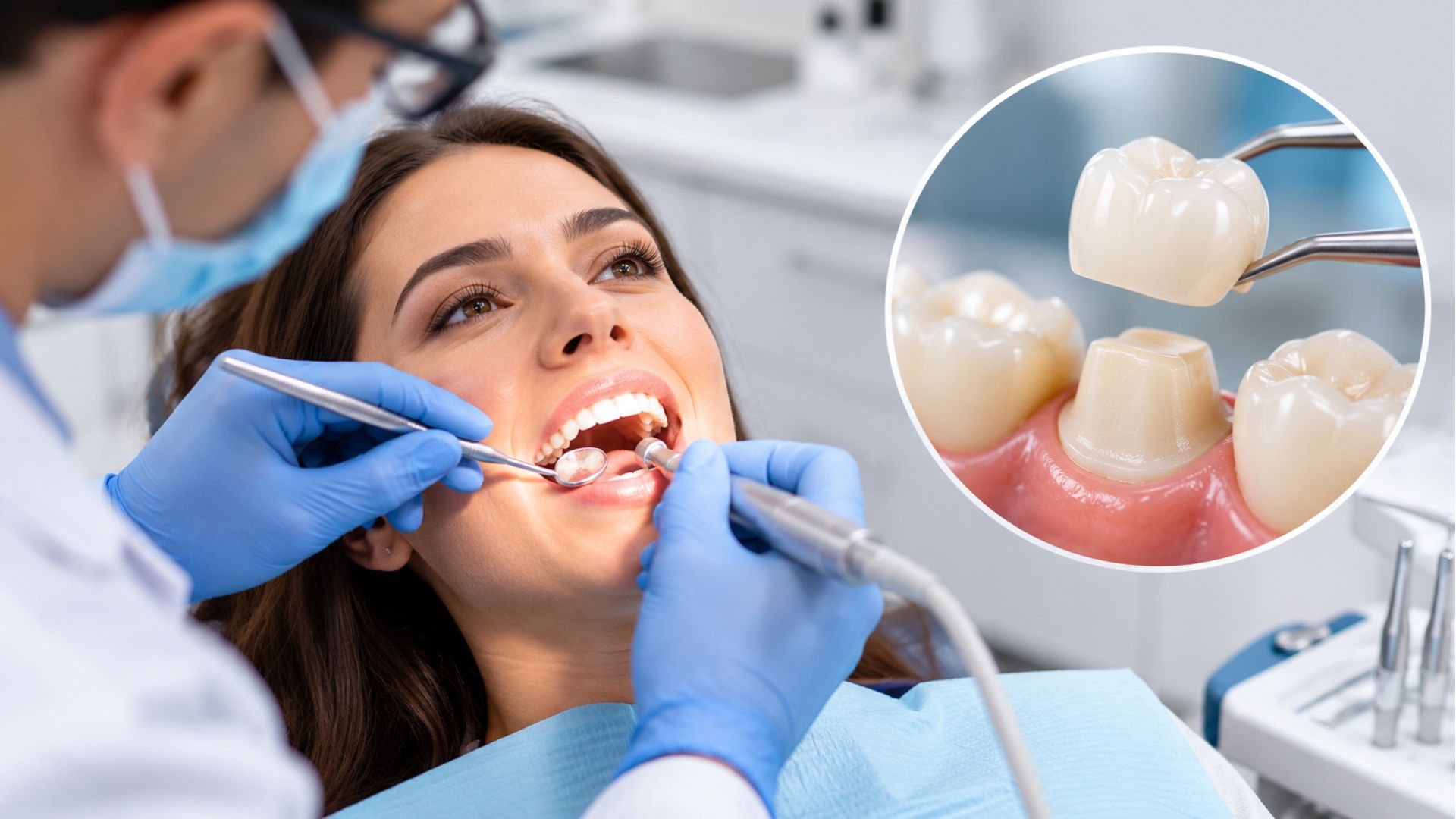
The first appointment does the groundwork. The dentist numbs the tooth and the area around it, so you should not feel discomfort during any of what follows. If there is decay or an old filling, that is cleaned out first. Then the tooth is carefully reshaped, trimming it down on all sides so the crown can fit over it like a cap and sit flush with your other teeth. How much is removed depends on the tooth and the type of crown.
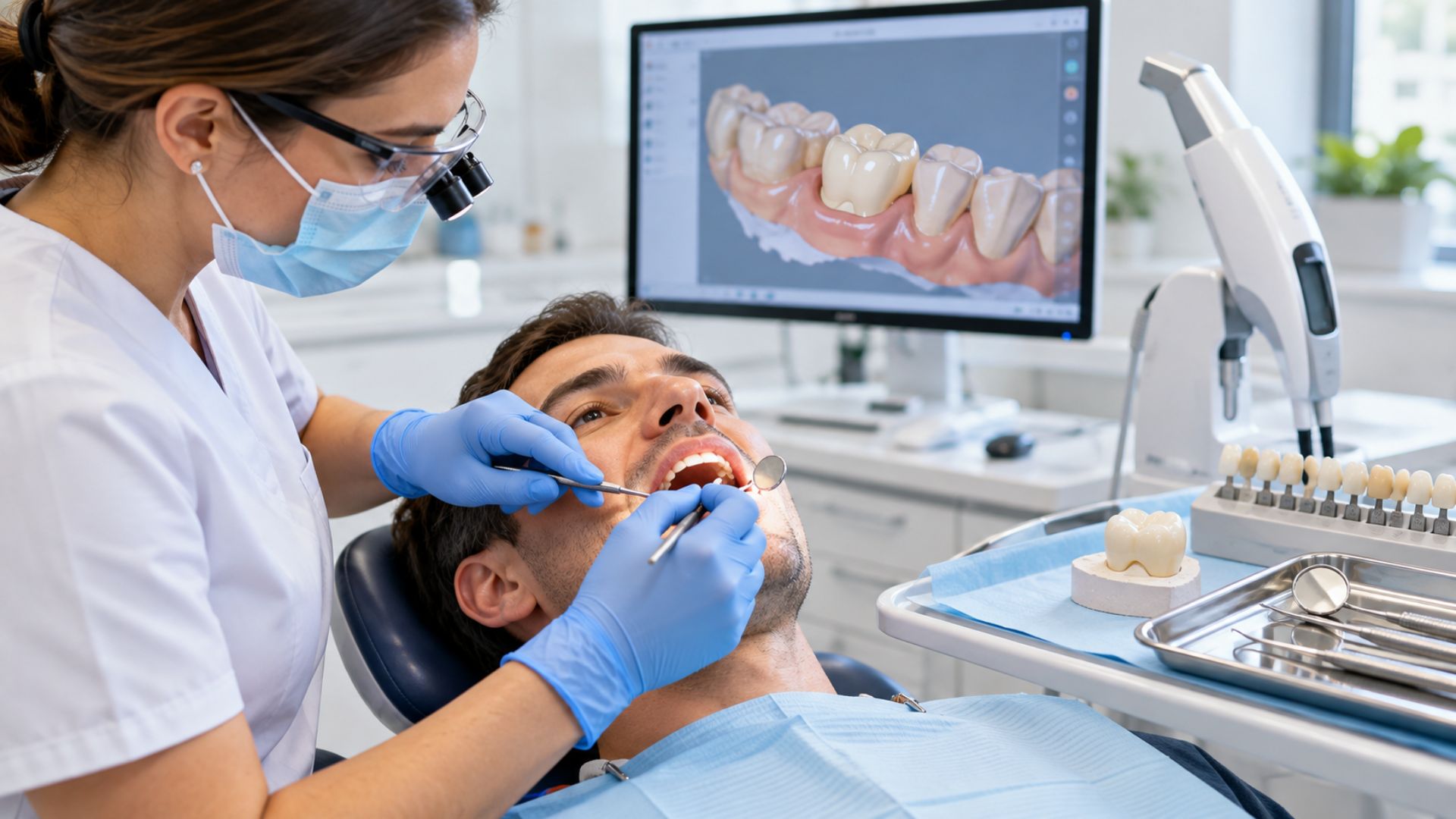
Next, the dentist captures the exact shape of the prepared tooth, either with a putty impression or a digital scan, and notes the shade so the crown will match your neighbouring teeth. That information goes to a dental lab, which custom-makes your crown. Because that takes time, the dentist fits a temporary crown over the tooth before you leave, so it is protected and you can eat and smile normally in the meantime.
Between the visits: living with the temporary
For the week or two while the lab works, you wear the temporary crown. It looks and functions well enough for everyday life, but it is not as strong as the final one and is held on with a softer cement so it can be removed easily later. A few simple habits keep it comfortable: chew on the other side where you can, go easy on very sticky or hard foods that could pull it off, and when flossing, slide the floss out sideways rather than pulling up so you do not dislodge it. If the temporary does come loose, it is worth a quick call to the clinic rather than leaving the prepared tooth exposed.
The second visit: fitting the crown
The second appointment is usually quicker and simpler. The dentist removes the temporary crown, cleans the tooth, and tries in the new crown to check three things: that it fits precisely, that it matches your other teeth in colour, and that it feels right when you bite. Small adjustments are made until everything is comfortable and natural. Once you and the dentist are happy, the crown is bonded permanently into place with a strong dental cement and given a final polish. From that point it works like a normal tooth.
The same-day alternative
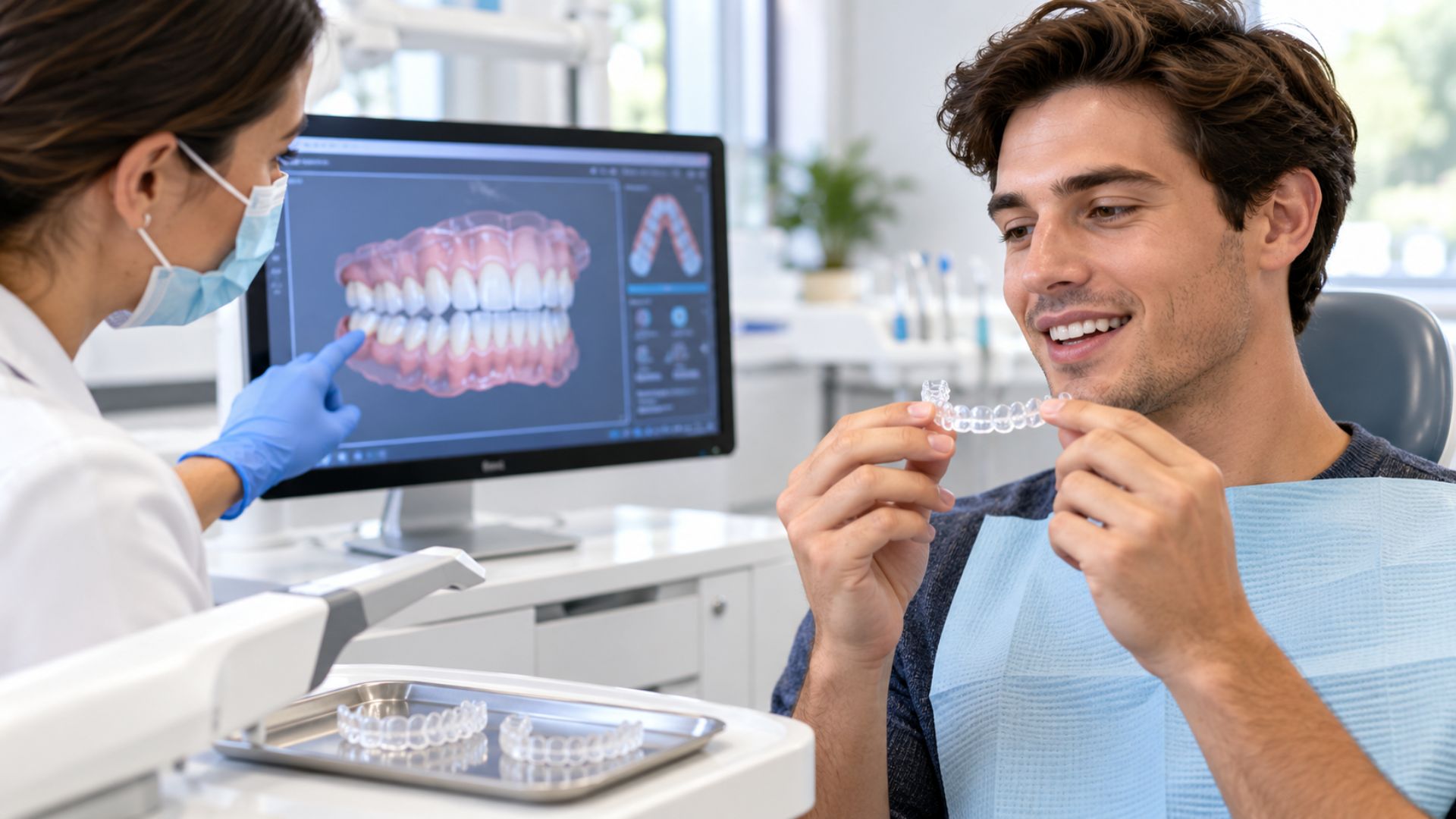
Not every crown means two visits and a temporary. Many clinics now offer same-day crowns using CEREC technology, where the tooth is prepared and scanned, the crown is designed on a computer, and a milling machine carves it from a ceramic block in the clinic while you wait. It is then bonded on the same day, so there is no impression sent to a lab, no temporary, and no second appointment. The result is comparable, and it comes down to what your clinic offers and what suits your tooth. Crowns of both kinds are part of the restorative care at Kaleen Family Dental Surgery.
Will it hurt, and how long will it last?
Because the tooth is fully numbed, the preparation and fitting are not painful, though it is normal for the tooth to feel a little sensitive to hot and cold for a few days afterwards, especially between visits. That usually settles on its own. Once it is in, a crown is looked after just like a natural tooth, brushed and flossed daily, and it typically lasts 10 to 15 years or more. The crown itself cannot decay, but the natural tooth underneath still can at the edges, so keeping up good preventive care and regular check-ups is what makes a crown go the distance.
Frequently asked questions
Does getting a crown hurt? Not during the procedure, because the tooth is numbed with local anaesthetic for both the preparation and the fitting. Afterwards the tooth may feel sensitive to temperature for a few days, particularly while you are in the temporary crown, but this usually settles quickly.
How many appointments does a crown take? Traditionally two, one to prepare the tooth and fit a temporary, and one a week or two later to cement the finished crown made by a lab. If your clinic offers same-day crowns with in-clinic milling, it can be completed in a single visit with no temporary.