You may need a filling if you have a cavity, and the common warning signs are tooth sensitivity to hot, cold, or sweet, a toothache, a visible hole or dark spot on a tooth, pain when biting, or food that keeps catching in one place. Here is the catch, though: early cavities usually cause no symptoms at all, so feeling fine does not mean you are in the clear. Only a dentist can confirm a cavity with an exam and an x-ray. If you notice any of the signs below, it is worth getting checked promptly, because a small cavity is far simpler to fix than a large one.
Signs and symptoms of a cavity
These are the things people most often notice when decay has taken hold. You may have one or several.
Sensitivity to hot, cold, or sweet. A twinge when you eat ice cream, sip a hot drink, or bite into something sugary is a classic early sign that decay has reached the sensitive layer under the enamel.
A toothache. Pain that lingers, comes and goes, or wakes you at night suggests decay is getting deeper. Ongoing pain is never something to sit on.
A visible hole, pit, or dark spot. Brown, black, or even chalky white marks on a tooth, or a hole you can see or feel with your tongue, often mean a cavity has formed.
Pain when biting or chewing. Discomfort under pressure can point to decay, a crack, or a failing filling.
Food constantly catching in one spot. If floss shreds or food wedges in the same place every time, decay may have opened a gap between teeth.
A rough, chipped, or catchy edge. Enamel weakened by decay can crumble slightly, leaving a rough spot your tongue keeps finding.
Bad breath or a bad taste. Persistent bad breath or an off taste can come from bacteria collecting in a decayed area.
The catch: many cavities have no symptoms
This is the most important thing to understand, and it is why "I have no pain" is not proof of healthy teeth. According to healthdirect, early tooth decay has no symptoms at all. Decay often starts between teeth or in the grooves of back teeth, out of sight, and it does not hurt until it has worked through the hard enamel toward the nerve.
By the time a cavity aches, it is usually well advanced and needs more than a simple filling. That is exactly why a routine check-up and x-ray matters so much, it finds decay while it is still a tiny, painless spot. Waiting for symptoms is waiting for the problem to get bigger and more expensive.
How a cavity forms, stage by stage
Understanding the progression makes the treatment make sense.
It starts when bacteria feed on sugars and produce acid that attacks the enamel, the hard outer shell of the tooth. The first sign is a white spot, a patch where minerals have been stripped out. At this earliest stage, no hole has formed yet. If the acid attacks continue, the enamel breaks down and a cavity, an actual hole, appears. Left longer, decay reaches the softer dentine underneath and spreads faster, which is often when sensitivity and pain begin. If it reaches the pulp, the living centre of the tooth, you can get a serious toothache or an abscess.
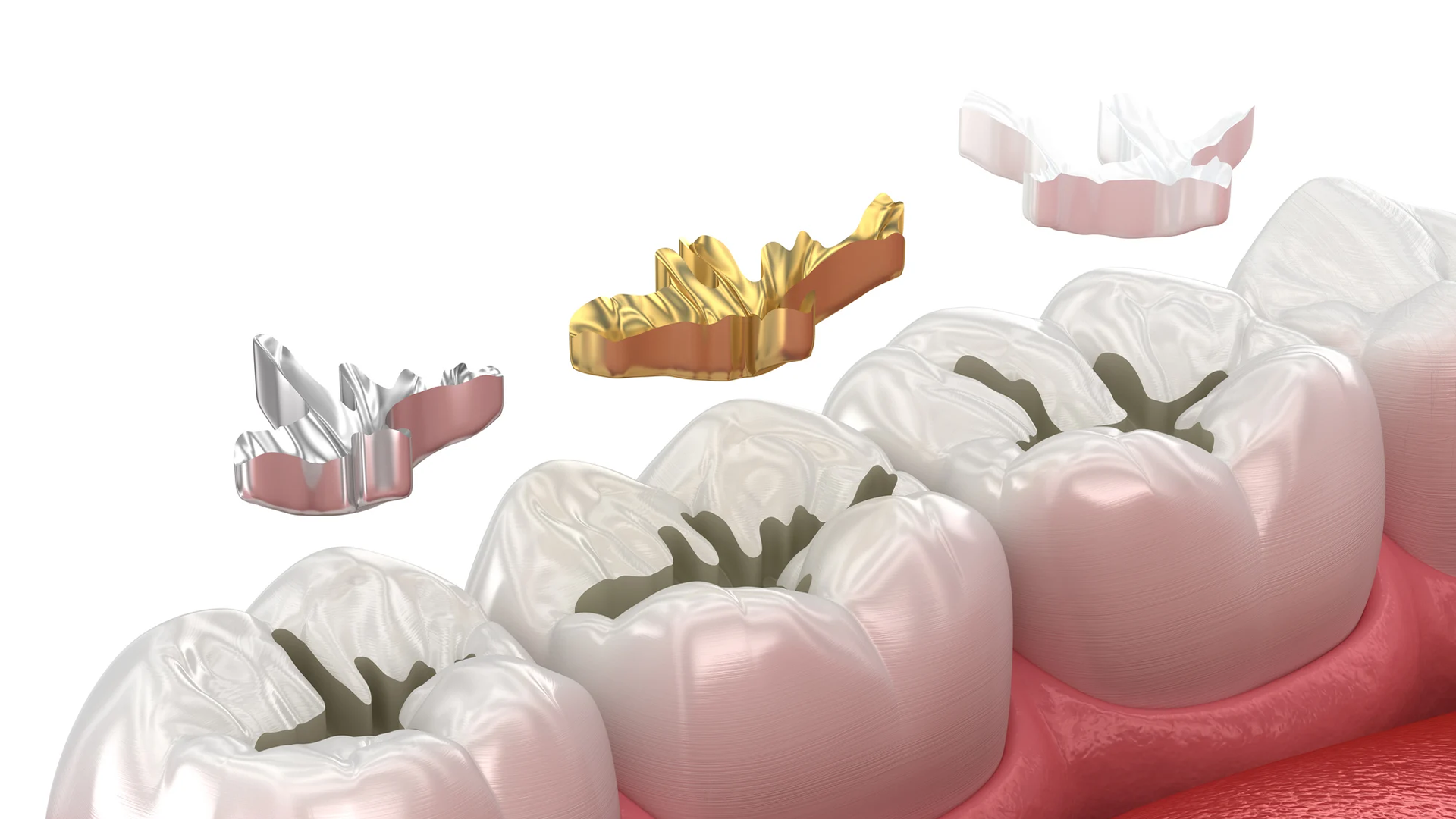
Where you are on that path decides the fix. A cavity in enamel or dentine is usually restored with a filling. Once decay is extensive or the tooth is badly broken down, you may need an onlay or a crown, and if it reaches the nerve, root canal treatment. The earlier it is caught, the smaller and cheaper the repair.
Can you fix a cavity without a filling?
Sometimes, but only at the very beginning. That early white spot, where minerals have been lost but no hole has formed, can often be remineralised and stopped before it becomes a cavity. healthdirect notes that early treatment can stop or even cure tooth decay at this stage, usually with fluoride paste or varnish plus better home care. Our guide to the role of fluoride explains how that works.
Once decay has broken through the enamel into a hole, though, it cannot heal itself. Enamel does not grow back, so a filling is needed to clean out the decay and seal the tooth. This is the honest line in the sand: caught as a white spot, a cavity may be reversible; caught as a hole, it needs a filling.
When to see a dentist, and when it is urgent
If you notice any of the milder signs, sensitivity, a dark spot, food catching, book a check-up in the next week or two. It is not an emergency, but it is worth not leaving.
Some symptoms mean see a dentist promptly: a throbbing or severe toothache, pain that keeps you up at night, a tooth that hurts to touch or bite, facial swelling, or a bad taste that will not go. Swelling in particular can signal an infection and should be seen quickly. When in doubt, call the clinic and describe what you are feeling, and they will tell you how soon to come in.
What happens if you ignore it
Decay does not pause. A small cavity that would have been a quick filling can, over months, reach the nerve and need root canal treatment and a crown, or become an abscess that requires urgent care or even removing the tooth. The cost and the discomfort both climb the longer it is left. Acting on the early signs is almost always the cheaper, easier path, which is the same reason regular preventive visits are worth keeping up.
How a dentist confirms whether you need a filling
You cannot reliably diagnose a cavity yourself, and not every twinge means decay, sensitivity has other causes too, like exposed roots or a cracked tooth. A dentist confirms it by examining the tooth, gently checking suspect spots with a probe, and taking x-rays to see decay hidden between teeth or under old fillings. From there they will tell you whether you need a filling, whether a white spot can be watched and remineralised, or whether something more is going on.
Frequently asked questions
How do I know if I need a filling? You may need a filling if you have signs of a cavity, such as sensitivity to hot, cold, or sweet, a toothache, a visible hole or dark spot, or food catching in one spot. But early cavities often have no symptoms, so the only way to know for sure is a dental exam and x-ray.
Does a cavity always hurt? No. Early tooth decay usually causes no pain at all, because it has not yet reached the sensitive inner layers. Pain tends to appear once decay is more advanced, which is why relying on pain to tell you something is wrong means catching problems late.
Can a cavity heal itself without a filling? Only at the very earliest stage. A white spot, where minerals have been lost but no hole has formed, can often be remineralised with fluoride and good care. Once decay has broken through into a hole, the enamel cannot repair itself and a filling is needed.