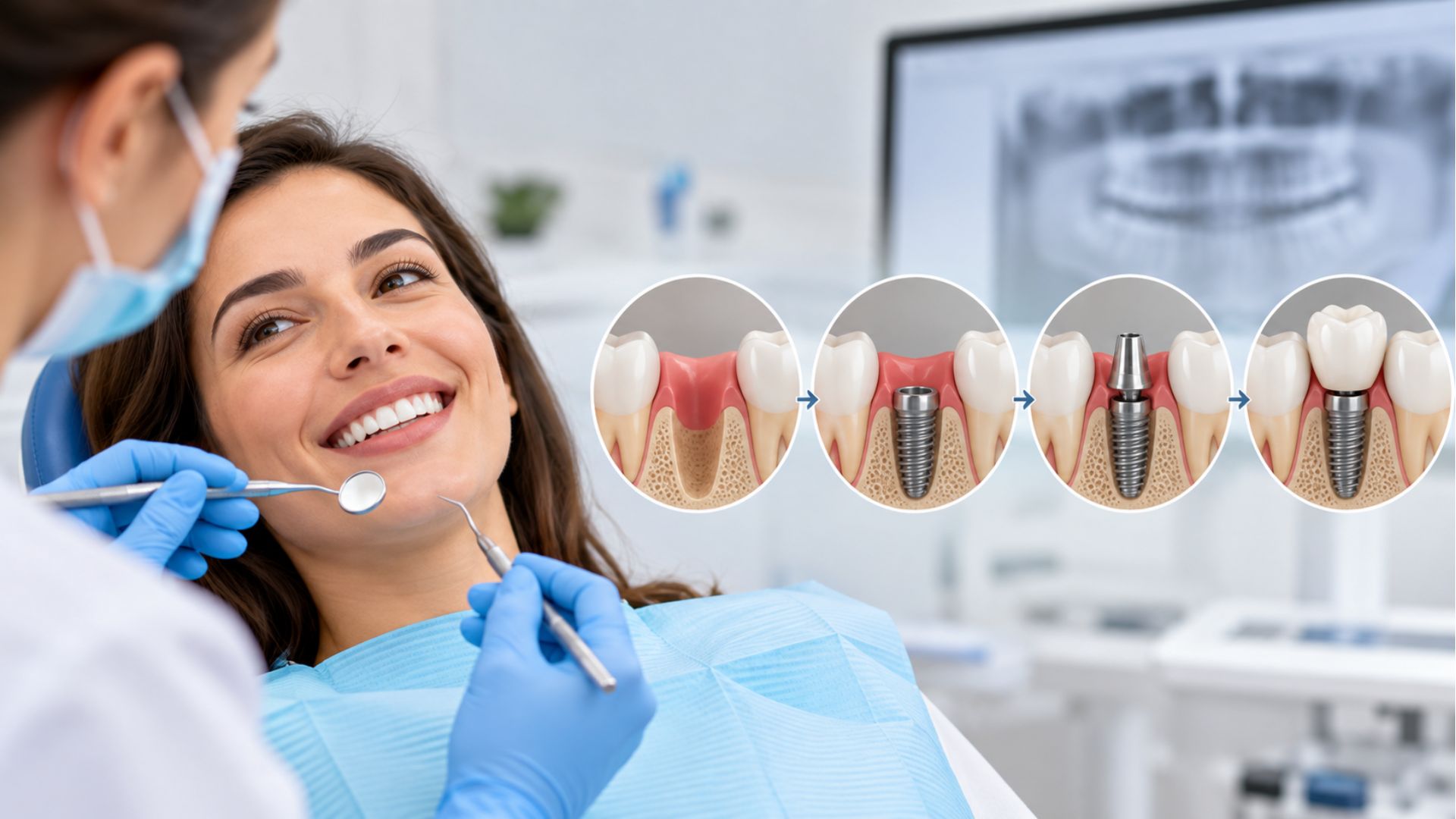
The thing to understand first is that a single tooth implant is a journey, not a one-hour appointment. It plays out over a few months and a handful of visits, and here is the twist most people do not expect: the actual time in the chair is short, while most of the timeline is simply waiting for your body to heal. A small titanium post is placed into your jaw, your bone slowly grows around it to lock it in, and only then is a new tooth attached on top. That healing gap is not a delay to be frustrated by, it is the whole reason an implant ends up as solid as a natural tooth.
The journey at a glance
Before the detail, here is the shape of the whole thing.
Stage | Roughly when | What it involves |
Assessment and planning | First visit | Exam, 3D scan, checking bone and health |
Placing the implant | A few weeks later | Short procedure, the post goes in |
Healing | 3 to 6 months | Bone fuses to the post |
Fitting your new tooth | Final visit or two | Custom crown attached on top |
Now, what each part is actually like.
It starts with an assessment, not surgery
Your first visit is about looking and planning, with nothing done to your tooth on the day. The dentist examines the area, takes a 3D scan or x-ray, and checks two things above all: whether you have enough healthy jawbone to anchor an implant, and whether your gums and general health are up to it. From there they map out your personal plan, including whether the old tooth needs removing first, or whether any bone needs building up before the post can go in. You leave this visit knowing exactly what your path and timeline look like, which takes a lot of the uncertainty out of the rest.
The day the implant goes in
This is the step people worry about, and it is almost always calmer than they picture. The area is fully numbed with local anaesthetic, and the dentist places the titanium post into the jawbone where the tooth root once sat. It is a short, controlled procedure, and because everything is numb, you should feel pressure and movement but no pain. Many people say it was easier than having a tooth pulled.
Afterwards, expect the site to be tender for a few days, sometimes with a little swelling or bruising, much like after an extraction. Simple over-the-counter pain relief, a cold pack, and soft foods for a day or two are usually all it takes to stay comfortable. If the thought of the procedure makes you nervous, say so beforehand, as there are ways to keep you relaxed.
The quiet months in between
Now comes the part that surprises people: mostly nothing, and that is by design. Over the next three to six months, living bone gradually grows around the post and bonds to it, a process called osseointegration. You carry on with normal life while it happens, with just the occasional quick check to make sure it is progressing well.
You will not be left with an obvious gap in the meantime. For a visible tooth especially, the dentist can fit a temporary tooth to wear through the healing period, so your smile stays intact while the important work happens out of sight. This waiting is exactly what a same-day fix cannot offer, and it is why an implant can carry the full force of biting for decades.
The day you get your tooth
Once the post has fused firmly into the bone, the finishing stage is quick and painless. The dentist attaches a small connector called an abutment, then takes a scan or impression so a crown can be custom-made to match your other teeth in shape, size, and shade. At the final visit, that crown is fixed onto the post, and the gap is gone. This is the moment the months of patience pay off, and it is part of the implant and restorative care Kaleen Family Dental Surgery provides.
Living with your new implant
Once it is in, an implant is refreshingly low-maintenance: brush and floss it like a natural tooth and keep up your regular check-ups. The post itself does not decay and can last a lifetime, while the crown on top usually lasts 10 to 15 years or more. The one thing it still relies on is healthy gums and bone around it, so the same preventive habits that protect your natural teeth are what keep an implant solid for the long haul.
Frequently asked questions
Why does a single tooth implant take months? Because the jawbone needs time to grow around and bond to the titanium post, a process called osseointegration that usually takes three to six months. That fusing is what gives an implant the strength to last, so the healing time is essential rather than optional.
Is placing the implant painful? Not during the procedure. The area is numbed with local anaesthetic, so you feel pressure but not pain, and many people find it easier than a tooth extraction. Afterwards there is usually some tenderness and swelling for a few days, managed with simple pain relief and soft foods.