Baby teeth matter far more than most people expect, and caring for them starts earlier than you might think. Even though they eventually fall out, baby teeth guide the adult teeth into place, help your child chew and speak, and can develop decay that affects their health and their permanent teeth. The essentials are simple: clean the gums from birth, brush as soon as the first tooth appears, use the right amount of toothpaste for their age, keep sugary drinks in check, and book a first dental visit by their first birthday. Here is what that looks like in practice.
Why baby teeth matter, even though they fall out
It is a common belief that baby teeth do not really count because they are temporary. They do. Baby teeth hold the space in the jaw and guide the permanent teeth into the right position, so losing one too early to decay can crowd the adult teeth coming through. They also let your child chew properly and form sounds as they learn to speak, and healthy baby teeth support a confident smile. Just as importantly, decay in baby teeth can be painful, can cause infection, and sets up habits and bacteria that carry into the adult teeth. Looking after them is an investment in the smile your child keeps for life.
When baby teeth arrive and fall out
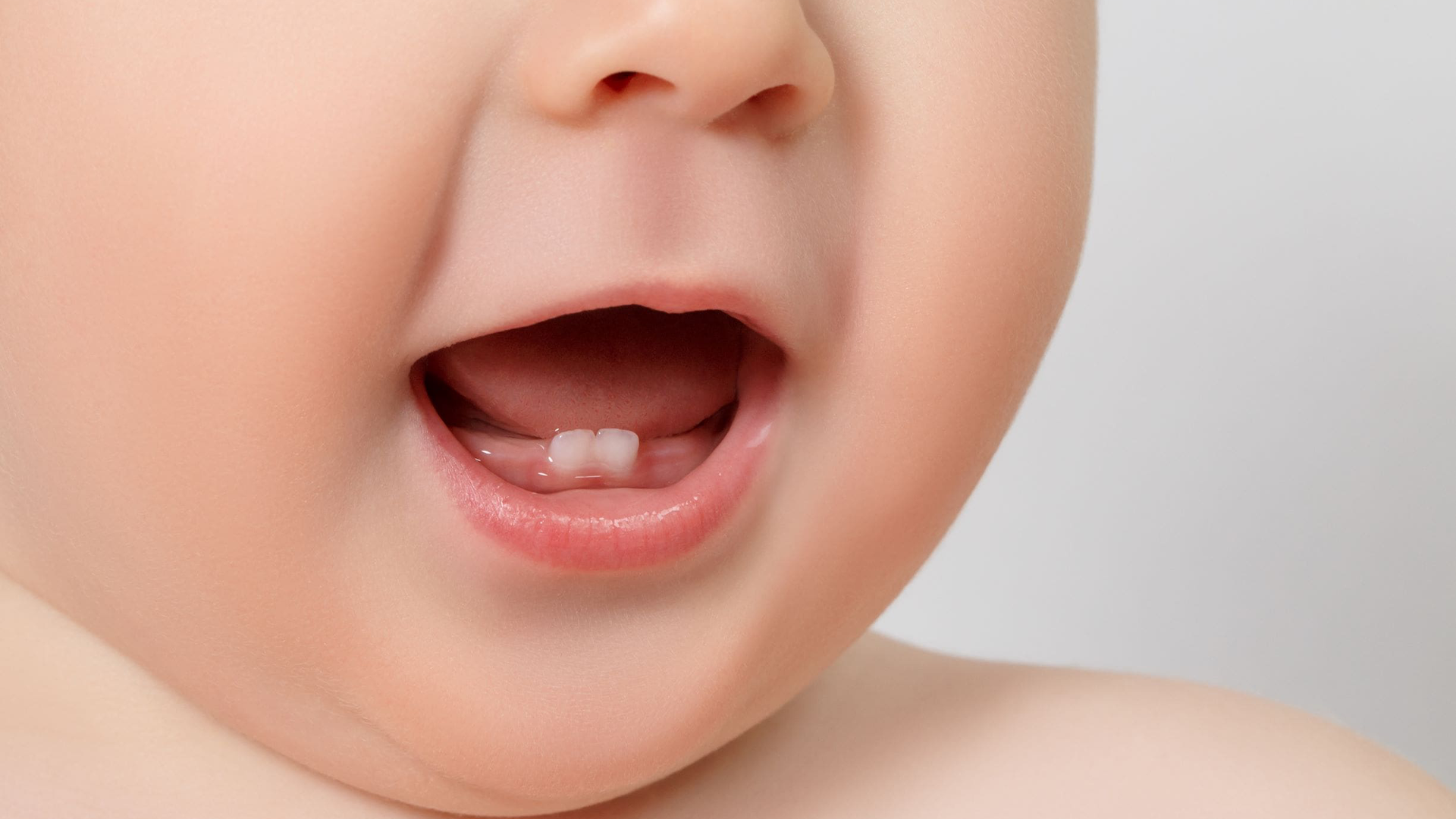
Babies are born with all 20 primary teeth already formed in the jaw. The first usually appears around 6 months, and teething carries on until about 2 to 3 years of age, by which point most children have their full set. From around age 6, those baby teeth start to loosen and fall out as the adult teeth push through, a process that continues until roughly age 12. Every child is a little different, so do not worry if yours is a few months ahead or behind.
How to care for baby teeth, by age
The right care changes as your child grows, and the toothpaste guidance in Australia is specific.
From birth:
Wipe your baby's gums with a clean, damp cloth or gauze pad after feeds, even before any teeth appear.
As soon as the first tooth comes through (under 18 months):
Brush twice a day with a small soft toothbrush and just water, no toothpaste, unless your dentist advises otherwise.
18 months to 6 years:
Brush twice a day with a pea-sized amount of children's low-fluoride toothpaste. Teach your child to spit it out, not swallow, lick, or rinse it away, since spitting leaves a protective trace of fluoride behind.
6 years and older:
Switch to a standard adult fluoride toothpaste, still twice a day.
Children need help brushing until about age 7 or 8, when their coordination is up to doing a thorough job alone. Start flossing gently once two teeth sit against each other.
Fluoride and diet
Two things protect baby teeth more than anything else: fluoride and limiting sugar. Fluoride strengthens enamel against decay, and Canberra's tap water is fluoridated, which helps every time your child drinks it. You can read more in our guide to the role of fluoride in dental health.
On diet, sugar is the main driver of decay. Keep sugary drinks and snacks occasional rather than everyday, and offer water or plain milk between meals rather than juice or cordial. One specific thing to avoid is putting your baby to bed with a bottle of milk or sweet drink, because it pools around the teeth overnight and causes what dentists call baby bottle decay. Water is the only safe drink to settle with.
The first dental visit
Australian guidance is clear: your child should see a dentist by the time their first tooth appears, or by their first birthday, whichever comes first. It sounds early, but these first visits are mostly about spotting problems, getting advice, and helping your child feel comfortable so the dentist never becomes something to fear. Our tips on making your child's first dental visit a positive experience make it easier for everyone. Building the habit early is one of the best things you can do, and it fits into caring for the whole family, as our family dentistry guide explains.
Common things to watch for
A few issues come up often with little ones. Tooth decay is the most common chronic disease in Australian children, so watch for white or brown spots on the teeth and mention them at a check-up. Teething can make babies grizzly, drooly, and keen to chew, which a chilled teething ring and a gentle gum rub can soothe. Prolonged thumb sucking or dummy use beyond the toddler years can start to affect how the teeth and jaw develop, so it is worth gently phasing out over time. None of these are cause for alarm, but they are worth raising with your dentist.
Frequently asked questions
Do baby teeth really matter if they fall out anyway? Yes. Baby teeth hold space and guide the adult teeth into position, help with chewing and speech, and can develop painful decay that affects your child's health and their permanent teeth. Caring for them properly protects the adult smile that follows.
When should my child first see a dentist? By the time their first tooth appears or by their first birthday, whichever is first. Early visits catch problems, give you tailored advice, and help your child grow up comfortable with the dentist.
How much toothpaste should my child use? Under 18 months, brush with water and no toothpaste unless your dentist advises otherwise. From 18 months to 6 years, use a pea-sized amount of children's low-fluoride toothpaste and teach them to spit rather than rinse. From 6 years, move to standard adult fluoride toothpaste.