What Are Braces?
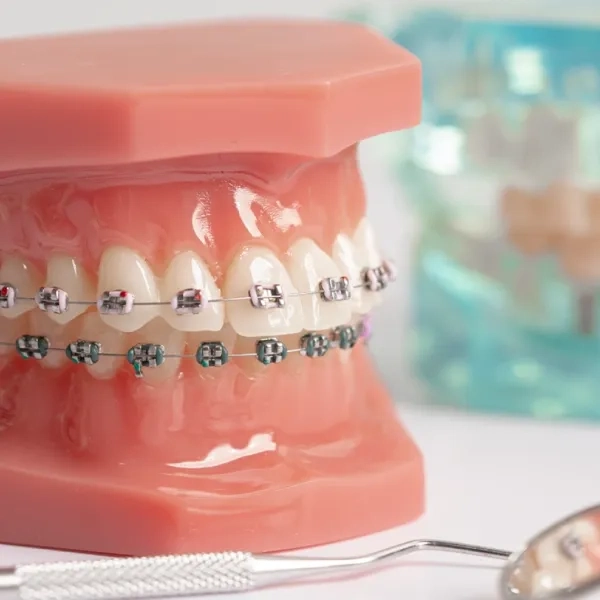
Braces are fixed orthodontic appliances that move teeth into a better position over time. Small brackets bond to each tooth, and a thin wire runs through them. The wire applies gentle, continuous pressure, and the bone around each tooth gradually remodels so the tooth shifts. It's a slow process by design. Teeth that move too quickly tend to relapse later.
Most cases run between 12 and 24 months. Simple crowding can finish sooner. Bite corrections and impacted teeth usually take longer.
Common Dental Issues Braces Can Fix
Braces handle a broader range of issues than clear aligners, which is why they're still the default for complex cases. The most common reasons patients come in include:
Crowded or overlapping teeth
Gaps between teeth, including a midline gap
Overbite, where the upper teeth sit too far over the lower
Underbite, where the lower teeth sit in front of the upper
Crossbite, where teeth meet on the wrong side
Open bite, where the front teeth don't meet when biting down
Rotated or tilted teeth that need full root movement
Impacted canines that need to be guided into the arch
If a case involves significant rotation or vertical tooth movement, braces give a more predictable result than aligners.
Types of Braces We Offer in Canberra
There's no single best option. The right choice depends on the complexity of the case, age, daily routine, and how visible you want treatment to be.
Metal braces
The traditional option, and still the most efficient for complex cases. Modern brackets are noticeably smaller than what most adults remember from years ago. They're the most cost-effective choice and work well for kids and teens, partly because coloured elastics give them something to enjoy about appointments.
Ceramic braces
Tooth-coloured brackets that blend in far better than metal. They work the same way but cost more and can stain with regular coffee, tea, or red wine. Worth it for adults who want a discreet option without switching to aligners.
Self-ligating braces
These use a built-in clip instead of elastic ties to hold the wire. Adjustment appointments tend to be shorter, and some patients find them more comfortable.
Lingual braces
Fitted to the back of the teeth, so they're invisible from the front. They take longer to get used to and cost more, but they're the only fixed option that's genuinely hidden. Not every case is suitable.
Benefits of Braces and Straight Teeth
Straight teeth aren't just cosmetic. Crowded teeth are harder to clean, which raises the risk of decay and gum disease over a lifetime. A poor bite wears teeth down unevenly, can cause jaw pain, and in some cases contributes to headaches or sleep issues. After treatment, most patients notice cleaning gets easier, food stops trapping in the same spots, and biting feels more even. The cosmetic improvement is the part people talk about, but the long-term dental health benefit is usually the bigger win.
Braces vs Clear Aligners: Which Is Right for You?
Both work. The decision is rarely about which is better overall, and more about which fits the case and the habits of the person wearing them.
Braces | Clear Aligners | |
|---|---|---|
Best for | Complex cases, kids, teens | Mild to moderate cases, adults |
Visibility | Visible (less so with ceramic) | Nearly invisible |
Discipline required | Low (fixed in place) | High (22 hours a day) |
Eating | Some foods to avoid | Remove for meals |
Cleaning | Takes practice | Easy |
Rotations and vertical movement | Strong | Limited |
If a teenager isn't going to wear aligners 22 hours a day, braces give a more reliable result. For an adult with mild crowding who travels for work or has client-facing meetings, aligners are often the better fit.
How Much Do Braces Cost?
Braces in Canberra fall within a wide range depending on the type, the complexity of the case, and the length of treatment. Metal braces sit at the lower end. Ceramic, self-ligating, and lingual options cost progressively more.
Most quotes include the consultation, records and X-rays, the appliances, all adjustment appointments, removal, and retainers. Ask what's included upfront, because some quotes look cheaper until the extras are added. Health fund rebates can offset a meaningful portion of the cost if you have orthodontic cover, and payment plans across the treatment period are standard.
How Braces Work Step by Step
Initial consultation. We examine the teeth and bite, take photos and X-rays, and discuss whether braces or aligners are the better fit.
Treatment plan. You receive a written plan with the recommended appliance, expected duration, and full cost.
Fitting appointment. Brackets are bonded to each tooth and the first wire is placed. Allow 60 to 90 minutes.
Adjustments. Every 4 to 8 weeks, the wire is changed or tightened to keep the teeth moving.
Removal. Once the teeth are in position, the brackets come off and the teeth are polished.
Retention. Retainers hold the result. Teeth shift back without them, so this step matters more than people expect.
Emergency Braces Care
Most issues during treatment are minor and can wait until business hours. The common ones:
A wire poking the cheek. Cover the end with orthodontic wax. If that doesn't settle it, the wire can usually be tucked or trimmed at a quick appointment.
A loose bracket. Not urgent unless it's causing pain. Avoid biting on it and book in within a few days.
A broken wire. Same approach as a poking wire. Wax first, then call.
Pain after an adjustment. Normal for two to three days. Soft food and paracetamol help.
If you're in significant pain, can't eat properly, or there's bleeding that doesn't settle, call the practice. We keep slots aside for braces emergencies.
Braces for Kids, Teens, and Adults: What's Different?
The mechanics are the same, but the approach differs.
Kids (around 7 to 10)
Most aren't ready for full braces yet, but an early check identifies issues that are easier to fix while the jaw is still growing. A short phase of treatment now sometimes avoids a much bigger one later.
Teens
The most common age for braces. The jaw is still developing, teeth move efficiently, and treatment fits naturally around school. Compliance with elastics and oral hygiene is where most teen cases succeed or struggle.
Adults
Treatment works at any age, the bone just remodels more slowly. Adults often prefer ceramic or aligners for appearance reasons, and existing dental work like crowns or implants needs to be factored into the plan.
Frequently Asked Questions
Do braces hurt?
The fitting itself doesn't hurt. The first few days afterwards, and a day or two after each adjustment, your teeth feel tender. Soft food and paracetamol usually handle it.
How long will I need to wear braces?
Most cases run 12 to 24 months. Simple crowding can be shorter. Bite corrections and complex movements take longer.
Can I play sport with braces?
Yes. A custom mouthguard is strongly recommended for contact sports. Standard boil-and-bite guards don't fit well over brackets.
Will I need to wear a retainer forever?
Most people wear retainers long-term, usually at night. Teeth have a memory and drift if nothing holds them. A fixed wire bonded behind the front teeth is another option.
Can I get braces if I have crowns, fillings, or implants?
Crowns and fillings usually aren't a problem, though brackets bond differently to porcelain. Implants don't move with braces, so they're worked around in the treatment plan. We assess this at the consultation.