Many people grind or clench their teeth without realising it, usually while they are asleep. The force involved is far greater than anything they would apply while chewing. Over months and years that pressure wears through enamel, loosens existing fillings and leaves the jaw muscles tight each morning.
An occlusal splint is one of the most widely used ways of managing that pressure. It will not change the underlying habit, but it can take a considerable amount of the load off your natural teeth while you sleep.
What is an occlusal splint?
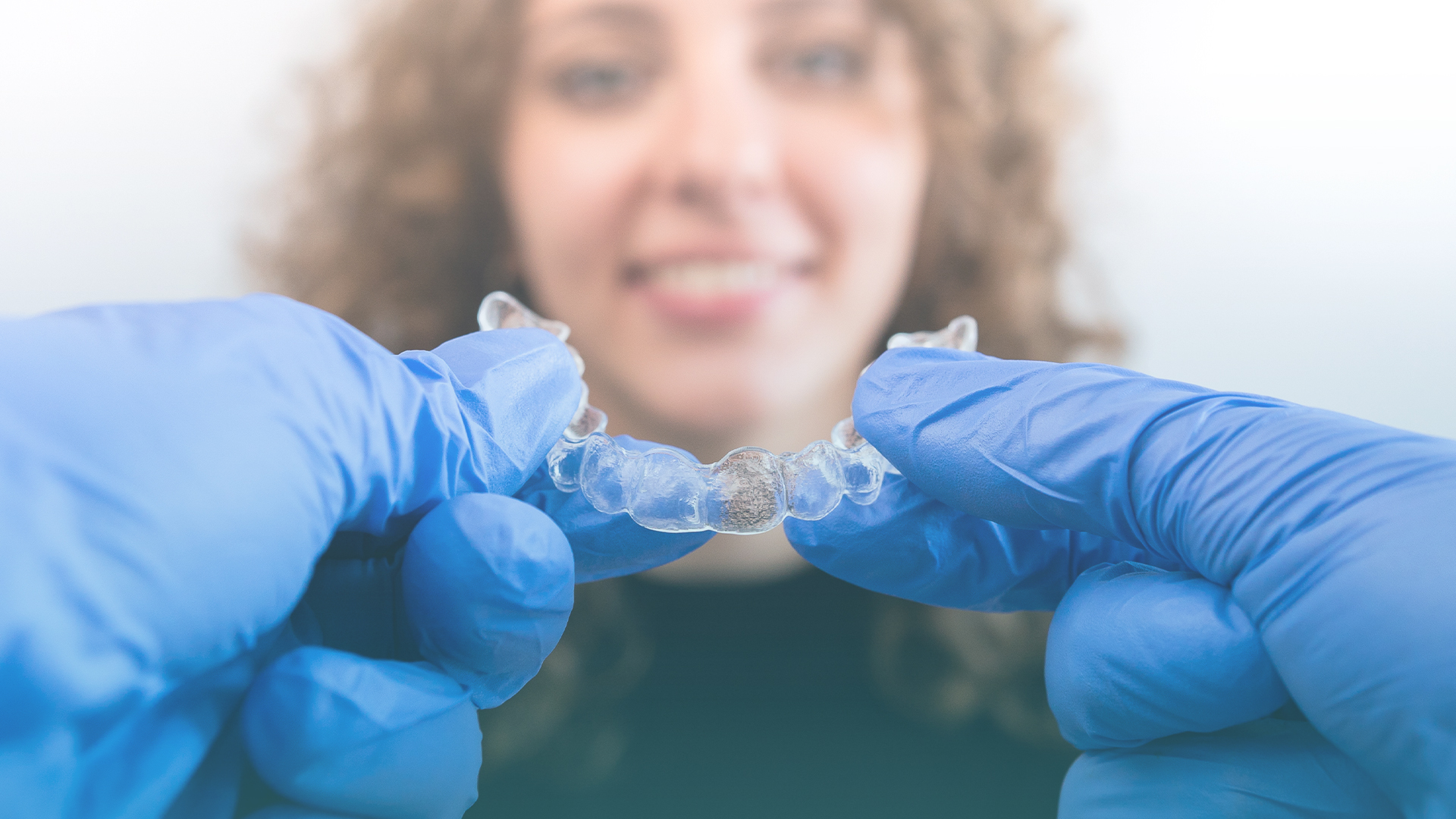
An occlusal splint is a custom-made dental appliance, usually worn overnight, that fits over either the upper or the lower teeth. It is made from firm dental acrylic and shaped from a digital scan or impression of your own teeth. That precision lets it sit securely without pressing on the gums.
Because the splint sits between the upper and lower arches, your teeth no longer make direct contact during the night. Grinding forces are distributed across the surface of the appliance rather than concentrating on whichever individual teeth happen to meet first, which helps protect both the enamel and any existing dental work.
You may also hear it described as a night splint, a bite splint, a dental splint or a bruxism splint. These terms generally refer to the same category of appliance, although the specific design is selected to suit the pattern of wear and the condition of your jaw joint.
Signs of grinding and clenching to look out for
Grinding and clenching frequently go unnoticed for years, because most of it happens while you are asleep. The evidence usually shows up either first thing in the morning, or at a routine examination when your dentist notices changes to the biting surfaces.
What you might notice
Jaw soreness, stiffness or fatigue when you wake up
Headaches that begin around the temples in the morning and ease through the day
Teeth that have become sensitive to cold, or tender under pressure
Clicking, catching or a tired sensation in the jaw joint
Disturbed sleep, or a partner who mentions hearing the grinding
Tenderness through the cheeks or around the ears
What your dentist may find
Flattened or noticeably shortened biting surfaces on the back teeth
Small chips, cracks or craze lines along the edges of the front teeth
Fillings, crowns or veneers that keep chipping, debonding or coming loose
Worn enamel exposing the softer, darker dentine underneath
Ridging along the inside of the cheeks, or scalloped indentations along the tongue
Gum recession in the areas carrying the heaviest load
What causes teeth grinding and clenching?
Bruxism, the clinical term for grinding and clenching, rarely has a single cause, and understanding what is driving it in your case helps determine whether a splint on its own will be enough.
Contributing factors can include periods of stress or heightened anxiety, disrupted or poor-quality sleep, certain prescribed medications, caffeine and alcohol intake, and the way the upper and lower teeth meet when the jaw closes. Sleep-disordered breathing has also been associated with night-time grinding in a proportion of patients, which is one reason your sleep is discussed as part of the assessment.
Because the picture varies so much from person to person, we look at your dental history alongside your general health rather than treating the wear in isolation. Where another factor appears to be involved, we may suggest you also speak with your GP or another practitioner.
How a splint protects your teeth and jaw
A splint does not stop the grinding itself. What it changes is where all of that force ends up going.
It shields the enamel. The acrylic absorbs wear that would otherwise fall directly on your natural teeth, which helps slow the ongoing loss of tooth structure that cannot be regrown once it has gone.
It protects existing dental work. Crowns, veneers, bridges and implants are all vulnerable to sustained night-time loading, and a well-fitted splint acts as a buffer between those restorations and the opposing teeth.
It can ease muscle tension. By holding the jaw in a more evenly balanced position through the night, a splint may reduce the strain carried by the chewing muscles, which many patients notice as less tightness on waking.
It helps distribute the bite. Rather than landing on the one or two teeth that make contact first, forces are spread more evenly across the whole arch.
It gives us useful information. The wear marks that appear on the splint over time show how much grinding is happening and exactly where, which helps guide any further treatment you may need.
Is an occlusal splint right for you?
A splint may suit you if there is visible wear developing on your teeth, if you regularly wake with jaw discomfort, or if you have invested in restorative work that you would like to protect. It is often recommended after crowns, veneers or implants have been placed, precisely because those restorations represent a significant investment.
It may not be the appropriate starting point in every situation. Active decay, untreated gum disease or an existing jaw joint condition will generally need to be addressed first, and an appliance can then be considered once the foundations are stable.
Your suitability is assessed at the examination, and if something else should be resolved beforehand, we will explain what and why before any appliance is made.
Types of occlusal splint
Several designs are available. The one recommended to you depends on the pattern of wear, the health of your jaw joint and what you will find comfortable enough to wear nightly.
Hard acrylic splints
Made from rigid, highly polished acrylic, these are typically the most durable option available. They are often selected for moderate to heavy grinding because they hold their shape well over time and can be adjusted with a good deal of precision.
Soft splints
Manufactured from a flexible thermoplastic material, soft splints are generally more comfortable during the first few nights of wear. They tend to suit lighter grinding or clenching, and they usually need replacing sooner than a hard appliance would.
Dual laminate splints
These have a soft inner surface against the teeth and a harder outer layer. The intention is to combine the initial comfort of a soft splint with something closer to the durability of a rigid one.
Anterior bite splints
Smaller appliances that cover only the front teeth, these are sometimes used for shorter periods where muscle relaxation is the primary aim. Because they cover a limited number of teeth, they are monitored closely and are not generally intended for long-term use.
Whichever design is recommended, we will explain the reasoning behind it before anything is sent to the laboratory.
Our treatment process
Most patients complete treatment across two appointments, usually scheduled around 2 to 3 weeks apart.
1. Assessment and examination
Your teeth, gums, bite and jaw joint are examined, and the existing wear is photographed so it can be compared at later visits. Your dental history, sleep quality and general health are discussed, so that the likely cause is considered alongside the visible symptoms.
2. Digital scan or impression
A scan or impression of both arches is taken, together with a record of how your upper and lower teeth currently meet. These records are sent to a dental laboratory where the splint is constructed to your individual bite, which generally takes somewhere in the range of 2 to 3 weeks.
3. Fitting and adjustment
The completed splint is fitted and then checked carefully for comfort, retention and even contact right across the arch. Small refinements are made in the chair until the bite feels balanced, and you will be shown how to insert, remove, clean and store it properly.
4. Review appointment
You return a few weeks later so that both the fit and the bite can be reassessed once the muscles have had time to settle. Further fine-tuning at this stage is common and entirely normal rather than a sign that anything has gone wrong.
Settling in during the first few weeks
A new splint tends to feel bulky at first, and slightly increased saliva over the first few nights is a normal response to having something unfamiliar in the mouth. Most people find they have adjusted within about 1 to 2 weeks of consistent nightly wear.
Wearing it every night through this initial period usually helps considerably more than wearing it occasionally, because the muscles adapt faster to a consistent routine. If it remains uncomfortable, feels loose, or leaves any individual tooth feeling sore in the morning, it can be adjusted rather than simply tolerated.
Please contact us if the splint is causing persistent discomfort. An adjustment appointment is usually short, and in most cases it resolves the problem.
How to look after your splint
Consistent daily care will keep a splint clear, odour-free and lasting considerably longer than it otherwise would.
Rinse it under cool running water as soon as you take it out each morning
Brush it gently with a soft toothbrush and liquid soap rather than toothpaste, which can scratch the acrylic surface
Allow it to dry fully before putting it away, and store it in the ventilated case provided
Keep it away from hot water, dishwashers, car dashboards and direct sunlight, since heat can distort the shape
Soak it occasionally in a denture or retainer cleaning tablet to help keep the surface clear
Bring it along to every check-up so the fit and the developing wear pattern can be reviewed
Keep it well out of reach of pets, which are a surprisingly common cause of damaged appliances
With daily cleaning and regular reviews, many hard splints last somewhere in the range of 3 to 5 years before replacement needs to be considered.
Occlusal splint cost and health fund cover
The overall cost depends on the design of the appliance chosen for you, the laboratory work it involves, and whether any additional adjustment appointments are needed beyond the standard review.
You will be given a written, itemised quote before treatment begins, so that the full fee and the relevant item numbers are clear to you before you decide whether to proceed.
Most extras policies contribute something towards an occlusal splint. Rebates and waiting periods differ considerably between funds. Your itemised quote can be taken directly to your fund to confirm exactly what you are entitled to claim.
Treatments we may recommend alongside a splint
A splint manages the consequences of grinding rather than its cause, so in some cases it works most effectively as one part of a broader treatment plan.
Repairing damaged teeth. Where enamel has already worn through, chipped or cracked, restoring those teeth may be recommended either before the splint is made or once it is in place.
Reviewing your bite. If the way your teeth meet appears to be contributing to the problem, orthodontic treatment or a bite adjustment may be discussed with you as an option.
Jaw exercises and physiotherapy. Where muscular tension forms a significant part of the picture, referral to a physiotherapist experienced in treating the jaw may be appropriate.
Managing stress and sleep quality. Because stress and disrupted sleep are so commonly associated with grinding, your GP is often the right person to involve alongside dental treatment.
Ongoing monitoring. Recording the wear on both your teeth and your splint over successive visits shows us whether the grinding is remaining stable or gradually increasing.
What happens if grinding is left untreated
Enamel does not grow back. Once it has been worn away, the dentine underneath is exposed, which makes the tooth more sensitive, more prone to chipping, and more complicated to restore later on.
Continued heavy loading also shortens the working life of fillings, crowns and veneers. Over time it may contribute to cracked teeth, gum recession and persistent jaw discomfort. Addressing the problem at an earlier stage generally means simpler and less extensive treatment further down the track.
Acting while the wear is still relatively mild leaves you with more options, and an examination is the most straightforward way to find out exactly where things currently stand.
Book an appointment
If you wake with a tight jaw, or your teeth look shorter or feel more sensitive than they used to, an examination is the place to start. We will explain what is causing the wear and whether a splint is the right step for you.
Call Kaleen Family Dental on (02) 6241 5941 or book online to arrange an appointment at Gwydir Square.