Root canal treatment has a reputation it no longer deserves. For most people the appointment feels much like having a large filling placed, because the tooth is thoroughly numbed before any work starts.
The pain that brings patients in is caused by the infection, not by the treatment. Removing that infection is what brings the relief.
Does root canal treatment hurt?
This is the question patients ask before any other, so it belongs at the top of the page rather than hidden in a list at the bottom.
Treatment is carried out under local anaesthetic, and the tooth and the tissue around it are numbed thoroughly before anything begins. Most patients report that the appointment feels comparable to having a large filling placed, and a good number say the toothache beforehand was considerably worse than the procedure that resolved it.
You may feel pressure or movement while the work is being done, which is normal and expected, but sharp pain is not something you should be putting up with. If anything feels uncomfortable at any stage, tell us and more anaesthetic is given before we carry on.
Some tenderness in the days afterwards is common, particularly when biting down, because the tissue surrounding the root tip has been inflamed. It usually settles within a few days and generally responds well to over-the-counter pain relief.
What is root canal treatment?
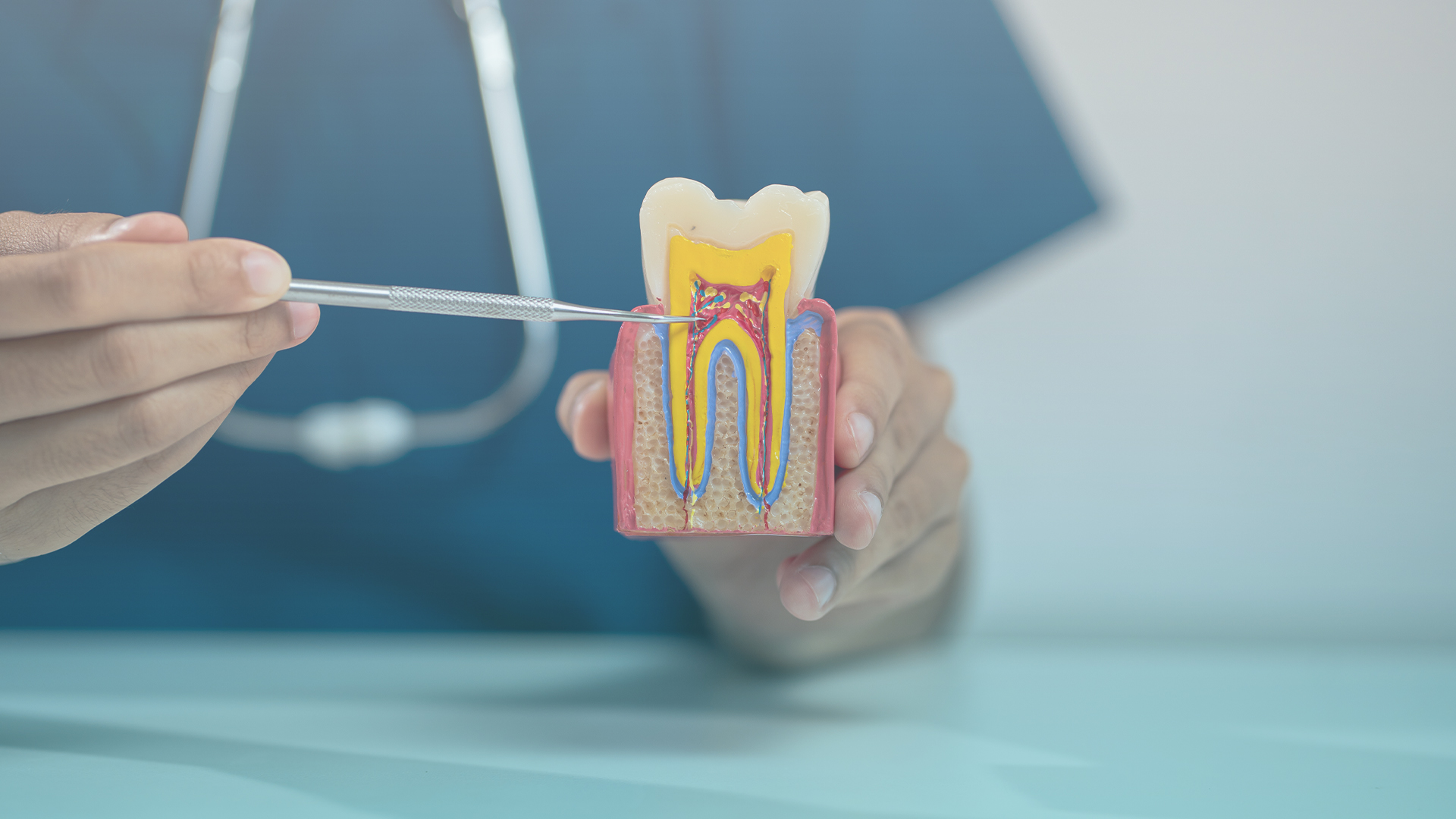
Every tooth has a soft centre called the pulp, which contains the nerve and the blood supply. When decay, a crack or an injury allows bacteria to reach that pulp, it becomes inflamed or infected, and the tooth can become extremely painful.
Root canal treatment, also known as endodontic treatment, removes the infected pulp from inside the tooth. The narrow canals running down through each root are then cleaned, shaped, disinfected and sealed with a filling material.
The outer structure of the tooth stays where it is and continues to function normally, so the treatment effectively clears the problem from the inside and allows you to keep a tooth that would otherwise have to come out.
Signs you may need root canal treatment
Symptoms vary a great deal between patients, and how much a tooth hurts is a poor guide to how badly it is infected.
Symptoms you may notice
Persistent, throbbing toothache, often worse when you lie down at night
Lingering sensitivity to hot or cold that continues well after the source is removed
Sharp pain when biting down, or when pressure is applied to one particular tooth
Swelling or tenderness in the gum near the tooth, or swelling of the face or jaw
A small pimple-like bump on the gum that may weep or taste unpleasant
A tooth that has darkened noticeably compared with the ones beside it
Pain that has recently eased on its own after being severe
That last point matters more than most people realise. Pain that disappears suddenly often means the nerve has died, and a dead nerve does not mean the infection has gone away.
When there are no symptoms at all
Some infected teeth cause no discomfort whatsoever, and these are usually picked up at a routine check-up when an x-ray reveals a dark shadow at the root tip indicating infection in the surrounding bone.
This is one of the clearer arguments for attending regular examinations, since treating a silent infection at an early stage is considerably more straightforward than dealing with one that has already spread.
What causes a tooth to become infected inside?
The pulp sits well protected beneath enamel and dentine, so bacteria need a route in before any infection can take hold.
Deep or untreated decay is the most common cause, particularly where a cavity has worked through both outer layers of the tooth and reached the pulp chamber beneath. A crack or fracture can open exactly the same pathway, sometimes years after the original damage occurred.
Other causes include trauma such as a knock to a front tooth, repeated dental work on the same tooth over many years, and heavy grinding that gradually stresses the tooth. Occasionally a tooth injured in childhood develops problems decades later.
Root canal treatment or extraction: how to weigh it up
Taking the tooth out is the cheaper option on the day in nearly every case. The comparison becomes considerably more even once you account for what follows, because a gap towards the back of the mouth rarely stays a simple gap for long.
| Root canal treatment | Extraction |
Natural tooth | Kept | Removed |
Appointments | Usually 1 to 2, plus a crown visit | Usually 1, plus any replacement |
Cost on the day | Higher | Lower |
Longer-term cost | Crown usually needed | Implant or bridge often needed to fill the gap |
Neighbouring teeth | Left undisturbed | May drift or tilt into the space over time |
Jawbone | Root preserved, so bone is maintained | Bone in the area may reduce over time |
Bite and chewing | Generally unchanged | May alter depending on the tooth |
Extraction is sometimes the more sensible choice, and we will say so when it is. A tooth with a vertical root fracture, very little remaining structure or advanced gum disease around it may simply not be restorable, and putting you through treatment unlikely to succeed helps nobody.
What we will not do is write off a tooth that can reasonably be saved. We will show you the x-ray, explain what it reveals, and give you both options with the costs attached so you can make the decision yourself.
What happens during treatment
Most cases are completed across one or two appointments, each usually running somewhere between 60 and 90 minutes.
At your first appointment
The tooth is examined and x-rays are taken to assess how far the infection has progressed and what shape the root canals take. Sensitivity and pressure tests help confirm which tooth is actually responsible, since pain from one tooth is frequently felt in a neighbouring tooth or even in the opposing jaw.
Once local anaesthetic has taken full effect, a small rubber sheet called a dental dam is placed over the tooth. This isolates it from the rest of your mouth, which keeps the area clean and stops any of the cleaning solutions going where they should not.
Cleaning and shaping the canals
A small opening is made in the top of the tooth so the infected pulp can be removed. The canals are then measured, cleaned along their full working length and disinfected, and this is the stage doing most of the work in resolving the infection and settling your symptoms.
Where infection is extensive, an antibacterial dressing may be left inside the tooth and a temporary filling placed, with the sealing completed at a second visit a week or two later.
Sealing the tooth
Once the canals are clean and dry, they are filled with a rubber-like material that seals them against bacteria returning. A filling is then placed to close the access opening in the top of the tooth.
Restoring the tooth
The tooth is rebuilt so it can handle normal chewing forces again. For back teeth this usually means a crown, which we discuss with you before treatment starts so the cost and timing are clear from the beginning.
Do you need a crown afterwards?
For back teeth, usually yes. A tooth that has been through root canal treatment has less structure remaining inside it and no blood supply, which leaves it more brittle and more likely to fracture under the substantial forces involved in chewing.
A crown covers and protects what remains, and fitting one is generally regarded as an integral part of achieving a lasting result rather than an optional extra afterwards. Front teeth that are still largely intact can sometimes be restored with a filling instead.
The usual recommendation is to have the crown fitted within about 4 to 6 weeks of completing treatment. Leaving a back tooth unprotected for months increases the risk of a fracture that could make the tooth impossible to save.
Recovery and looking after the tooth
Numbness from the local anaesthetic generally wears off within about 2 to 4 hours. Until it does, take care with hot drinks and avoid chewing on that side, since it is easy to bite your cheek or tongue without realising.
Mild tenderness when biting is normal for a few days and usually eases within about a week. Over-the-counter pain relief is typically enough, and we will give you specific guidance suited to your situation.
Until the tooth has been permanently restored, chew on the other side where you can and avoid hard or sticky foods on the treated tooth. Contact us if the pain increases after the first few days, if swelling develops, or if a temporary filling comes away.
How long does a treated tooth last?
A tooth that has been properly treated and properly restored can last for many years, and in a good number of cases it lasts for the rest of the patient's life.
Reported success rates for root canal treatment are generally high, although outcomes vary with the position of the tooth, how far the infection had progressed and how well the tooth is restored afterwards. Teeth that receive a crown promptly tend to do better over time than those left with only a filling.
A small proportion of treated teeth do develop problems later on, and where that happens, retreatment or a minor surgical procedure at the root tip can frequently resolve matters without the tooth being lost.
If you feel anxious about treatment
Dental anxiety is common, and it is more common still around this particular procedure, largely because of the reputation it carries. Telling us beforehand genuinely helps.
We can talk you through each stage before it happens, or skip the explanation entirely if you would rather not hear the detail. Appointments can be paced with agreed breaks, and a simple hand signal lets you stop proceedings at any point.
Where anxiety is significant, we can discuss options for additional support at your first visit and arrange them before treatment is booked in.
Root canal treatment cost and health fund cover
Cost depends largely on which tooth is involved, since a front tooth generally has a single canal while a molar may have three or four and takes considerably longer to treat. How far the infection has spread and what restoration is needed afterwards also affect the total.
You will receive a written, itemised quote covering both the root canal treatment and the recommended restoration before any work begins. We quote the two together deliberately, because the crown is a real cost and you should be able to plan for it from the outset rather than hearing about it once treatment is underway.
Most private health funds with extras cover contribute towards endodontic treatment, though rebates and annual limits differ between policies. Take your itemised quote to your fund and they can confirm exactly what you are able to claim.
[Placeholder: insert fee range, payment plan options and any emergency appointment fee once confirmed by the practice]
What happens if an infected tooth is left untreated
An infection inside a tooth does not clear up on its own, because the blood supply that would normally fight it has already been compromised.
Left alone, the infection typically spreads out through the root tip into the surrounding bone, where it may form an abscess causing increasing pain, facial swelling, an unpleasant taste, and in some cases fever and difficulty opening the mouth.
Infections in this area occasionally spread further. Swelling that is increasing, spreading towards your eye or neck, or affecting your breathing or swallowing should be treated as urgent, so please telephone us or attend an emergency department after hours.
Acting earlier also keeps considerably more options open. A tooth caught early can often be saved straightforwardly, whereas one left for months may no longer be restorable at all.
How we approach root canal treatment
Two things tend to matter most to patients facing this treatment, and both come down to being told the truth early.
The first is knowing the full cost before committing, which is why the crown is quoted alongside the treatment rather than raised as a follow-up expense once the tooth has been opened. The second is knowing whether the tooth is genuinely worth saving, which is why you see the x-ray and get both options rather than a single recommendation.
Beyond that, we schedule enough time to complete each stage properly, since rushing this procedure tends to compromise the result, and we keep time available each day for patients in acute pain. Kaleen Family Dental has looked after patients of every age from Gwydir Square for years, and we are easy to reach from Bruce, Giralang, Lawson, Aranda and Belconnen, with parking on site.