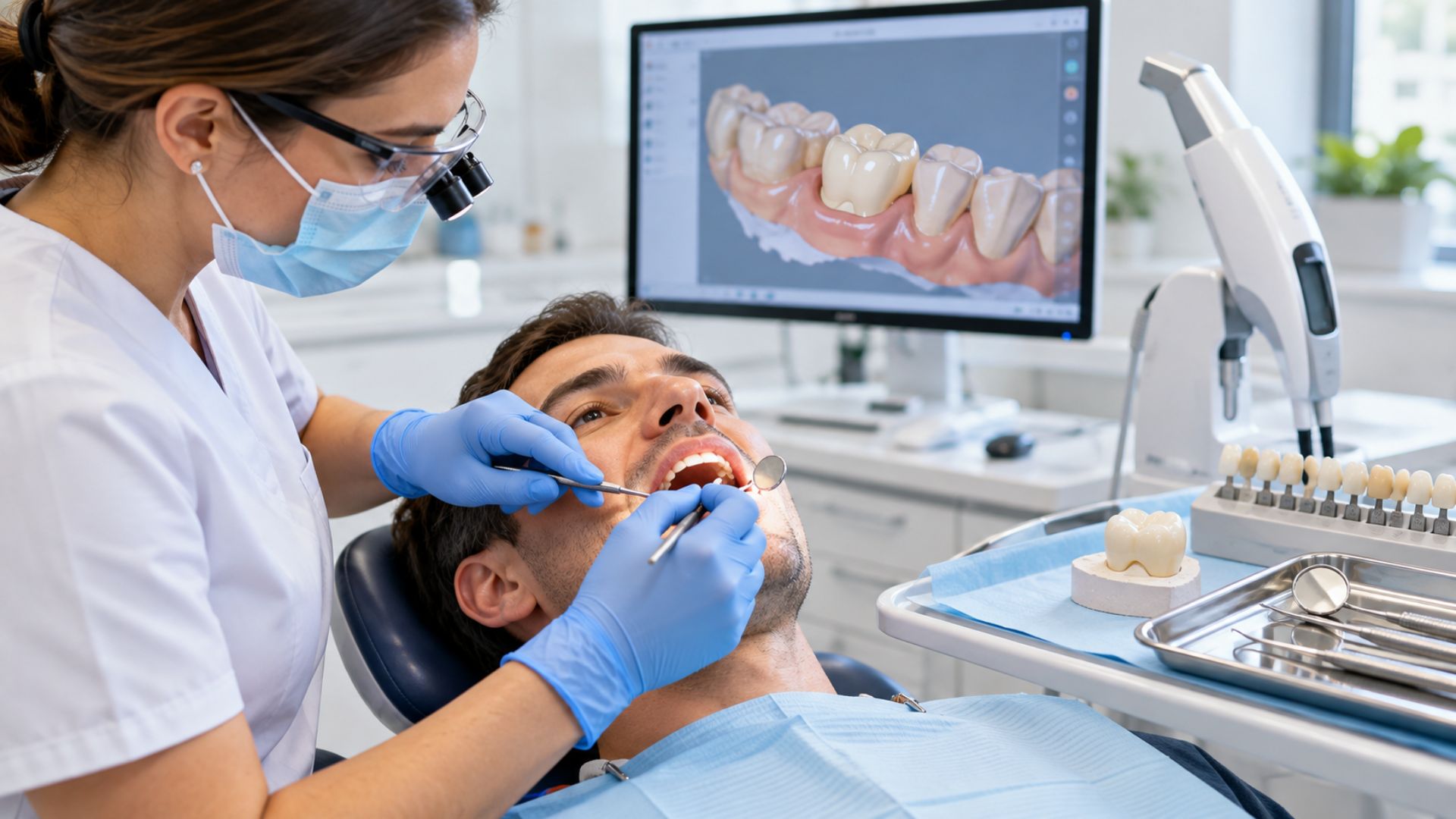

Getting composite veneers is more straightforward than most people expect. In a single visit, the dentist bonds tooth-coloured resin directly onto your teeth, sculpting and hardening it layer by layer, then shaping and polishing it to look natural. There is no dental lab, no temporary veneers, and usually no drilling or needles, because little or none of your natural tooth is removed. Most people walk out the same day with the finished result. Here is exactly how the appointment unfolds, and what it feels like along the way.
The appointment, step by step
The process runs in a clear sequence, whether you are having one tooth done or several.
Consultation and shade matching. First the dentist talks through what you want to change, checks your teeth are healthy enough, and picks a resin shade that matches or lightens your smile. This is where the plan is set, so it is worth being clear about the look you are after.
Preparing the tooth. The tooth is cleaned, and in most cases only the surface is lightly roughened, with little to no drilling. A mild etching gel is applied for a few seconds to help the resin grip, then rinsed off. This is why composite veneers are considered a conservative, largely reversible option.
Applying the bonding agent. A thin bonding liquid is painted on and set with a curing light. This is the glue layer that holds everything together.
Sculpting the composite. Now the artistry begins. The dentist applies the soft, putty-like resin directly onto the tooth and shapes it by hand, building the form, length, and contour of the new surface. For a natural look, it is usually built up in thin layers.
Curing each layer. A bright blue light hardens each layer of resin in seconds. The dentist adds and cures until the shape is right.
Shaping and refining. Once set, the dentist trims and refines the veneer with fine instruments, perfecting the edges and how it sits against the neighbouring teeth.
Polishing. Finally the veneer is polished to a smooth, natural shine so it blends in and resists staining.
Checking your bite. The dentist checks how your teeth meet and makes small adjustments so the veneers feel comfortable when you bite and chew.
Does it hurt, and will you need a needle?
For most people, having composite veneers placed is painless, and often no local anaesthetic is needed at all. Because the technique usually removes little or none of the tooth, there is nothing to numb. You will feel the dentist working on your teeth, the cool air, the curing light, and some gentle pressure, but not pain. If your teeth are sensitive or a little more preparation is needed, the dentist can numb the area, so tell them if you are worried. There is no drilling of the kind you would get with a filling.
How long it takes
Composite veneers are famously quick, which is a big part of their appeal. A single tooth typically takes around 30 to 60 minutes, and a set of several front teeth is usually done in one appointment of a couple of hours. Everything happens chairside, so there is no second visit and no waiting on a lab. You arrive with your natural teeth and leave with your new smile the same day. This is part of what sets composite apart, and if you are weighing it against porcelain, our overview of cosmetic and restorative options is a good place to start.
Why the dentist's skill matters
Here is the honest part worth knowing. Composite veneers are sculpted freehand, in the mouth, in real time. That makes the dentist an artist as much as a clinician, and the result depends heavily on their eye and technique. A skilled hand produces veneers that look completely natural, with lifelike shape and translucency, while a rushed job can look flat or bulky. It is entirely reasonable to ask to see before-and-after photos of the dentist's own composite work before you commit. This artistry is also why quotes vary, and it is worth choosing on skill, not just price.
What happens afterwards
Aftercare is easy but matters for how good they stay. You can usually eat and drink soon after, though it is wise to avoid deeply staining foods and drinks like coffee, red wine, and curry for the first 48 hours while the surface fully settles. After that, treat them like natural teeth: brush and floss normally, and go easy on habits that could chip them, such as biting nails or opening packets with your teeth. Composite does pick up stain over time, so keeping up good habits, along the lines of our tips for a bright smile between visits, keeps them looking fresh. With care, composite veneers typically last five to seven years, and a chip can often be repaired in a single quick visit rather than replacing the whole veneer. One tip: if you are also considering whitening, do it before your veneers are made, because the resin is matched to your current shade and will not lighten later, as our guide to whitening explains.
Frequently asked questions
Does getting composite veneers hurt? Usually not. Because little or none of the tooth is removed, most people need no anaesthetic and feel only gentle pressure, the curing light, and the dentist working on the surface. If your teeth are sensitive, the area can be numbed, so mention any concerns beforehand.
How long does it take to get composite veneers? Often just one visit. A single tooth takes around 30 to 60 minutes, and a set of front teeth is usually completed in one appointment of a couple of hours. There is no lab and no temporaries, so you leave with the finished result the same day.
Is any of my tooth removed for composite veneers? Usually very little, and sometimes none. The surface is lightly roughened and etched so the resin bonds, rather than drilled down. That conservative approach is why composite veneers are considered largely reversible compared with other options.