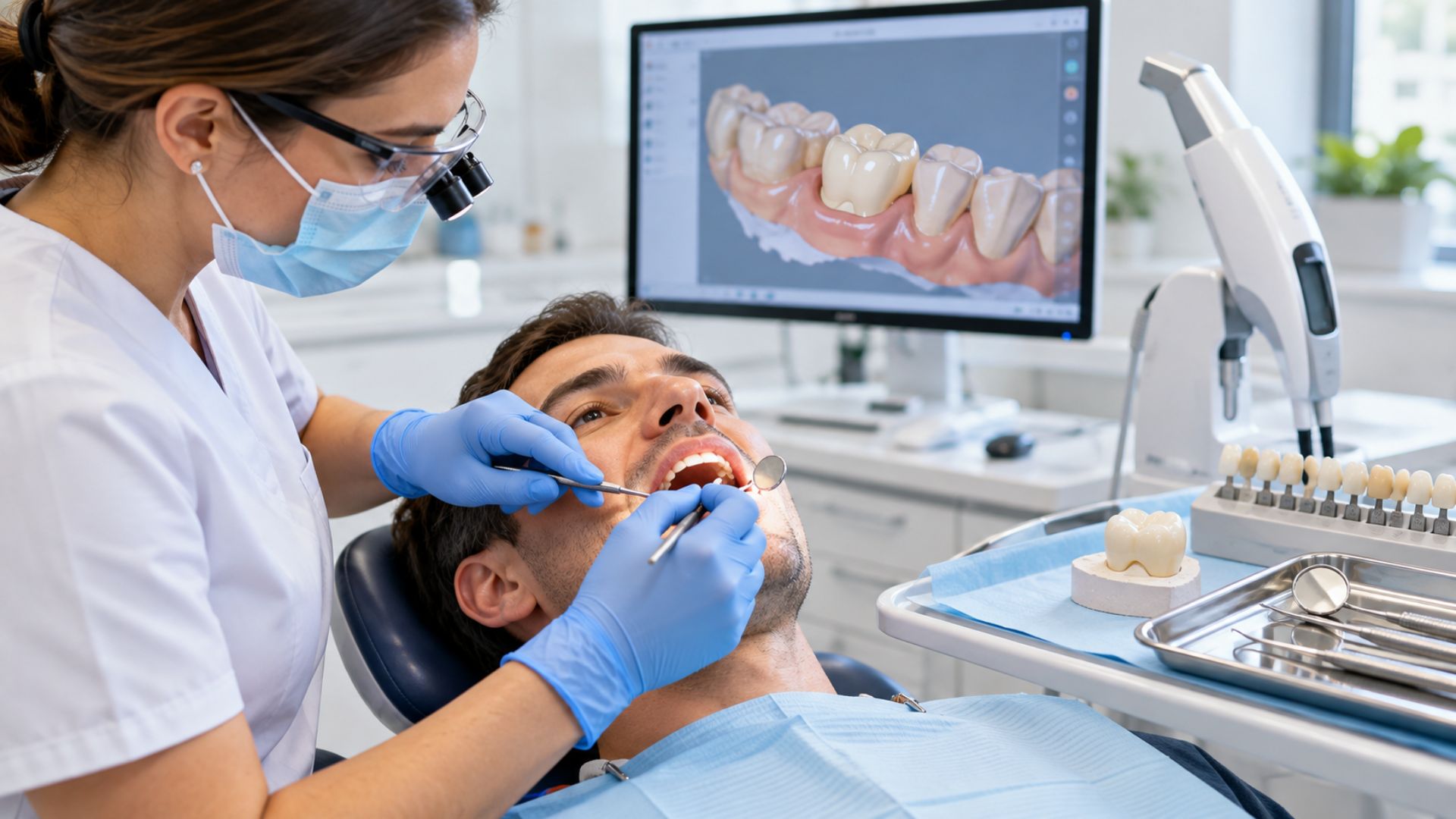
A porcelain crown is made in two main stages. First the dentist numbs and reshapes the tooth, records its exact shape with a scan or impression, and carefully matches the shade of the porcelain to your natural teeth. That information goes to a dental ceramist, who crafts the crown from porcelain over a week or two, while you wear a temporary. At the second visit the finished crown is checked for fit, colour, and bite, then bonded permanently in place. Some clinics can now design and mill a porcelain crown in a single visit. What sets porcelain apart from other crown materials is the attention paid to colour and light, which is why shade matching is such a big part of the process.
Why porcelain, specifically
Crowns can be made from metal, porcelain fused to metal, or all-ceramic porcelain, and the material changes both the look and the steps. Porcelain is chosen mainly because it mimics real teeth. Natural enamel is slightly translucent, letting light pass into the tooth, and good dental porcelain does the same, so the crown looks alive rather than flat. It also carries no dark metal edge that can show as a grey line near the gum over time.
That is why porcelain is the usual pick for front teeth and any tooth that shows when you smile. The honest trade-off: porcelain is prized for looks, while someone with very heavy grinding, or a back tooth taking huge bite forces, may be guided toward a tougher, high-strength ceramic like zirconia. The right choice depends on the tooth, and it is worth discussing before anything starts.
The process, stage by stage
Once you and the dentist have settled on a porcelain crown, the treatment runs through a clear sequence.
Numbing and assessment. The tooth and gum are numbed with local anaesthetic, so the rest is comfortable. If there is decay or an old, failing filling, it is cleaned out first, and the dentist checks there is enough healthy tooth to support a crown.
Shaping the tooth. The tooth is trimmed down on all sides to make room for the porcelain to fit over it like a cap. Porcelain needs a little more space than metal to look natural and stay strong, so the amount removed is judged to suit the material.
Recording the tooth. The dentist captures the prepared tooth with a digital scan or a putty impression, along with the shape of the teeth around it and how your bite meets, so the crown will sit naturally among them.
Matching the shade. Using a shade guide or a digital reading, the dentist records the exact colour, brightness, and character of your neighbouring teeth for the ceramist to follow. More on this below, because it is where porcelain earns its reputation.
Fitting a temporary. Because the porcelain crown is made off site, the dentist fits a temporary crown to protect the prepared tooth and keep your smile intact while you wait.
Crafting the crown. At the dental lab, a ceramist builds your crown from porcelain, layering and shading it to match the record provided, then firing and glazing it. This craftsmanship is a large part of why the result looks so lifelike, and why it takes a week or two.
Fitting and bonding. At the second visit, the temporary comes off and the porcelain crown is tried in. The dentist checks it fits precisely, matches your other teeth, and feels right when you bite, makes any fine adjustments, then bonds it permanently and polishes it.
How the shade is matched
This is the step that separates a porcelain crown from a purely functional one. Real teeth are not a single flat colour. They are lighter near the biting edge, warmer near the gum, faintly translucent at the tip, and carry tiny variations that make them look natural. To make a crown disappear into your smile, the dentist records all of that, not just a base shade.
One tip worth acting on: if you are planning to whiten your natural teeth, do it before the crown is made. Porcelain is colour-matched at the time it is crafted and will not lighten later with whitening, so whitening first means the crown is matched to your brighter shade. Our guide to whitening explains the timing.
Porcelain crowns made in a day
Not every porcelain crown means a lab and a temporary. Many clinics now use CEREC technology to design and mill a ceramic crown in-house. The tooth is prepared and scanned as usual, the crown is designed on a computer, and a milling machine carves it from a solid block of ceramic while you wait, ready to bond the same day. It removes the temporary and the second visit, and the result is a strong, natural-looking crown. The layered artistry of a hand-built lab crown can still have an edge for a highly visible front tooth, so which route suits you comes down to the tooth and what your clinic offers. Both approaches sit within the restorative and cosmetic care at Kaleen Family Dental Surgery.
How long a porcelain crown lasts, and caring for it
With good care, a porcelain crown typically lasts 10 to 15 years or more. The porcelain itself cannot decay, but the natural tooth underneath still can at the margin where the crown meets the gum, so this is where daily habits matter most. Brush twice a day, floss around the crown as you would a natural tooth, and keep up your regular check-ups so any problem at the edge is caught early. Porcelain resists staining well but can chip under sudden force, so avoid biting ice, pens, or fingernails, and mention it if you grind your teeth at night, since a night guard protects both the crown and your natural teeth. Looked after this way, alongside good preventive care, a porcelain crown keeps working like a natural tooth for years.
Frequently asked questions
How long does it take to get a porcelain crown? Traditionally two visits over a week or two: one to shape the tooth, record it, and fit a temporary, and a second to bond the finished crown once the lab has crafted it. If your clinic offers same-day porcelain crowns with in-clinic milling, it can be done in a single appointment with no temporary.
Do porcelain crowns look natural? Yes, that is their main strength. Good dental porcelain is slightly translucent like real enamel and is shade-matched to your neighbouring teeth, so a well-made porcelain crown is very hard to tell apart from a natural tooth, which is why it is the usual choice for teeth that show when you smile.
Is getting a porcelain crown painful? Not during treatment, because the tooth is numbed with local anaesthetic for both the preparation and the fitting. The tooth can feel sensitive to hot and cold for a few days afterwards, especially while you are in the temporary crown, and this usually settles on its own.