Most children's dental appointments are short, which usually surprises parents who are bracing for a battle. A routine check-up and clean for a child typically takes about twenty to thirty minutes, a first visit a little longer at around thirty to forty-five minutes while your child settles in, and a filling roughly twenty to forty minutes. Quick preventive treatments like fluoride or sealants add only a few minutes each. The honest answer is that it depends on what the appointment is for and on your child, because a happy, cooperative four-year-old and an anxious one will not take the same time even for the same treatment. The reassuring part is that dentists deliberately keep children's visits brief and gentle, working at the child's pace rather than rushing, so the time in the chair is usually far less daunting than parents expect.
It depends on the appointment
Children's dentistry is not a single procedure with a set length, so the time varies with what is being done. A simple look-and-clean is quick, while a filling takes a bit longer, and a first-ever visit is paced slowly on purpose. Thinking of it by appointment type, rather than as one block of time, gives a much clearer picture.
The other big factor is the child. Age, temperament, and how comfortable they feel all change the pace. A toddler having their first peek in the chair is handled very differently from a confident eight-year-old, and a good children's dentist adjusts accordingly. So the ranges below are typical guides, and the actual time flexes around your child on the day. The idea of care paced to every age is part of what a family dental practice is built around.
A check-up and clean is quick
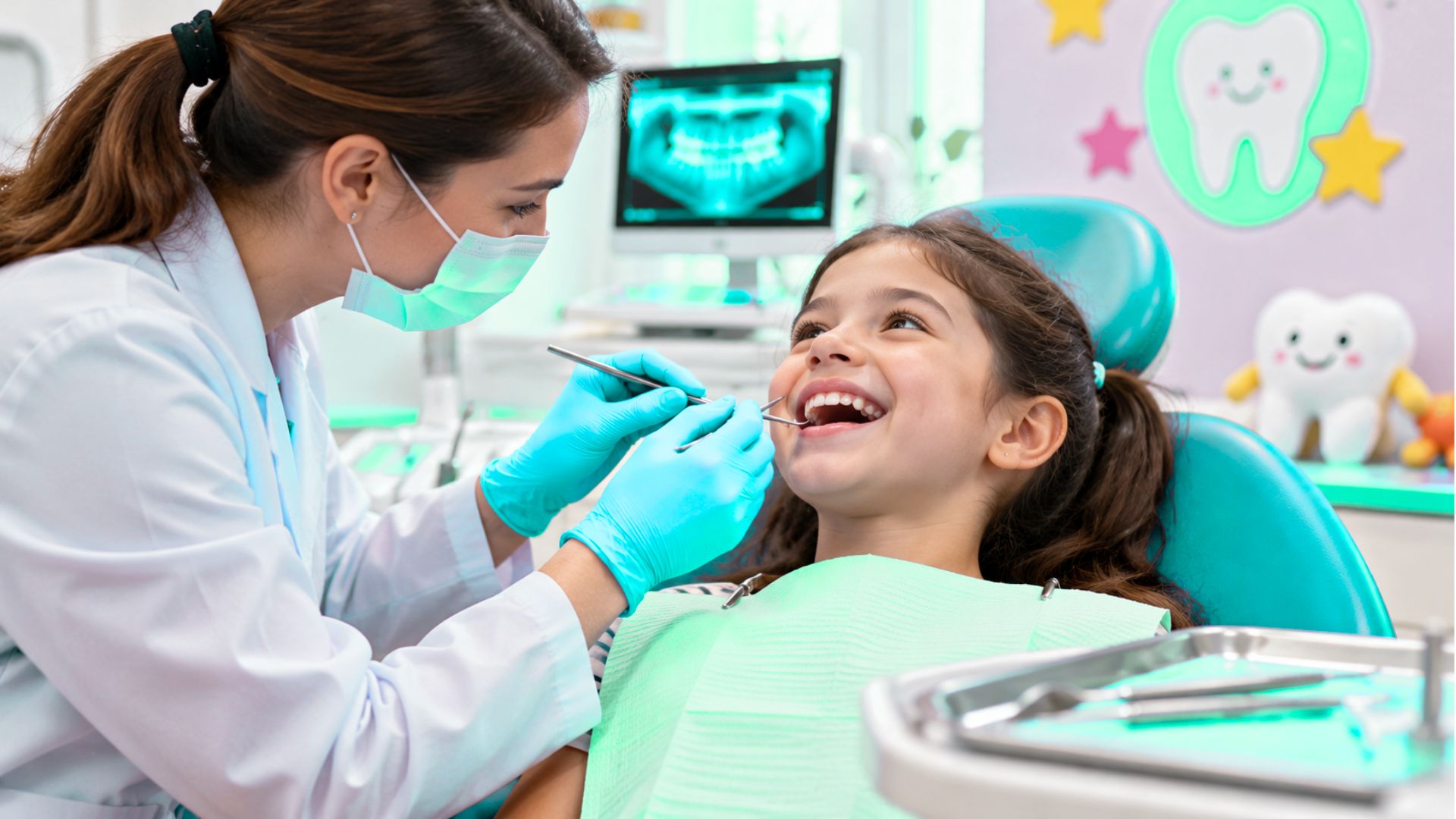
The most common children's appointment, a routine check-up and clean, is also one of the shortest, usually around twenty to thirty minutes. In that time the dentist counts and examines the teeth, checks that they are developing and coming through properly, looks for any early signs of decay, and gives them a gentle clean and polish. Often a fluoride treatment is added at the end.
It is a relaxed, low-key visit, and keeping it short is intentional, because a brief, positive check-up every six months builds a child who is comfortable at the dentist rather than fearful. These regular visits are also where small problems are caught early, while they are still quick and painless to deal with, which is the whole point of the preventive care offered through a general and preventive dental service.
The very first visit runs a little longer
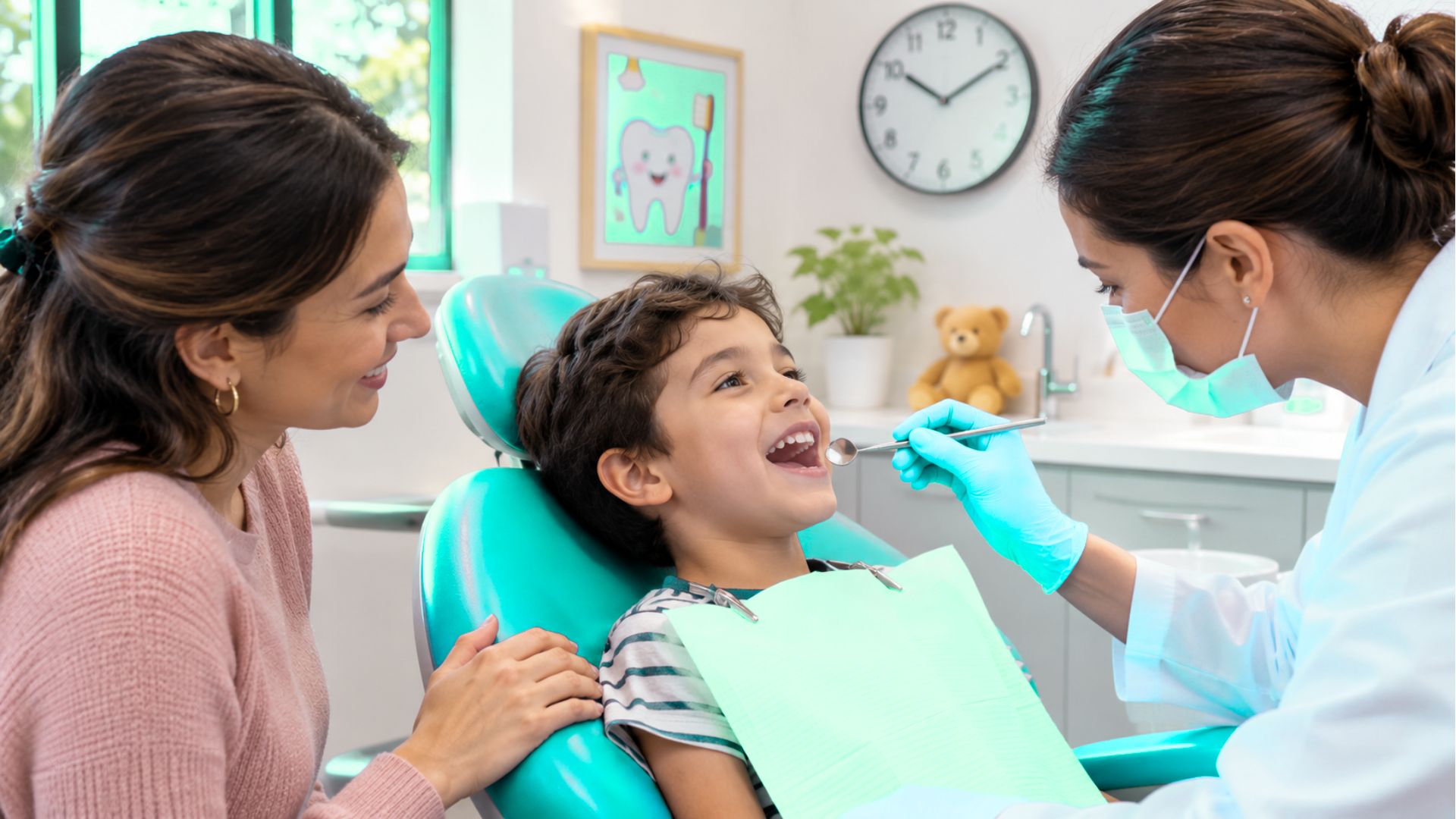
A child's first dental visit tends to take a touch longer than a regular check-up, often thirty to forty-five minutes, and that extra time is entirely about comfort rather than complex treatment. Australian guidance suggests a child should first see a dentist by around their first birthday or when their first tooth appears, and at that early age the appointment is wonderfully gentle. The dentist may simply let your child sit in the chair, have a look at the first few teeth, perhaps count them, and chat with you about brushing and diet.
The goal of a first visit is a happy introduction, not a full work-up, so it is unhurried by design. Letting a young child explore the room, meet the dentist, and leave with a good memory is worth far more than speed. A few simple steps beforehand make it smoother, which are gathered in the advice on making your child's first dental visit a positive experience, and the care of those early teeth is covered in the guide to baby teeth and their care.
Fluoride and fissure sealants
Two common preventive treatments for children are quick additions rather than appointments of their own. A fluoride treatment, where a protective varnish or gel is painted onto the teeth to strengthen them against decay, takes only a couple of minutes and is usually done at the end of a check-up. It is painless, and your child simply avoids eating or drinking for a short while afterwards.
Fissure sealants take a little longer but are still fast, generally about five to ten minutes per tooth. A sealant is a thin protective coating painted into the grooves of the back teeth to keep food and bacteria out, and applying one involves no drilling and no discomfort, just cleaning the tooth, painting on the sealant, and setting it with a light. Even a few sealed teeth are done well within a single short visit.
Fillings and other treatments
When a child does need a filling, it usually takes around twenty to forty minutes depending on the tooth and the child. The dentist numbs the area, gently removes the decay, and places a tooth-coloured filling, pacing everything to keep your child at ease. Children's fillings are often quicker than an adult's because baby teeth are smaller, though extra time is sometimes taken simply to keep a nervous child comfortable.
Other treatments vary with what is involved. Removing a loose or badly decayed baby tooth is often very quick, while something more involved may take longer or occasionally be split across visits so a child is not in the chair too long at once. For children who are especially anxious or need more extensive work, some practices offer calming options to help, and longer or more complex treatment is always planned with the child's comfort first. The key point is that dentists would rather keep each visit manageable than push a child through a marathon appointment.
Why children's appointments are kept short
There is a deliberate philosophy behind the brevity, and it helps to understand it. Young children have short attention spans and limited patience, so a dentist who drags out an appointment risks a distressed child and a negative association that can last for years. Keeping visits short, friendly, and successful does the opposite, building trust and making the next visit easier.
This is why a dentist may break treatment into smaller sessions, stop while a child is still coping well, or spend a first visit doing very little at all. It can feel like slow progress, but it is the approach most likely to raise a child who looks after their teeth and does not fear the dentist. Finding a practice that treats the whole family this way makes it easier, and the thinking behind a one-clinic-for-every-generation approach is built on exactly that.
What changes the length
A few things shift the time up or down on the day. Your child's age and stage matter, since a toddler is handled more slowly than a school-age child. Their temperament and anxiety make a real difference, as a calm child moves through treatment faster than an upset one, and no good dentist rushes a worried child. The treatment itself is the biggest factor, with a check-up far shorter than a filling. And cooperation on the day plays a part too, which is why preparing your child beforehand and staying relaxed yourself genuinely helps the appointment run smoothly.
None of these are things to stress about. A children's dentist expects the range of moods and ages that come through the door and plans the time accordingly. The best thing a parent can do is book regular short visits from an early age, so each one stays quick, familiar, and easy.
Frequently asked questions
How long is a child's first dental visit? Usually around thirty to forty-five minutes, a little longer than a routine check-up. Most of that time is about helping your child feel comfortable rather than doing treatment. The dentist often just examines the first teeth, counts them, and talks with you about brushing and diet, keeping the whole experience gentle and positive.
At what age should my child first see a dentist? Australian guidance recommends a first dental visit by around twelve months of age, or when the first tooth appears, whichever comes first. These early visits are short and gentle, and they help your child get used to the dentist while letting any issues be spotted early. Regular visits every six months usually follow from there.
How long does a filling take for a child? Generally about twenty to forty minutes, depending on the tooth and how settled your child is. The dentist numbs the area, removes the decay, and places a tooth-coloured filling, working at a pace that keeps your child comfortable. Children's fillings are often a little quicker than an adult's because baby teeth are smaller.