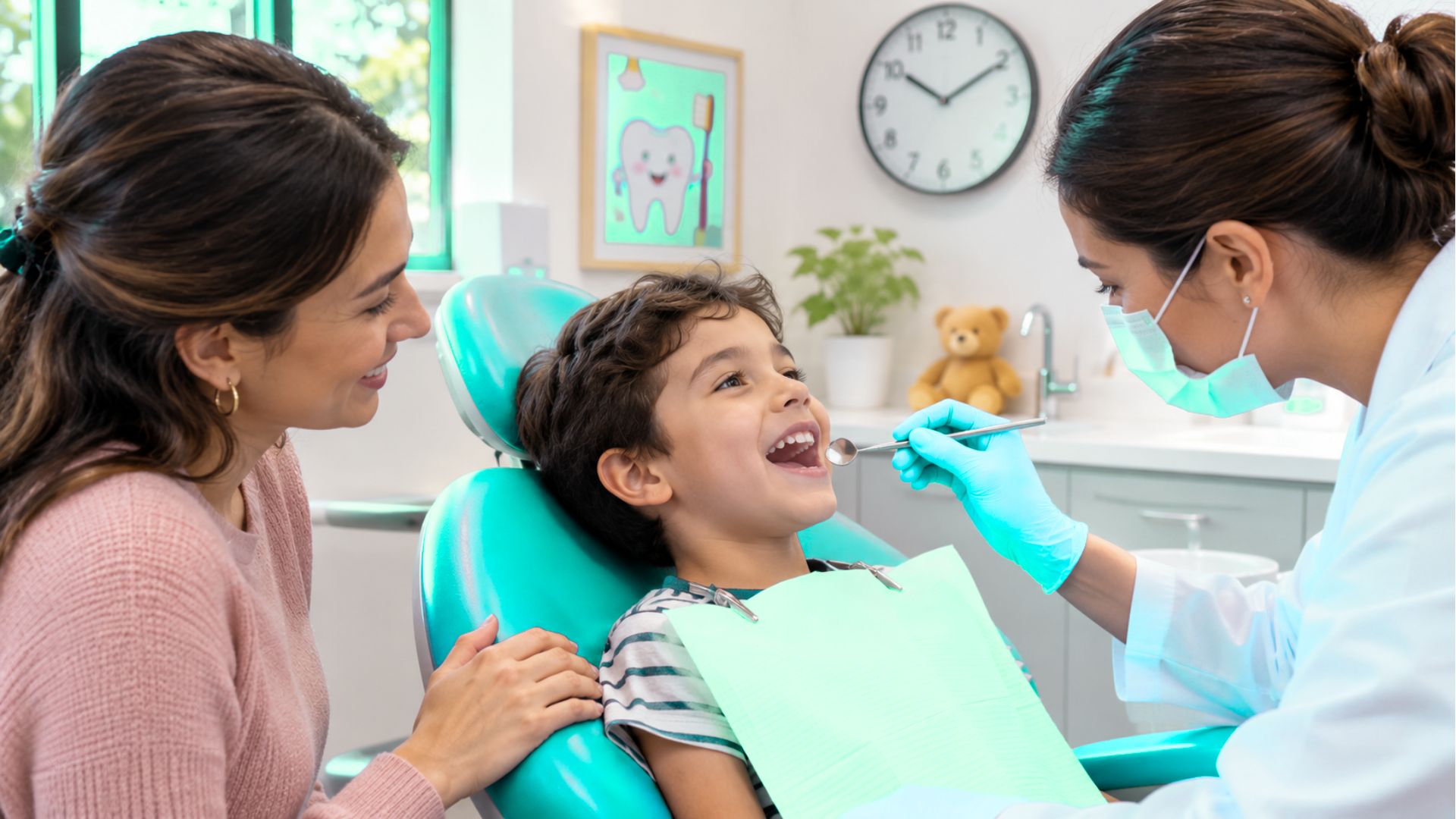
A children's dental visit is a gentle, friendly experience built around keeping your child comfortable, and it is usually far calmer than parents expect. In a typical appointment the dentist welcomes your child, lets them settle into the chair, examines their teeth and gums, gives them a clean and polish, and often paints on a protective fluoride coating. Along the way the dentist explains each step in simple words, checks that the teeth and jaw are developing well, and finishes with a chat with you about brushing, diet, and anything to watch. If a problem like decay is found, it is treated gently, sometimes at a later visit so your child is never overwhelmed. The whole approach is designed to build a positive relationship with the dentist, because a child who feels safe becomes an adult who looks after their teeth. This walkthrough covers what each part of the visit actually involves.
Before you arrive
What happens at the appointment starts a little before you get there, with some simple preparation that makes everything smoother. Talking about the visit in a calm, upbeat way helps, as does avoiding scary words and letting your child know they are just going to have their teeth counted and cleaned. Timing the appointment for when your child is usually rested and fed, rather than tired or hungry, makes a real difference to how the visit goes.
It also helps to bring along anything comforting, such as a favourite toy, and to have any questions ready for the dentist. A relaxed parent tends to mean a relaxed child, since little ones pick up on nerves, so staying easy-going yourself is one of the most useful things you can do. More practical ways to set the day up well are gathered in the advice on making a child's first dental visit a positive experience.
The welcome and settling in
The appointment itself usually begins not with treatment but with a friendly hello. A good children's dentist takes a moment to greet your child at their level, chat about something fun, and let them get used to the room, the chair, and the gentle whir of the equipment. For a young child, simply sitting in the big chair that goes up and down can be the most exciting part.
This settling-in time matters, because a child who feels at ease will let the dentist do far more than one who is rushed. You are usually welcome to stay close, and with very young children the dentist may even do the first look while your child sits on your lap. Nothing is forced, and the pace is set by how comfortable your child is rather than by a clock.
The examination, tooth by tooth
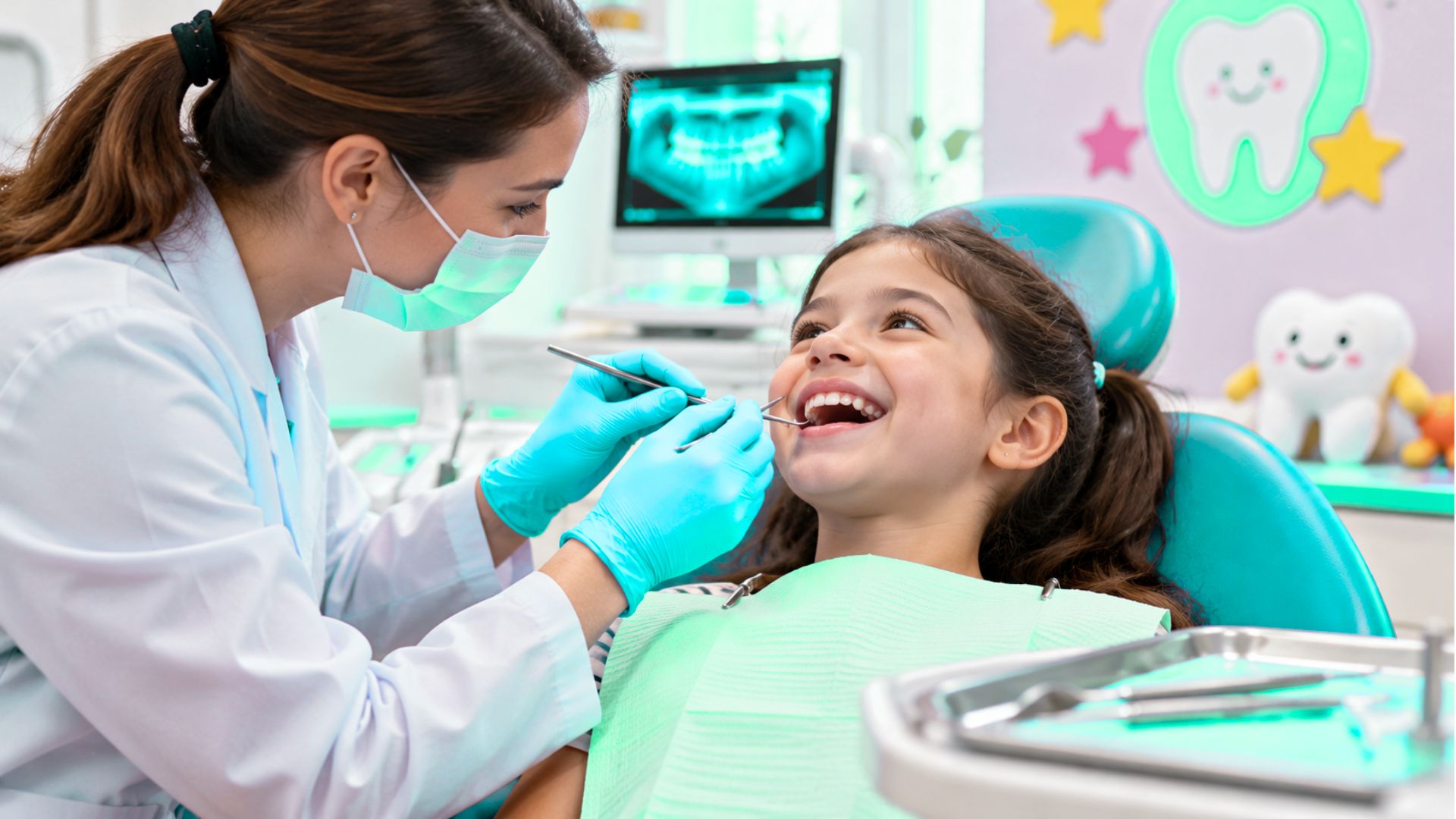
Once your child is settled, the dentist examines their mouth, and this is the heart of the visit. Using a small mirror and a good light, the dentist counts the teeth, which children often enjoy, and checks each one for any early signs of decay or weakness. They also look at how the teeth are coming through, whether the bite is developing normally, and how the gums and soft tissues look.
For a child, this part is painless and can even be playful, with the dentist naming teeth or making a game of opening wide. The examination is where small issues are spotted early, while they are still simple to deal with, which is the real value of regular visits. Catching a tiny spot of decay now, before it becomes a toothache, is exactly what the preventive care in a general and preventive dental service is for. On some visits the dentist may suggest an x-ray to see between teeth or check developing adult teeth, which is covered in the questions below.
The clean and polish
After the examination, the dentist or hygienist usually gives the teeth a gentle clean. For children this is mild and comfortable, removing any soft plaque and surface staining and then polishing the teeth smooth with a soft rotating cup and a flavoured paste that many kids rather like. It tickles more than anything, and there is nothing sharp or frightening about it.
The clean does two jobs at once. It freshens the teeth and lifts build-up that brushing at home may have missed, and it gives the dentist a chance to show your child which spots they are missing when they brush. Turning the clean into a quick lesson, pointing out where plaque was hiding, helps your child brush better at home, and it keeps the appointment feeling collaborative rather than clinical. The routine check-up and clean that most children have every six months is explained further on the check-up and clean page.
Fluoride and sealants to prevent decay
A big part of children's dentistry is preventing problems before they start, and two quick treatments often feature. The first is a fluoride application, where the dentist paints a protective varnish or gel onto the teeth to strengthen the enamel against decay. It takes only a minute or two, tastes mild, and your child simply avoids eating or drinking for a short while afterwards. Fluoride is one of the simplest and most effective ways to protect young teeth.
The second is fissure sealants, usually offered once the back adult teeth come through at around six and twelve years of age. A sealant is a thin protective coating painted into the deep grooves of the molars, where food and bacteria love to hide, and it seals them off so decay cannot take hold. Applying one involves no drilling and no discomfort, just cleaning the tooth, painting on the sealant, and setting it with a light. More on these protective coatings sits on the fissure sealants page.
The tell, show and do approach
One thing that quietly shapes the whole visit is a technique good children's dentists use called tell, show, do. Rather than springing anything on a child, the dentist first tells them what is going to happen in simple, friendly words, then shows them the instrument or demonstrates on a finger or a toy, and only then does the actual step. A polishing tool might become a tooth tickler, and the suction straw a thirsty elephant.
This approach takes the fear of the unknown out of the appointment, which is where most dental anxiety in children comes from. By turning each step into something familiar and even fun, the dentist builds trust that carries into future visits. It is also why a children's appointment can look unhurried, because that small investment of time in explaining and reassuring is what makes the whole experience positive and sets your child up to be comfortable at the dentist for life.
A chat with you about home care
Children's dentistry is as much about guiding parents as treating teeth, so a good portion of the visit involves the dentist talking with you. They will often cover how your child's teeth are developing, whether their brushing is doing the job, and any habits worth addressing, from thumb-sucking to too many sugary drinks. This is your chance to ask anything, so it helps to have your questions ready.
The advice is practical and tailored to your child's age and stage. For a toddler it might be about helping them brush and easing off the bottle, while for an older child it could be about diet, sports mouthguards, or caring for new adult teeth. Looking after those early teeth matters more than many parents realise, and the thinking behind it is set out in the guide to baby teeth and their care. The broader idea of care that adapts as your child grows runs through a family dental approach.
If a tooth needs treatment
Most children's visits are just a check, clean, and prevention, but sometimes the dentist finds something that needs treating, such as a cavity. If so, it is handled with the same gentle, child-paced approach. For a small filling, the dentist numbs the area, removes the decay, and places a tooth-coloured filling, explaining each step and keeping your child at ease throughout.
Importantly, treatment is never rushed or forced. If a child is tired or has had enough, the dentist may do a little now and the rest at another visit, rather than pushing through a long appointment and risking a bad memory. For more anxious children, or more involved work, calming options may be available to keep things comfortable. The guiding principle is always to treat the tooth while protecting the child's trust, because a frightened child today can become an adult who avoids the dentist for decades.
When a child isn't up for it
It is worth being honest that not every visit goes to plan, and that is completely normal. Some days a child is shy, tired, or simply not in the mood, and a toddler may cry or refuse to open wide. A good dentist takes this in their stride and does not force anything, because a forced appointment teaches a child that the dentist is scary, which is exactly what everyone wants to avoid.
On a difficult day, the dentist might achieve very little, perhaps just a quick look or even only letting your child sit in the chair and leave happy, and that still counts as a success. Each visit builds on the last, and a child who leaves with a good feeling will cooperate more next time. So if the first appointment or two seem to accomplish little, that is often the plan working rather than failing, and it is nothing to feel embarrassed about.
Leaving on a good note
A children's visit almost always ends on a positive, with plenty of praise and often a small reward like a sticker or a little toothbrush. This happy finish is deliberate, because the last thing a child remembers shapes how they feel about coming back. Walking out proud of themselves, rather than relieved it is over, is exactly the outcome a good children's dentist is aiming for.
Before you leave, the dentist usually confirms when to come back, which for most children is a check-up every six months. These regular, low-key visits keep teeth healthy, catch any issues early, and keep your child comfortable in the chair, and finding a practice that cares for the whole family makes the habit easy to keep, which is part of the thinking behind a one-clinic-for-every-generation approach. For many families, the cost of children's visits is also eased by funding such as the Child Dental Benefits Schedule, which is explained in the overview of dental payment options.
Frequently asked questions
What happens at a child's first dental visit? The first visit is gentle and mostly about comfort rather than treatment. The dentist greets your child, lets them get used to the chair, has a look at the first teeth, perhaps counts them, and talks with you about brushing and diet. For very young children it can be as simple as a quick check while they sit on your lap, with the aim of making a happy first impression.
Will my child need x-rays? Not at every visit, and only when there is a reason, such as checking between teeth that touch or seeing how adult teeth are developing. Children's x-rays use very low levels of radiation and are taken with protective precautions, so they are safe when needed. The dentist will always explain why an x-ray is being suggested before taking one.
Does a children's dental check-up hurt? No, a routine check-up and clean is painless. The examination, counting, and polishing are gentle and often feel ticklish rather than uncomfortable, and fluoride is simply painted on. If any treatment like a filling is needed, the area is numbed first so your child stays comfortable, and the dentist works at a pace that suits them.
How often should my child see the dentist? Most children benefit from a check-up every six months, the same as adults, though your dentist may suggest a different interval based on your child's needs. Regular visits keep teeth healthy, catch any problems early while they are easy to fix, and keep your child relaxed and familiar with the dentist over time.
What if my child is scared of the dentist? That is very common and nothing to worry about. Children's dentists are experienced with nervous little ones and use gentle, reassuring techniques to build trust, never forcing treatment. Preparing your child calmly beforehand, staying relaxed yourself, and booking regular short visits from an early age all help fear fade, and most children settle well over a few appointments.