If you've recently lost a tooth or are facing an extraction the number of replacement options can feel overwhelming. Dental implants are the most talked-about choice, but they're not right for everyone and they're certainly not the only option. At Kaleen Family Dental Surgery, we believe the best treatment is the one that suits your clinical situation, your lifestyle, and your budget not the most expensive one on the list. This honest comparison of dental implants, bridges, and dentures for Canberra patients is designed to help you understand the trade-offs before your consultation.
The Three Main Options for Replacing Missing Teeth
Dental Implants — The Permanent Root Replacement
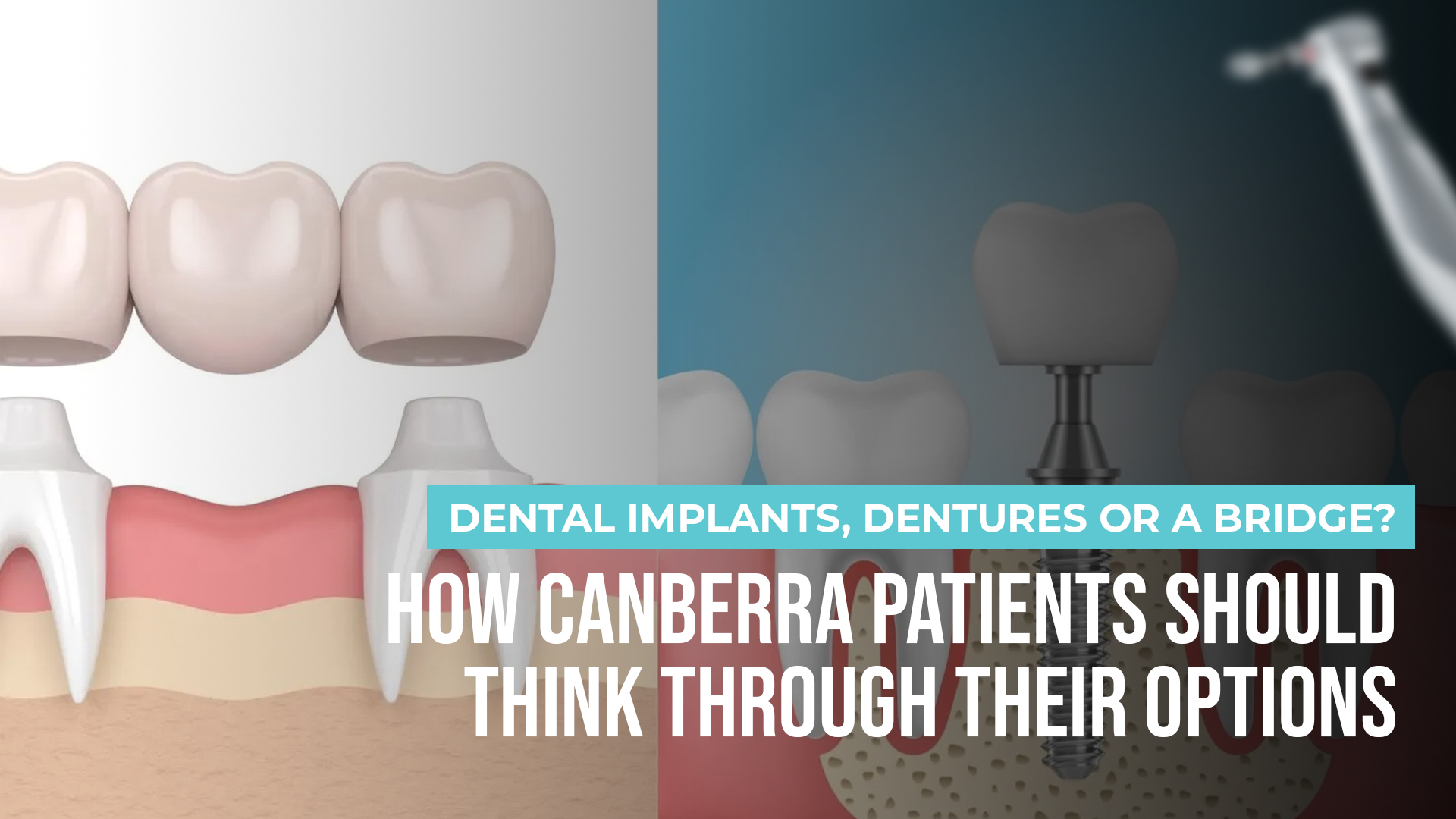
A dental implant is a titanium post that is surgically placed into the jawbone, replicating the function of a natural tooth root. Once the implant integrates with the bone a process called osseointegration that takes 3–6 months a custom crown is placed on top. The result looks, feels, and functions like a natural tooth, and critically, it stimulates the jawbone to prevent the bone loss that occurs after tooth extraction.
Implants are standalone they don't involve or affect neighbouring teeth. They can be cleaned just like natural teeth. With proper care, they can last decades; many implants remain functional for 20–25 years or longer. The limitation is cost and suitability: bone density, general health, and surgical candidacy all need assessment, and the process takes several months from placement to final crown.
Dental Bridge — A Fixed Option Without Surgery
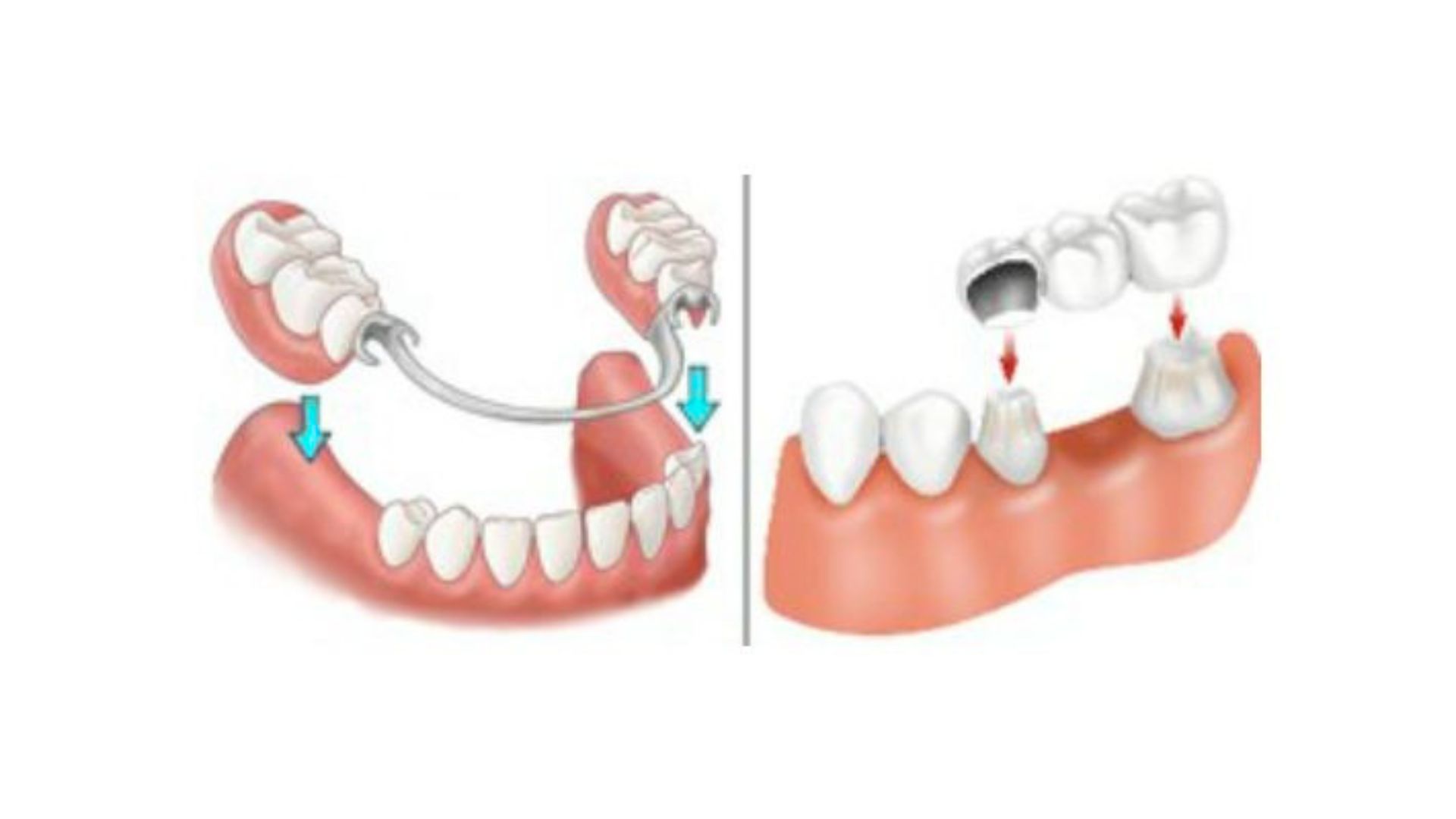
A dental bridge literally bridges the gap created by a missing tooth, using the teeth on either side as anchors. Crowns are placed on the anchor teeth, with an artificial tooth (called a pontic) suspended between them. The result is fixed in place you can't remove it and looks natural. The process takes two appointments and doesn't involve surgery.
The significant downside of a bridge is that the two healthy anchor teeth must be permanently reduced (ground down) to fit crowns. This irreversibly compromises healthy tooth structure. If the bridge fails later which may happen over 10–15 years those teeth are now more vulnerable. Bridges also don't prevent bone loss in the gap beneath the pontic.
Dentures — Removable and Versatile
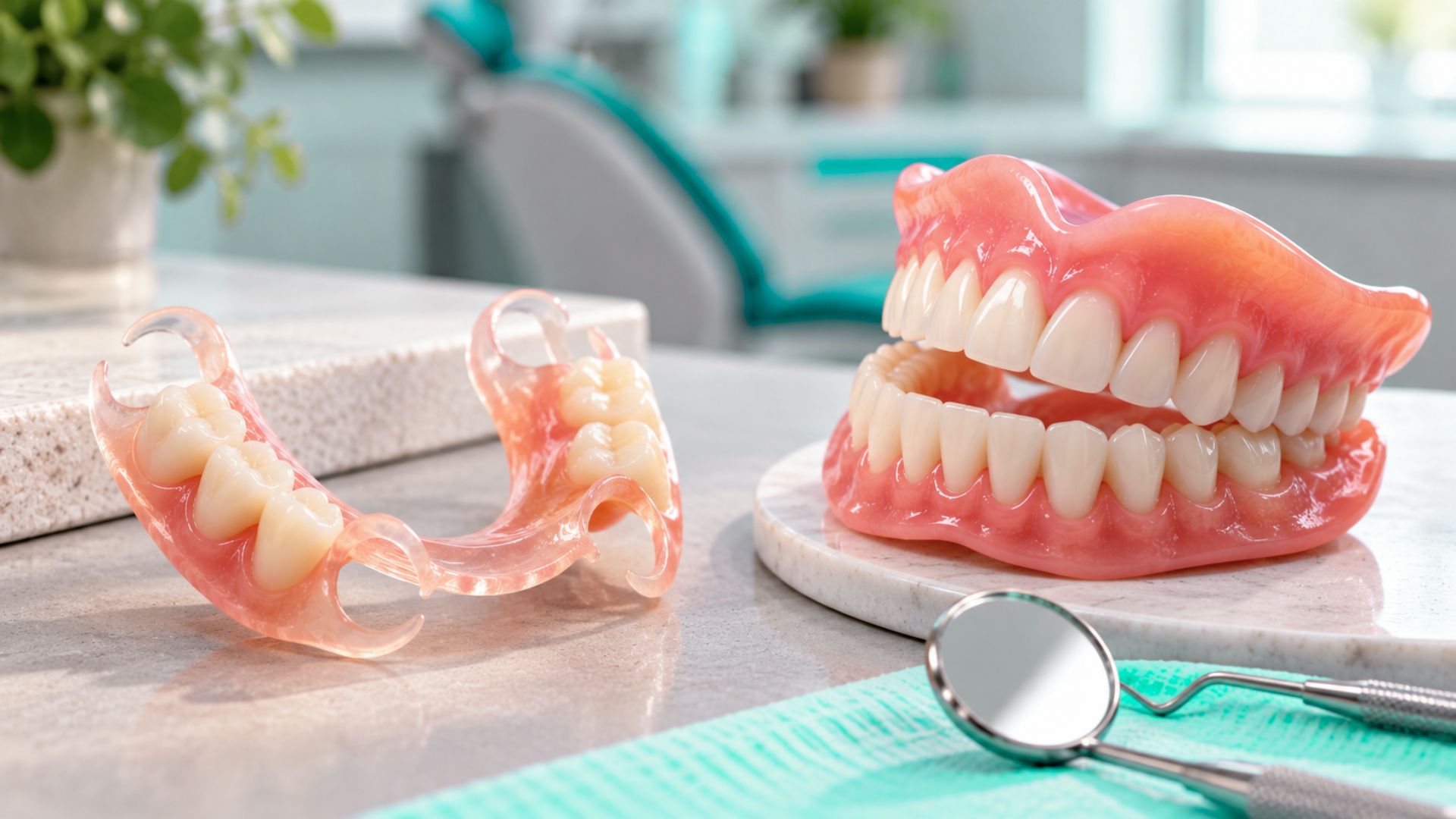
Dentures whether full dentures for patients missing all teeth in an arch, or partial dentures replacing several missing teeth are removable prosthetics. Modern dentures are more comfortable and natural-looking than their predecessors, but they come with well-known limitations: they can move when chewing, they require adhesives in many cases, they need to be removed for cleaning, and they accelerate bone resorption in the jaw over time.
Partial dentures are typically the most affordable tooth replacement option in the short term. Full dentures are often used as a transitional solution while a patient considers implant-supported overdentures, which attach to implants for significantly improved stability.
The Real Cost Comparison Over Time
When patients compare costs and see that a dental implant costs $3,300–$6,500 versus a denture at perhaps $1,500–$2,500, the denture looks significantly more affordable. Over a 20-year horizon, however, the picture changes. Dentures typically require relining every 2–3 years and full replacement every 5–8 years. Ongoing adhesive costs add up. Bone loss beneath a denture can eventually complicate future implant placement if the patient later changes their mind.
A well-placed implant, by contrast, may require only routine dental care for 15–20 years or more. A bridge, reasonably maintained, may last 10–15 years before needing replacement and the anchor teeth beneath it may need further restoration at that point. The long-term cost equation often favours implants, though the upfront cost remains a genuine barrier that we work with patients to address.
Clinical Factors That Influence Your Options
Not every patient is a straightforward implant candidate. Bone density below the gap site is assessed before implant placement insufficient bone may require a grafting procedure first, which adds time and cost. Uncontrolled diabetes, active smoking, and certain medications can affect healing and implant integration success rates. These are factors we assess thoroughly at consultation.
For patients who genuinely are not implant candidates, a well-designed bridge or high-quality partial denture is a clinically sound choice not a compromise. Our goal is to give you the best option for your actual situation, not to sell you the most expensive treatment.
Implant-Supported Overdentures — The Best of Both
For patients who are missing most or all teeth in an arch, implant-supported overdentures offer a compelling middle ground. Two to four implants are placed in the arch, and a denture is designed to clip onto them. The result is far more stable than a conventional denture no adhesives needed, significantly better chewing efficiency, and the implants preserve jawbone in the areas where they're placed.
All-on-4 implant systems use four strategically angled implants to support a full arch prosthesis, often in a single surgical session. This approach has transformed outcomes for patients who thought they'd be managing conventional dentures for the rest of their lives.
Making Your Decision at Kaleen Family Dental
Your consultation at our Kaleen dental clinic begins with a clinical examination that includes an assessment of bone quality and gum health at the gap site, a review of your medical history, and an honest discussion of which options are suitable for your situation. You'll leave with a written treatment plan and fee estimate for each viable option so you can compare them clearly.
Many patients come in thinking they know which option they want, and the consultation either confirms that or reveals a better path. Either way, there's no pressure to decide at the appointment.
Frequently Asked Questions — Tooth Replacement Options in Canberra
Q: 1 How long does a dental implant take from start to finish?
The full process from implant placement to final crown typically takes 4–8 months. The implant post needs 3–6 months to integrate with the jawbone before the crown is placed. Where bone grafting is needed first, this adds time. Some systems allow a temporary crown to be placed on the day of implant surgery, though this is not suitable for all cases.
Q: 2 Can I get a dental implant if I've had a tooth missing for years?
Yes, in many cases though bone loss over time may mean a grafting procedure is needed before placement. The longer a tooth has been absent, the more resorption has typically occurred beneath it. This is assessed via imaging at your consultation and does not necessarily prevent implant placement.
Q: 3 What is the success rate of dental implants?
When placed in appropriate candidates by experienced practitioners, dental implant success rates are consistently reported above 95% at ten years in the clinical literature. Smoking, uncontrolled diabetes, and poor oral hygiene are the most significant factors associated with implant failure.
Q: 4 Are there affordable dental implant options in Canberra?
Kaleen Family Dental offers flexible payment options including Afterpay for eligible treatments, and we accept health fund major dental rebates. A single implant consultation will give you exact costs for your specific case so you can plan accordingly. Staged treatment placing the implant now and adding the crown later is another strategy for spreading costs.
Choosing how to replace a missing tooth is a significant decision. Kaleen Family Dental Surgery will give you the honest, clinical advice you need to make it well. Book a tooth replacement consultation with us call (02) 6241 5941 or book online. We'll assess your situation, explain every option, and provide a written fee estimate for each. Monday to Friday 8am–5pm, Saturday 8am–1pm.