The gum line frames every smile. When it begins to migrate away from the teeth leaving longer-looking crowns, exposed yellowish root surfaces, and often a persistent cold sensitivity the change is visible but the cause is not. That gap between what patients see and what is actually happening beneath the gum tissue is where treatment decisions go wrong.
Treating the appearance without understanding the underlying process rarely produces a lasting result. This guide covers the full clinical picture of gum line recession: what is driving it, what the symptoms indicate about how far it has progressed, and what treatment including gum graft surgery can realistically achieve. Written by the team at Kaleen Family Dental Surgery in north Canberra.
What Is Actually Happening When the Gum Line Recedes?
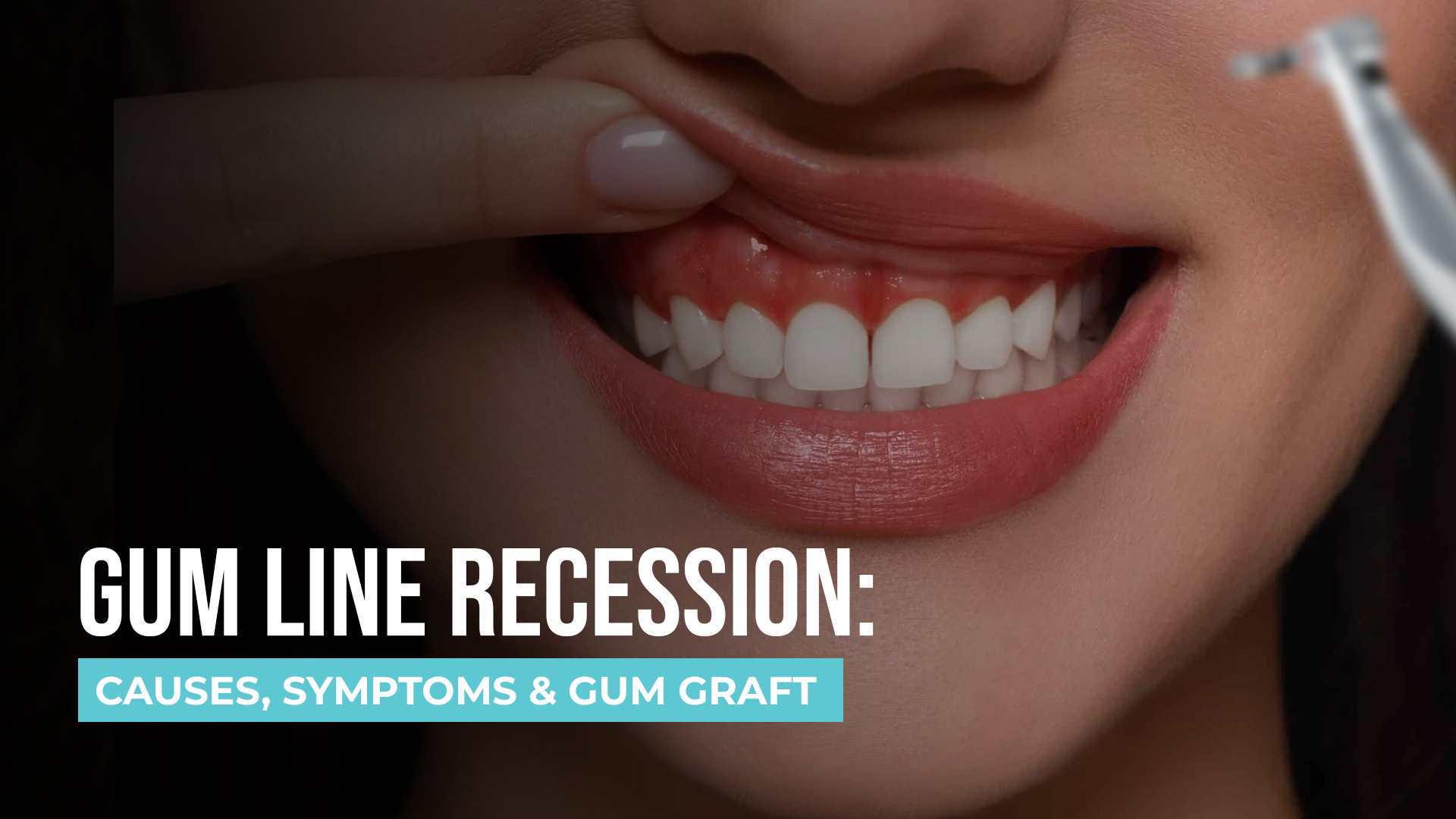
Gum line recession occurs when the gingival margin the soft tissue edge that seals around each tooth — migrates apically, exposing root surface that is normally protected beneath it. This is not simply a surface phenomenon.
The gum line's position is directly influenced by two deeper structures: the alveolar bone that supports each tooth root, and the periodontal ligament fibres that connect root to bone. When bone is lost through infection or chronic inflammation, the gum follows. When the gum tissue itself is damaged or thinned by mechanical forces most commonly aggressive brushing the margin retreats without necessarily involving bone loss. Both processes produce visible recession, but the mechanisms are different, the risk factors differ, and the treatment pathways differ.
Understanding which mechanism is at work requires clinical assessment, not guesswork. A full dental check-up and periodontal examination at Kaleen Family Dental Surgery includes probing around every tooth, charting the gum margin position against a fixed reference, and determining whether pocket depths, bleeding, or bone changes on X-ray are present the findings that distinguish periodontal disease from mechanical recession.
How Can You Tell What Type of Gum Line Recession You Have?
The pattern of recession where it appears, how many teeth are affected, and what the clinical probing reveals is the primary diagnostic tool. Two patterns point in different directions.
Localised Recession: Usually a Mechanical Cause
Recession affecting a single tooth on its outer surface, with minimal pocket depth on probing and no bone loss on X-ray, is typically mechanical in origin. The most common causes are aggressive toothbrushing with a medium or hard-bristled brush, a lip or tongue piercing in direct contact with the gum, or labial orthodontic tooth movement beyond the alveolar envelope.
The tooth itself is usually sound, the adjacent teeth are often unaffected, and the recession is frequently more pronounced on the side of the patient's dominant hand a characteristic pattern of brush-induced abrasion. Patients who have recently completed or are undergoing orthodontic treatment should be assessed for recession at treatment completion, as tooth movement outside the bony envelope is a recognised risk factor.
Generalised Recession: A Sign of Active Periodontal Disease
Recession affecting multiple teeth across both upper and lower arches, accompanied by bleeding on probing, deeper pocket depths, and visible bone loss on X-ray, presents a very different picture. This is the pattern associated with chronic periodontitis a bacterial infection of the supporting structures of the teeth that destroys the periodontal ligament and alveolar bone progressively if left untreated. The recession is a consequence of bone loss, not its cause. Our dedicated gum disease treatment service explains in detail how periodontitis is staged and managed at Kaleen Family Dental Surgery, including what non-surgical and surgical options are available.
Thin Gum Biotype: The Hidden Risk Factor
Thin gum biotype is a genetic characteristic where the tissue covering the outer root surface is naturally narrow and translucent rather than wide and opaque. Patients with thin biotype are more susceptible to recession from either cause their tissue has lower mechanical resistance and tolerates inflammation less well than thicker tissue. It is identified at examination by visual assessment and probing, and it is an important factor in both treatment planning and surgical decision-making.
How Is Gum Line Recession Treated Without Surgery?
Non-surgical management is the first-line response to gum line recession in most presentations. The specific approach depends on what is causing the recession and the two causes require quite different interventions.
Treating Periodontal Disease First
Where gum disease is driving the recession, professional periodontal treatment is the essential foundation. Scaling and root planing a thorough removal of bacterial deposits from above and below the gumline, including from the root surface itself eliminates the source of infection and creates conditions in which the remaining supporting structures can stabilise. This is typically performed under local anaesthetic over one or more appointments depending on severity. At Kaleen Family Dental Surgery, we also offer EMS Airflow Guided Biofilm Therapy (GBT), which uses a warm water, air, and fine powder system to remove biofilm and calculus with significantly less mechanical trauma than conventional scaling — making it particularly appropriate for patients with sensitive root surfaces.
In selected cases, laser-assisted periodontal treatment is used as an adjunct to decontaminate periodontal pockets and support tissue healing. This will be discussed where relevant at your assessment.
Correcting Brush Technique for Mechanical Recession
For recession caused by aggressive brushing, the intervention is immediate and effective: a transition to a soft-bristled toothbrush and adoption of a gentle modified Bass technique, 45-degree angled bristles at the gumline, gentle circular motions, no horizontal scrubbing. Bacterial biofilm is disrupted by bristle motion, not by pressure, so nothing is lost in cleaning effectiveness. An electric toothbrush with a built-in pressure sensor removes the variable of unconscious applied force entirely and is our preferred recommendation for patients with a history of brush-induced recession.
Supporting Measures for Exposed Root Surfaces
Regardless of the cause of recession, exposed root surfaces benefit from supportive treatment. Desensitising agents applied in-clinic or used at home in the form of targeted toothpastes reduce sensitivity by occluding the dentinal tubules. Fluoride varnish applied professionally strengthens root cementum and reduces its susceptibility to decay. These measures improve patient comfort and protect the exposed surface but they are adjuncts to treatment, not substitutes for it.
What Happens If Gum Line Recession Is Left Untreated?
Untreated gum line recession does not stabilise spontaneously. In the absence of cause management, it continues. Bone loss associated with periodontal disease progresses. Brush-induced abrasion continues each time the patient uses the same technique with the same brush. Root surfaces become more exposed, decay risk accumulates, and the surgical complexity of eventual treatment increases.
The financial reality of delayed treatment is significant. Scaling and root planing costs a fraction of gum graft surgery. Gum graft surgery costs a fraction of tooth replacement. This is precisely the logic behind preventive dental care at Kaleen Family Dental catching pathology when it is cheap and reversible, not when it has progressed to requiring surgery or extraction.
For families with multiple members including children our family dentistry approach at Kaleen means gum health is tracked longitudinally across every member. Children with thin gum biotype are identified early, brushing technique is assessed and corrected, and the foundation for lifelong gum health is established before problems begin.
Frequently Asked Questions About Gum Line Recession
What causes gum line recession in young people?
Gum line recession in patients under 35 is most commonly caused by aggressive toothbrushing, thin gum biotype, or a combination of both. These two factors interact: thin tissue tolerates brush trauma far less well than thick tissue, so the same brushing habit that causes no recession in one person causes significant recession in another.
Does gum graft surgery hurt?
The surgery itself is performed under local anaesthetic and should not be painful during the procedure. Post-operative discomfort is primarily from the palatal donor site, typically more significant than at the graft site itself, and is managed with prescribed pain relief and a soft diet.
How long does it take to recover from gum graft surgery?
Most patients return to normal daily activities within a few days of gum graft surgery. A soft diet is maintained for two to three weeks to avoid disturbing the sutured tissue. The graft site appears to be healing visibly within two weeks. The palate heals within two to three weeks. Complete integration and maturation of the graft including final root coverage and colour match with surrounding tissue continues over three to six months.Final assessment of the surgical outcome is made at the three-to-six month review.
Can I prevent gum line recession from worsening without surgery?
In many cases, yes provided the cause is identified and addressed promptly. For brush-related recession, the transition to a soft brush and correct technique stops further progression immediately.
How is gum line recession different from gum disease?
Gum recession is a clinical sign a visible and measurable change in the position of the gum margin. Gum disease (periodontitis) is a specific infectious condition that causes gum recession as a consequence of the bone destruction it produces. Not all recession is caused by gum disease mechanical causes such as aggressive brushing produce recession without periodontal infection. The distinction is made clinically through probing, bleeding assessment, and X-ray. If you are unsure which applies to you, a comprehensive assessment at Kaleen is the right starting point. Our gum disease treatment service outlines what a full periodontal assessment and staged treatment plan involves.
Kaleen Family Dental Surgery is open Monday to Saturday at Kaleen Shopping Centre, Gwydir Square, Kaleen ACT 2617 — serving patients from Kaleen, Giralang, Lawson, Macgregor, Spence, Evatt, and the broader north Canberra area. Call (02) 6241 5941 or book online at kaleenfamilydental.com.au.