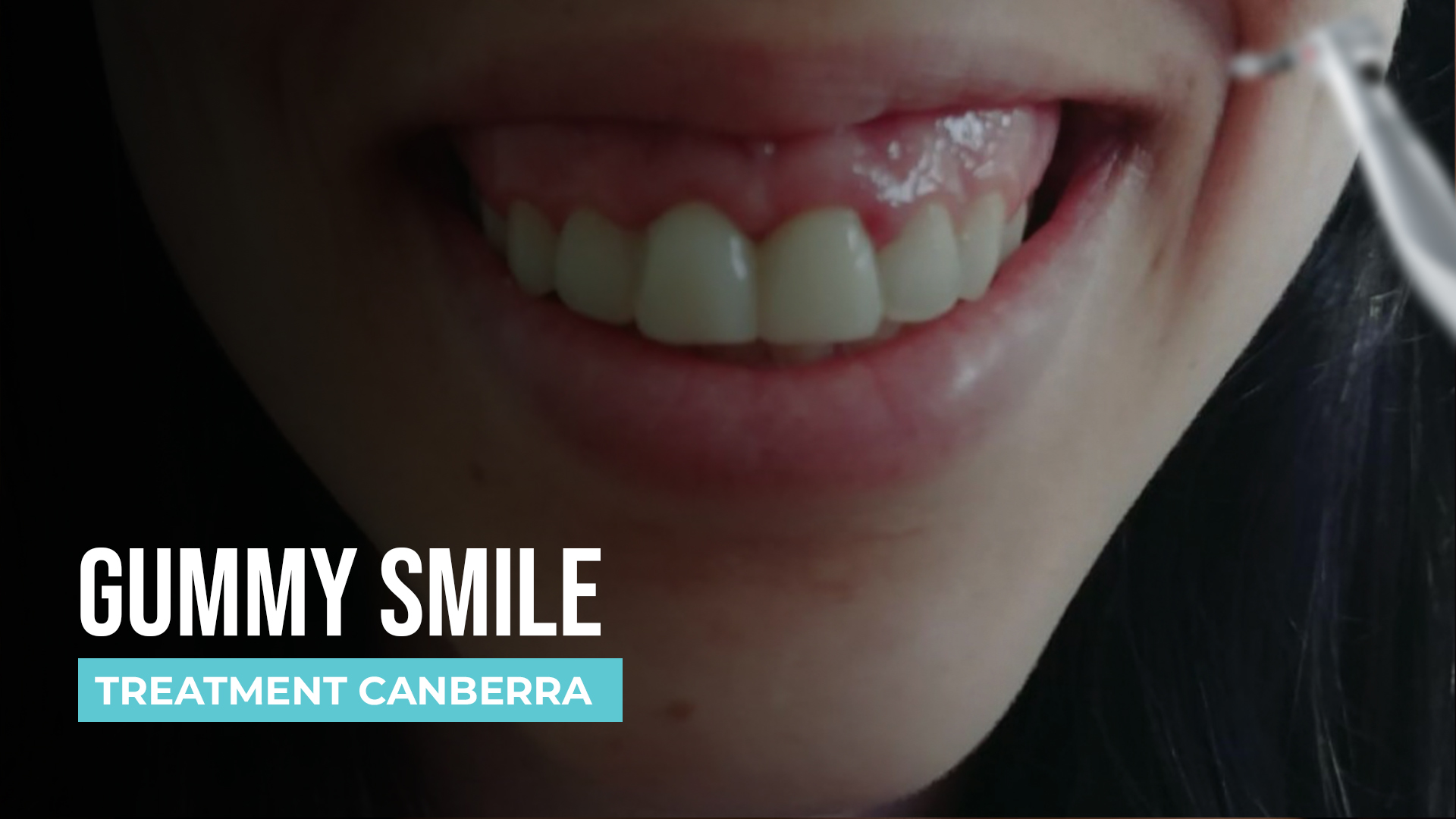
A gummy smile, technically called excessive gingival display, is one of the most commonly misunderstood cosmetic dental concerns. Patients searching for how to fix a gummy smile find a landscape of treatments: Botox injections, laser gum contouring, lip repositioning surgery, orthodontics, and orthognathic jaw surgery. Each of these is a real and effective treatment. What they are not is interchangeable. Each one addresses a specific anatomical cause, and applying the wrong treatment to the wrong cause produces, at best, a temporary result, and at worst, no result at all.
The starting point for any gummy smile treatment is understanding precisely what is causing the excess gum display in your specific case. This guide explains the four main causes, how they are distinguished clinically, and which treatment options are appropriate for each. If you are ready to book an assessment, visit our cosmetic dentistry service or call (02) 6241 5941.
KEY TAKEAWAYS
A gummy smile can be caused by four different anatomical factors: short teeth, excessive gum tissue, a hyperactive upper lip, or excessive vertical jaw growth.
Treatment must match the cause. The wrong treatment produces a poor or short-lived result.
Laser gum contouring is effective for excess gum tissue covering otherwise normal-length teeth.
Gummy smile Botox targets the hyperactive lip elevator muscles and lasts three to four months per treatment.
Lip repositioning surgery offers a longer-lasting alternative to Botox for the same muscle-driven cause.
Jaw-related gummy smiles require orthognathic surgery for comprehensive correction.
What Does a Gummy Smile Actually Mean?
Most dental aesthetic research suggests that gum display of approximately two millimetres above the upper teeth during a full smile is within normal parameters for most observers. Gum display of three to four millimetres or more is generally perceived as excessive. The threshold at which a patient personally finds it affecting their confidence varies considerably and is the relevant measure for seeking treatment.
The key point is that too much gum is not a single diagnosis. It is a visible outcome that can result from four quite different structural situations, each requiring a different clinical approach.
What Are the Four Causes of a Gummy Smile?
Short Clinical Crown Length (Altered Passive Eruption)
In some patients, the teeth are a normal anatomical length, but an excessive amount of gum tissue covers the crown, making the teeth appear short and the gum proportion high. This is often called altered passive eruption. The gum tissue did not fully migrate to its final position as the teeth erupted, leaving more gum than is appropriate covering the tooth crown. Crown lengthening, either surgically or with a dental laser via laser gum contouring, removes the excess gum tissue and reveals the full crown length beneath it. The result is immediate and permanent. Many patients are surprised by how much tooth length was always there, simply hidden beneath excess tissue.
Excessive Gingival Tissue Without Short Crowns
In some cases, the teeth are genuinely short in anatomical length and the gum tissue is proportionally positioned but appears excessive because the teeth themselves are undersized. Simply removing gum tissue reveals more short tooth, which may not achieve the desired result. The appropriate treatment may involve crown lengthening combined with porcelain crowns or veneers to build the tooth length, or it may indicate that a different approach is needed entirely.
Hyperactive Lip Elevator Muscles
Some patients have teeth and gum tissue in completely normal proportions. They display excessively because the muscles that elevate the upper lip during smiling have an unusually strong action, pulling the lip higher than typical. This is the cause for which gummy smile Botox is specifically designed. Botulinum toxin injected into the levator labii superioris muscles reduces the amplitude of lip elevation during smiling. The treatment is temporary, lasting three to four months on average, but is highly effective when applied to this specific cause. Lip repositioning surgery is a longer-lasting surgical alternative. Patients exploring broader smile improvements alongside this treatment may want to review our smile makeover service.
Excessive Vertical Jaw Development
Where the upper jaw has grown excessively in the vertical dimension, a condition called vertical maxillary excess, the result is a gummy smile that cannot be adequately corrected by soft tissue management alone. The gum display in this case is driven by the underlying skeletal structure. Comprehensive correction requires orthognathic surgery, typically carried out in combination with orthodontic treatment. This is the least common cause of a gummy smile but is important to identify because treating it with laser contouring or Botox produces inadequate results.
How Does Laser Gum Contouring Fix a Gummy Smile?
For patients with altered passive eruption, where excess gum tissue covers otherwise well-proportioned teeth, laser gum contouring is a minimally invasive solution. A dental laser precisely removes the excess gum tissue and recontours the gum margin to a position that is aesthetically proportionate with the tooth crowns beneath it.
The procedure is performed under local anaesthetic. The laser simultaneously removes tissue and seals the wound, which minimises bleeding and significantly reduces healing time compared to traditional surgical crown lengthening. The result is visible immediately, though some swelling in the first few days means the final aesthetic outcome is fully seen at two to three weeks of healing. For the right indication, the change to the smile is striking.
How Does Gummy Smile Botox Work and How Long Does It Last?
Botulinum toxin for gummy smile is an office-based treatment with no downtime and results that appear within two weeks of injection. For patients whose gummy smile is driven by hyperactive lip muscles, it reliably reduces gum display during smiling and is well tolerated. The limitation is duration. It is not permanent, and regular repeat treatments are required to maintain the result.
For patients who want to trial the improvement before considering a longer-term surgical option, Botox serves as a useful reversible preview. For others, a three-to-four-month treatment interval is a perfectly acceptable long-term management strategy. The decision depends on the patient's preference, tolerance for repeat treatments, and the clinical picture.
What Happens at a Gummy Smile Assessment?
A thorough assessment of a gummy smile at Kaleen Family Dental includes measurement of the degree of gum display, assessment of clinical crown length, evaluation of the gum margin position relative to the cemento-enamel junction, observation of the lip's range of movement during smiling, and where skeletal causes are possible, appropriate radiographic review. This is often combined with a standard dental check-up and clean to ensure the full oral health picture is assessed at the same visit.
From this assessment, we can tell you clearly which anatomical factor is producing your gum display and which treatment will actually address it. Many patients arrive having already decided they want laser treatment or Botox based on what they have read online. Sometimes that is exactly right. Sometimes a different approach will produce a better result. We will always explain the reasoning, and the decision to proceed is always yours.
Book a Gummy Smile Assessment at Kaleen Family Dental Surgery
A gummy smile is not a fixed feature of your face. It is a clinical situation with identifiable causes and effective treatments. The first step is an honest assessment that tells you exactly what is driving yours. Our cosmetic dentistry team at Kaleen Family Dental Surgery in Kaleen, Canberra will explain your options clearly and let you decide what is right for you.
Open Monday to Saturday at Kaleen Shopping Centre, Gwydir Square, Kaleen ACT 2617. Call (02) 6241 5941 or book online at kaleenfamilydental.com.au.
Frequently Asked Questions
How much does gummy smile treatment cost?
The cost depends entirely on which treatment is appropriate for your cause. Laser gum contouring for a single case of altered passive eruption ranges from approximately $500 to $1,500 depending on the number of teeth involved. Gummy smile Botox treatment is typically priced from $200 to $500 per treatment session. Surgical options including lip repositioning are more involved and priced accordingly. A consultation at Kaleen Family Dental will give you an accurate estimate for your specific situation.
Is gummy smile treatment permanent?
It depends on the treatment. Laser gum contouring for altered passive eruption produces permanent results because the tissue does not grow back. Botox results last three to four months and require repeat treatment to maintain. Lip repositioning surgery is significantly longer-lasting than Botox. Orthognathic surgery for skeletal causes is permanent.
Can Invisalign fix a gummy smile?
Clear aligners can contribute to gummy smile correction in specific cases, for example where the vertical position of the upper teeth can be intruded to reduce gum display. However, aligners address tooth position, not gum tissue volume or lip muscle action. For most gummy smile patients, orthodontics alone is not sufficient as the primary treatment. Our orthodontics service covers what tooth alignment treatment can and cannot achieve.
How long does laser gum contouring take to heal?
The gum tissue treated with laser contouring typically heals within one to two weeks. Some swelling and minor discomfort in the first few days is expected and managed with over-the-counter pain relief. The full aesthetic result, with swelling fully resolved, is visible at two to three weeks. Most patients find the recovery very manageable compared to conventional surgical procedures.