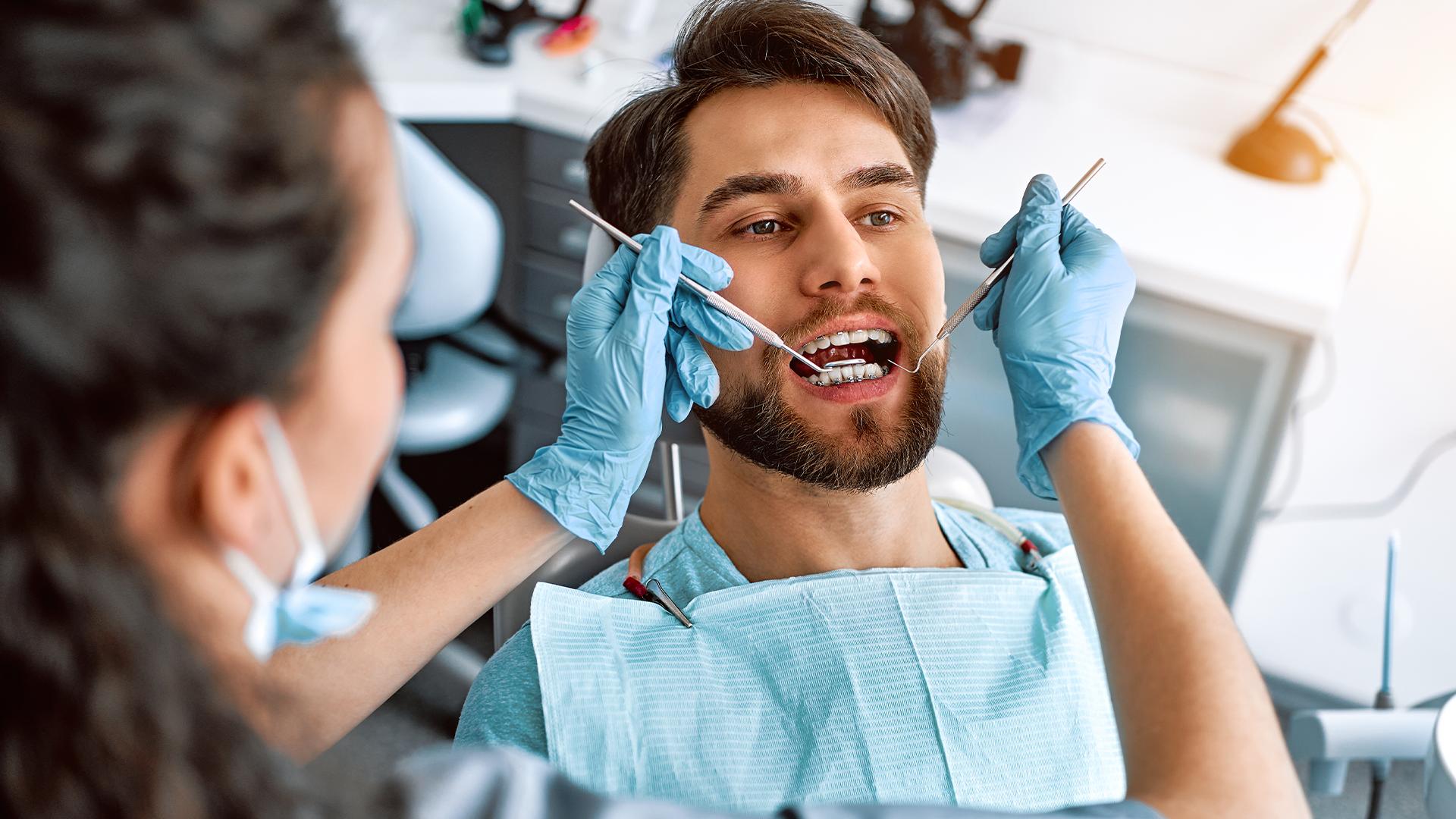
A check-up and clean is mostly looking and cleaning, not treatment. It has two parts: the dentist examines your teeth, gums, and mouth to catch any problems, then removes the hardened tartar that brushing leaves behind. A typical visit runs through a health chat, an exam, x-rays if you are due, a scale and polish, a fluoride application, and some tailored advice. None of it should hurt, and you usually walk out with clean teeth and a clear picture of your oral health.
The visit, step by step
Here is how a standard appointment flows, from the chair going back to you rinsing at the end.
A quick chat about your health. The dentist asks about any changes since last time, any pain or sensitivity, and your medical history, since some medications and conditions affect your mouth.
The examination. They look over each tooth for decay, cracks, and worn spots, check your gums for signs of gum disease, look at your bite, and examine the soft tissues of your mouth, which includes a quiet screen for early signs of mouth cancer.
X-rays, if you are due. Not every visit needs them, but dental x-rays show decay between teeth and problems below the gumline that the eye cannot see.
The scale. Using a small hand or ultrasonic scaler, the dentist or hygienist removes the hardened plaque, called tartar, from around your gumline and between your teeth. This is the part brushing at home cannot do.
The polish. A soft rotating cup with a gritty paste smooths and cleans the tooth surfaces, lifting surface stains and leaving them feeling slick.
Fluoride, often. Many visits finish with a fluoride treatment painted on to strengthen the enamel and help protect against decay.
A chat about what they found. The dentist talks you through anything they spotted, gives tailored brushing or flossing tips, and, if needed, books any follow-up treatment separately.
What it actually feels like
For most people, a check-up and clean is easy and painless. The exam is just looking and gentle prodding with a small mirror and probe. The scale is where you notice the most, a light scraping or a faint vibration and water spray if an ultrasonic scaler is used, which can feel ticklish or a little sensitive if there is a lot of tartar, but it is not painful. The polish feels like a gentle buzzing.
If your teeth are sensitive or you feel anxious, say so at the start. A good clinic will go gently, explain each step, and pause whenever you need. There is no drilling and no needles in a routine check-up and clean, which surprises people who have been putting it off.
The check-up and the clean are two different jobs
It helps to understand that the appointment bundles two separate things. The check-up is diagnosis, the dentist is looking for problems while they are small. The clean is prevention, removing the tartar that causes gum disease and decay. One finds trouble early; the other stops trouble starting. That is why they are done together, and why skipping the visit means missing both. Both are part of routine preventive dentistry.
What happens afterwards
You can usually eat and drink straight away and get back to your day. If you had a fluoride treatment, it is common to be asked to wait about 30 minutes before eating or drinking so it can work. If the exam turned up something, like a small cavity or a worn filling, that is treated at a separate appointment, not during the clean, and the dentist will explain your options and give you a quote first. Otherwise, you are simply booked in for your next visit down the track.
Frequently asked questions
What happens during a dental check-up and clean? The dentist examines your teeth, gums, bite, and soft tissues to catch any problems, then scales away hardened tartar and polishes your teeth. A visit usually includes a health chat, the exam, x-rays if due, the scale and polish, a fluoride application, and tailored advice. It is mostly checking and cleaning, not treatment.
Does a dental check-up and clean hurt? No, for most people it is painless. The exam is just looking, and the scale feels like light scraping or a gentle vibration, which can be a touch sensitive if there is a lot of tartar. Tell your dentist if you have sensitive teeth or feel nervous, and they will go gently.
Will I need treatment on the same day? Usually not. A check-up and clean is diagnosis and prevention. If the dentist finds something like a cavity, it is booked as a separate appointment, and you will get an explanation and a quote before any treatment goes ahead.