Invisalign moves your teeth gradually using a series of custom-made clear plastic aligners, each worn for a week or two before you swap to the next in the set. The process starts with a consultation and a digital scan of your teeth, which is used to plan the whole movement on a computer and even show you a preview of the end result. Your aligners are then made to that plan, and you wear them yourself, changing to the next tray on schedule and returning for the occasional check. Once your teeth are where they should be, you finish with retainers to hold them there. The whole thing usually takes several months to around two years, depending on how much movement is needed.
It starts with an assessment and a digital plan
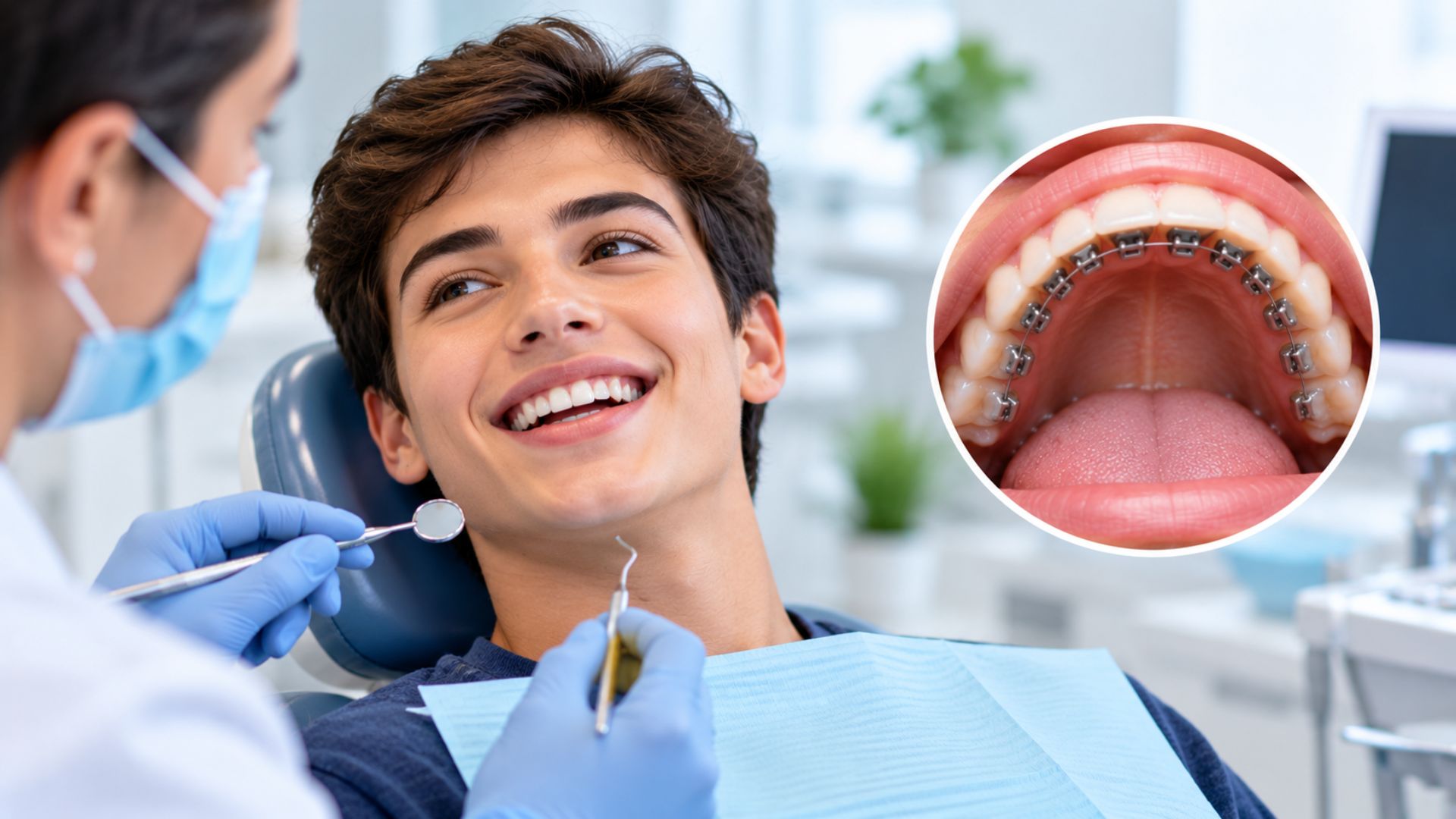
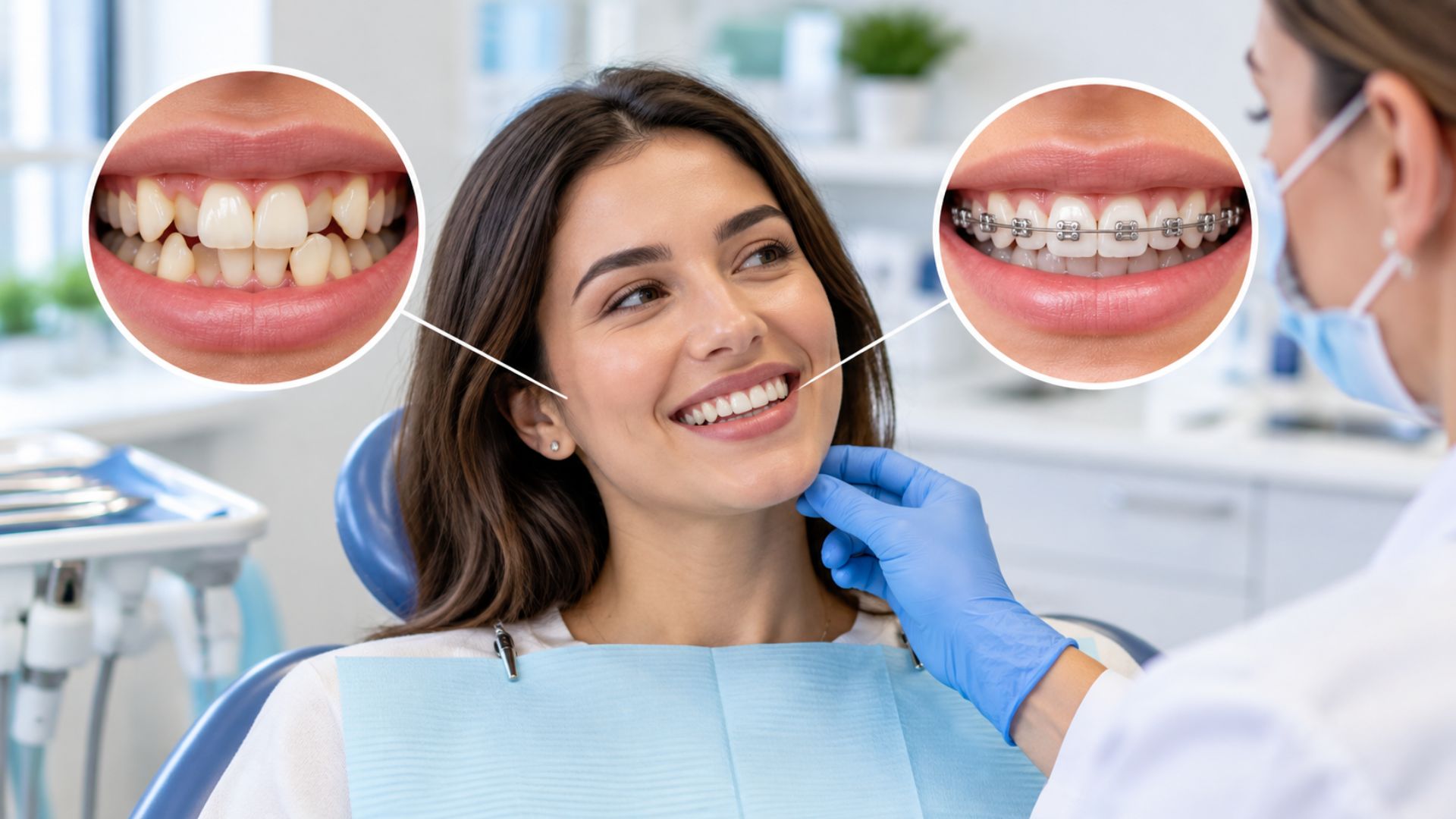
The first appointment decides whether Invisalign is right for you at all, which is an honest first step worth having. Not every case suits clear aligners, and a good clinician will say so. Mild to moderate crowding, gaps, and many bite issues respond well, while very complex cases can still need traditional braces or a combined approach. If your teeth are crowded or sticking out, our guide on crowded or protruding front teeth explains what aligners can and cannot shift.
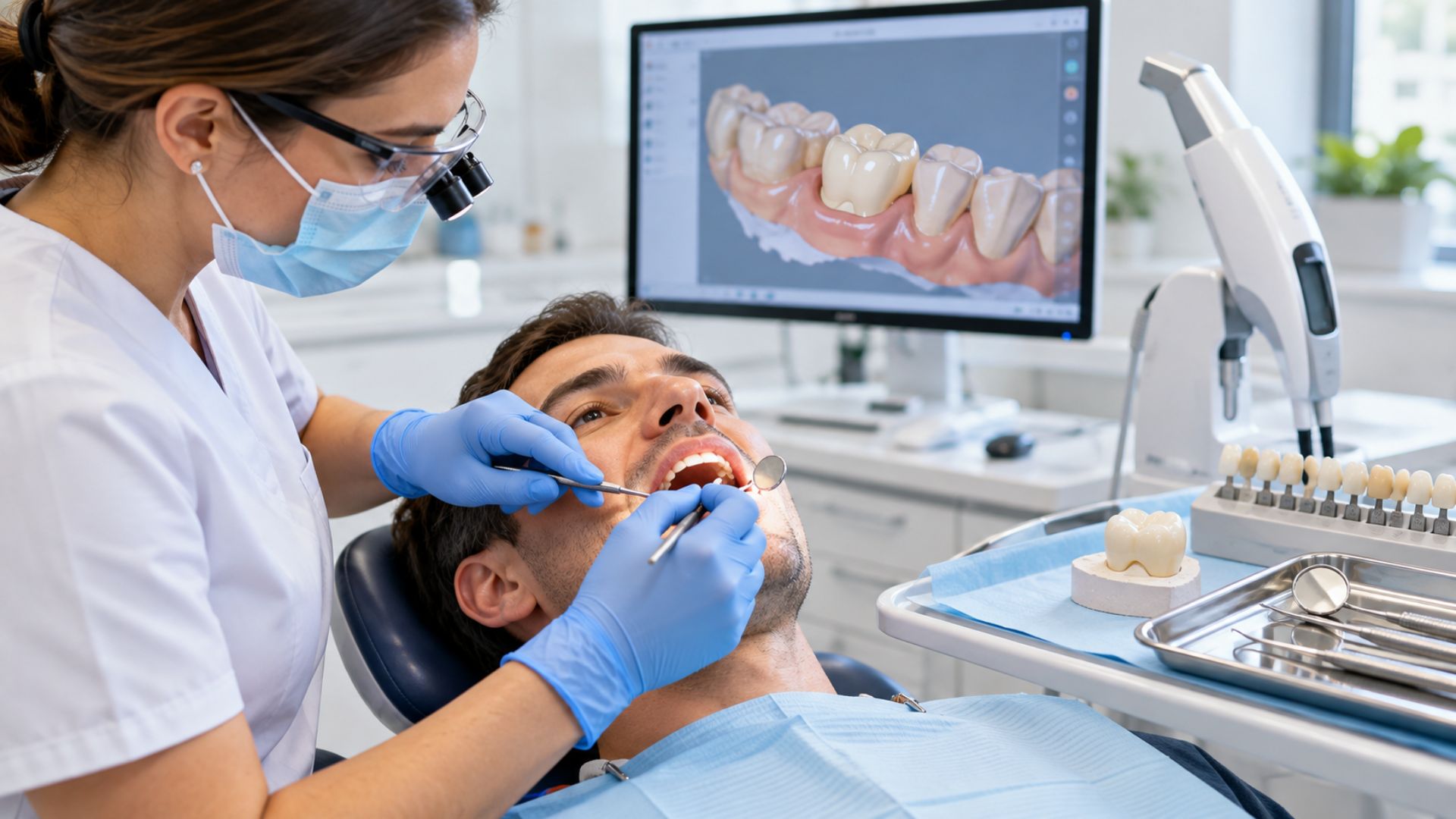
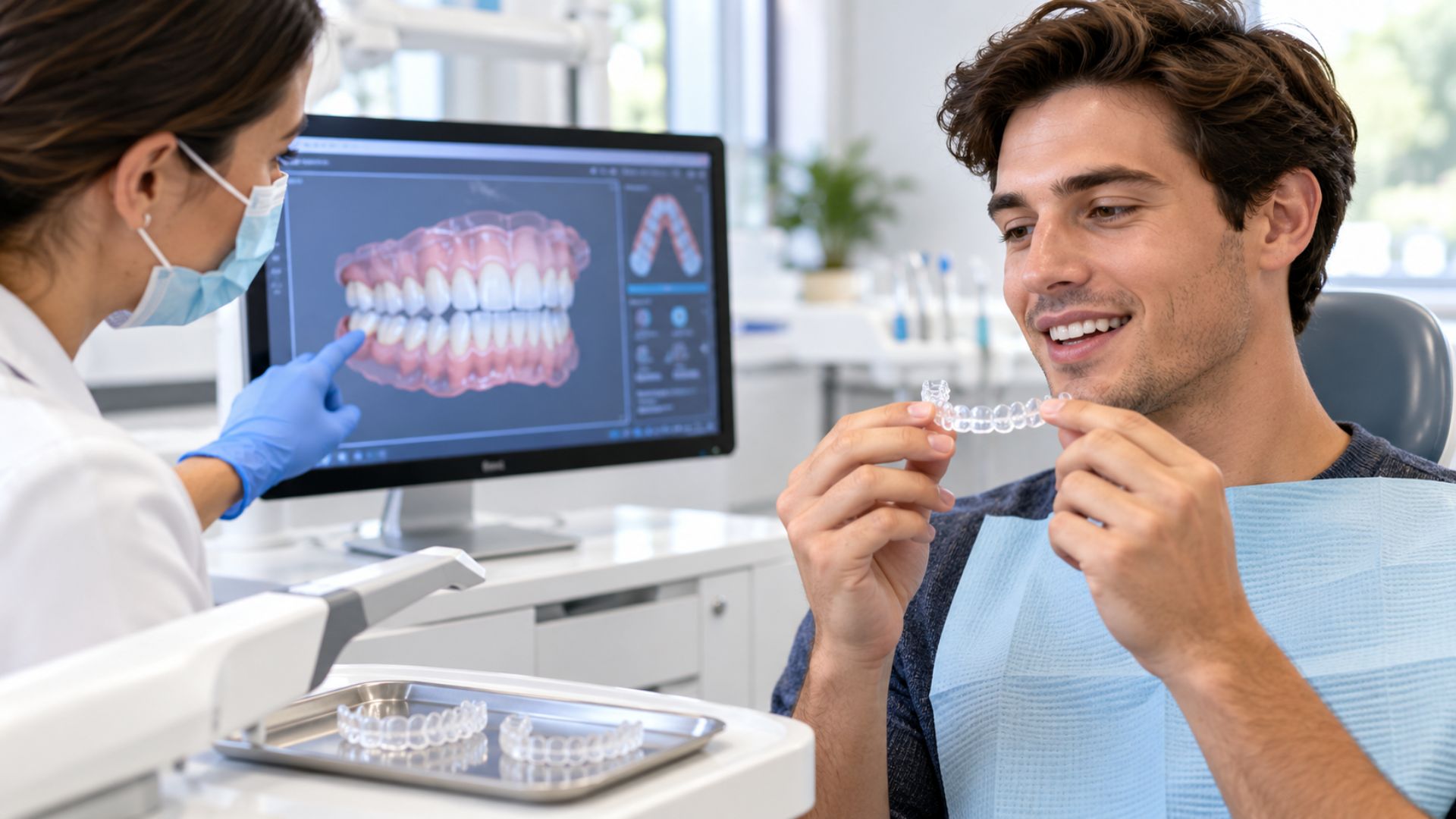
If you are suitable, the dentist takes a digital scan of your teeth rather than a messy putty mould. That scan builds a precise 3D model, and from it your treatment is mapped out move by move on software. One of the best parts of the process happens now: you often get to see a simulation of how your smile will look at the end, before a single aligner is made. It turns an abstract plan into something you can actually picture and agree to.
Your custom aligners are made to that plan
Once you approve the plan, the details are sent off and your full series of aligners is manufactured. Each one is slightly different, shaped to nudge specific teeth a fraction closer to their target position. A course can be anywhere from about ten aligners to fifty or more, and that number is really just a reflection of how far your teeth need to travel.
At the fitting visit, the dentist may add small tooth-coloured attachments to a few teeth. These are tiny bumps of bonding material that give the aligners something to grip, so they can make trickier movements like rotating or uprighting a tooth. They are barely noticeable and come off cleanly at the end. You are shown how to take the aligners in and out and sent away with your first few sets.
The daily routine that does the work
This is where Invisalign differs most from braces, and where your part really matters. With braces, the dentist tightens wires and the appliance does its job whether you like it or not. With Invisalign, the discipline is yours. To move on schedule, the aligners need to be worn 20 to 22 hours a day, taken out only to eat, drink anything other than water, and brush. That honesty is important, because Invisalign only works as well as you wear it. People who leave the trays out for long stretches see slower results or none at all.
The upside of that trade-off is real freedom. The aligners are clear and hard to spot, so most people will not notice you are wearing them. You take them out to eat, so there are no food restrictions and nothing gets stuck in wires. And because they lift out, brushing and flossing stay simple, which protects your teeth through treatment rather than making cleaning a battle. Every week or two you move to the next aligner in the sequence, feeling a gentle tightness for a day or so each time as the new tray takes hold.
Check-ins and small refinements
Across the treatment you return to the clinic now and then, often every six to eight weeks, so the dentist can check your teeth are tracking to plan. These visits are quick and low-key, with no wires to adjust. If a tooth is being stubborn and not keeping up with its aligner, the dentist can order a short set of refinement aligners near the end to fine-tune the result. This is common and not a sign anything went wrong. It is simply how the process dials in the final details.
Finishing with retainers, for good
Reaching your last aligner is not quite the end, and skipping this part is the most common way people undo their own hard work. Teeth have a memory and will happily drift back toward where they began, so once they are straight you move on to retainers to hold them. These may be clear ones worn at night, or a thin wire bonded quietly behind the front teeth, and often a mix of both. Wearing them as directed is what makes the result last for years rather than months. Invisalign in Canberra is one of the orthodontic options offered at Kaleen Family Dental Surgery, and if you are also thinking about whitening, our guide to whitening explains the best time to do it around aligner treatment.
Frequently asked questions
How long does Invisalign take? Most treatments run from about six months to two years, with the average around twelve to eighteen months. The exact time depends on how much your teeth need to move and, crucially, on wearing the aligners the full 20 to 22 hours a day. Wearing them less means slower progress.
Does Invisalign hurt? Not really, though it is normal to feel a mild pressure or tightness for a day or two each time you move to a new aligner. That feeling is the aligner working, and it settles quickly. Most people find it far more comfortable than the tightening of traditional braces.