Is teeth whitening good for your teeth?
Yes, professional teeth whitening is safe for the structure of your teeth when it is supervised properly. The active ingredient in every legitimate whitening product, whether at the dentist, a beauty salon, or a supermarket, is peroxide (either hydrogen peroxide or carbamide peroxide, which breaks down into hydrogen peroxide once it touches your teeth). Peroxide works by oxidising the pigmented molecules trapped inside your tooth. It does not dissolve enamel, etch it, or strip a layer off. It bleaches the colour, not the structure.
Here is the part most articles skip. Your enamel is largely translucent. The colour you see when you look at someone's teeth is mostly the dentine layer underneath showing through. That is why whitening gels are designed to pass through the enamel and act on the dentine, which is where the staining actually lives. Understanding this matters, because it explains why some teeth whiten brilliantly and others barely shift no matter how strong the gel is.
Sensitivity during whitening is real, but it is temporary. The peroxide passes through tiny tubules in your enamel and briefly irritates the nerve. For most patients it settles within 24 to 48 hours, and we can manage it with desensitising paste before treatment and shorter wear times for sensitive teeth.
In Australia, only registered dental professionals are legally allowed to use whitening gels above 6% hydrogen peroxide or 18% carbamide peroxide. Salon technicians are capped at lower concentrations and are not trained to identify decay, exposed root surfaces, or gum disease, any of which can turn a routine whitening session into a painful one.
Whitening only works if it suits your stain type. This is what most people miss
When patients ask whether whitening is "good," what they usually mean is: will it work on me? The honest answer depends on what is actually staining your teeth.
Extrinsic stains sit on the outer surface of the enamel and come from coffee, black tea, red wine, smoking, and pigmented foods like curry and beetroot. Whitening works very well on these. If your discolouration is from a Canberra coffee habit (and let us be real, that is most of us), you are an excellent candidate.
Intrinsic stains live inside the tooth and behave very differently:
Age-related dentine yellowing. As we get older, dentine naturally darkens and enamel thins, so more of that darker layer shows through. Whitening responds well to this.
Tetracycline staining. People prescribed certain antibiotics in childhood developed grey or banded discolouration in their adult teeth. Whitening helps, but results are limited. Veneers are usually a better option.
Fluorosis. White flecks or brown patches caused by excess fluoride during tooth development. Results are mixed; sometimes the contrast becomes more obvious before it improves.
Trauma greys. If you knocked a front tooth years ago and it has gone darker than the others, external whitening will rarely fix it. The discolouration is coming from inside the dead pulp, and the answer is usually internal whitening through the back of the tooth, or a crown.
Enamel hypoplasia. Genetically thin or pitted enamel often looks worse after whitening, not better.
There is one more thing whitening cannot touch: any restoration. Crowns, porcelain veneers, composite fillings and bridges all stay the colour they were made. If you have a white filling on a front tooth and you whiten the natural enamel around it, the filling will suddenly look yellow against the new background. At Kaleen Family Dental Surgery, I always check this before recommending whitening, and I will let you know upfront if a filling will need replacing afterwards to match.
Everyone also has a biological ceiling, a maximum natural whiteness their teeth can reach. Past that point, no amount of whitening goes further. To go whiter than your natural maximum, veneers are the only honest answer.
What actually makes whitening "good": the pre-whitening checklist
A whitening result is only as good as the tooth surface it is applied to. Before any patient at our Kaleen practice starts whitening, we work through this:
Get a scale and clean first. Peroxide cannot penetrate tartar or biofilm. If you whiten over a dirty tooth, the gel works on the clean patches and skips the rest, leaving you with patchy results.
Treat active decay and gum disease. Peroxide on inflamed gums or exposed root surfaces is genuinely painful, and it can drive sensitivity that lingers for weeks.
Use custom-fitted trays. Generic boil-and-bite trays leak gel onto the gums and miss the back of the front teeth. A custom tray, made from an impression of your own mouth, holds the gel exactly where it should be.
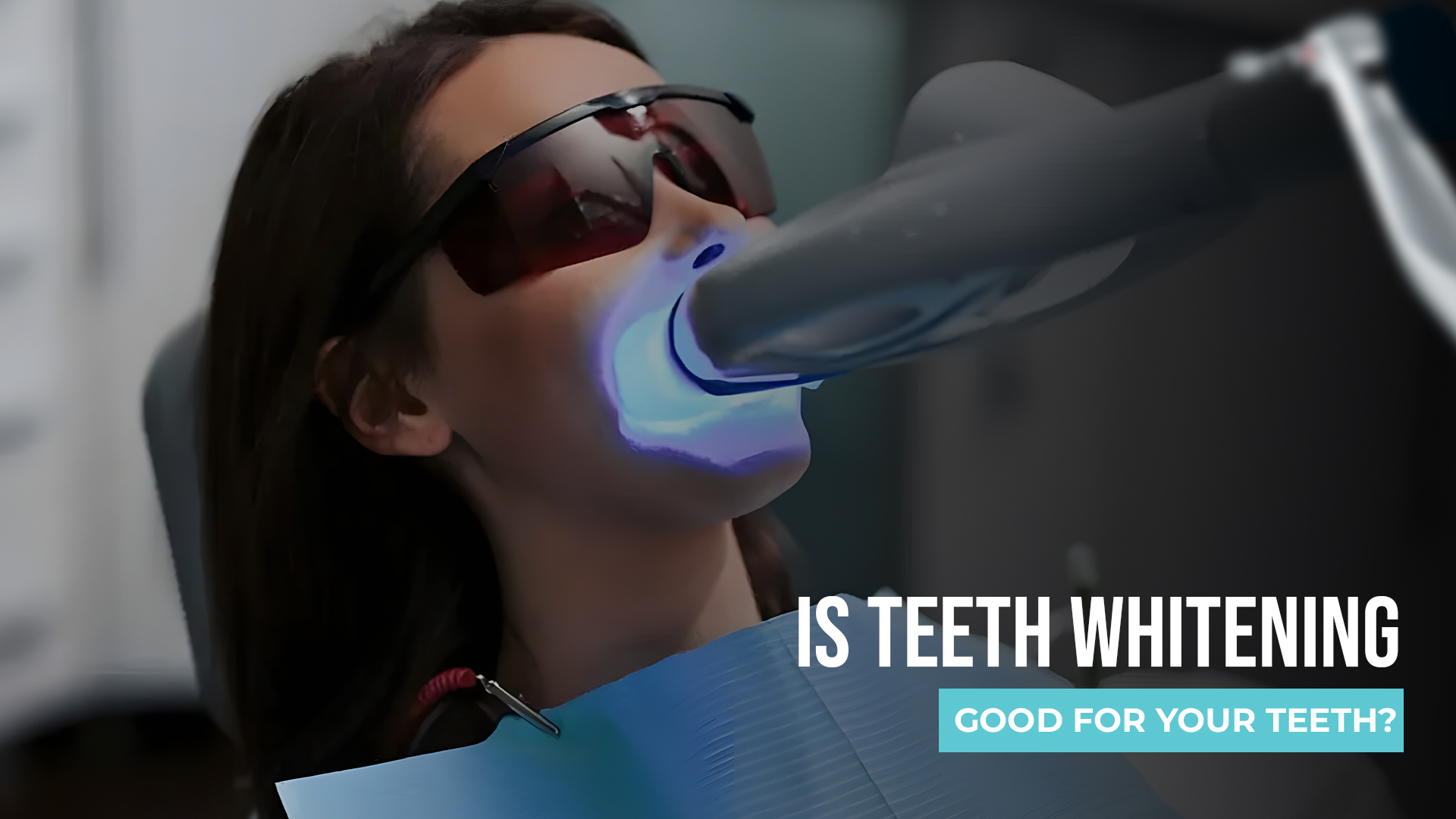
Pick the right format for your life. Take-home kits use custom trays worn nightly for around two weeks and give a gradual, even result. In-chair whitening gives you a faster lift in about 90 minutes. Both work; the choice is about lifestyle and budget.
Stick to the 48-hour "white diet." For two days after treatment your enamel pores are temporarily more open, so coffee, red wine, curry and dark berries will stain faster than usual.
Expect the rebound. Teeth dehydrate during whitening and look brighter than reality straight after treatment. Your final shade settles about two weeks later. Do not panic if it looks less white at the one-week mark; that is normal.
With proper aftercare, most patients hold their result for 12 to 18 months with maintenance before topping up with a single tray refresh. If you drink three coffees a day, that timeline shortens.
If you live in Kaleen, Giralang, Bruce, Aranda, Lyneham, Belconnen or anywhere across north Canberra and you are weighing up whitening, come in for an assessment first. I would rather tell you honestly that whitening will not give you the result you are hoping for than take your money and disappoint you.
Frequently asked questions
Is teeth whitening bad for your enamel?
No. Peroxide oxidises the pigmented molecules trapped in your dentine; it does not dissolve, etch or thin enamel. The damage you sometimes hear about comes from misuse of unregulated, very high-strength products without dental supervision, or from pre-existing issues like cracked teeth and exposed dentine that should have been treated first.
Why didn't my last whitening treatment work?
Almost always one of three reasons. Either the stain was intrinsic (tetracycline, trauma grey, fluorosis) and would not have responded to surface whitening anyway; or you have crowns, veneers or fillings on visible teeth that stayed the original shade; or the product was too weak, the trays did not fit, or the gel was not worn long enough. A consultation can identify which, so the next attempt actually works.
Is whitening at a beauty salon as good as at a dentist?
No, and the gap is bigger than people realise. Australian law caps salon products at much lower peroxide concentrations than dentists can legally use. Salon technicians cannot diagnose decay, gum disease or exposed root surfaces, so any underlying problem is missed. Custom-fitted trays are not part of the service, which means uneven results and a higher chance of gum burns.
How much does professional teeth whitening cost in Canberra?
As a general guide, take-home kits with custom-fitted trays usually sit around $400 to $600, and in-chair whitening sessions around $600 to $900. Final pricing depends on the practice, the system used and what your assessment uncovers. Contact Kaleen Family Dental Surgery for a current quote tailored to your situation.