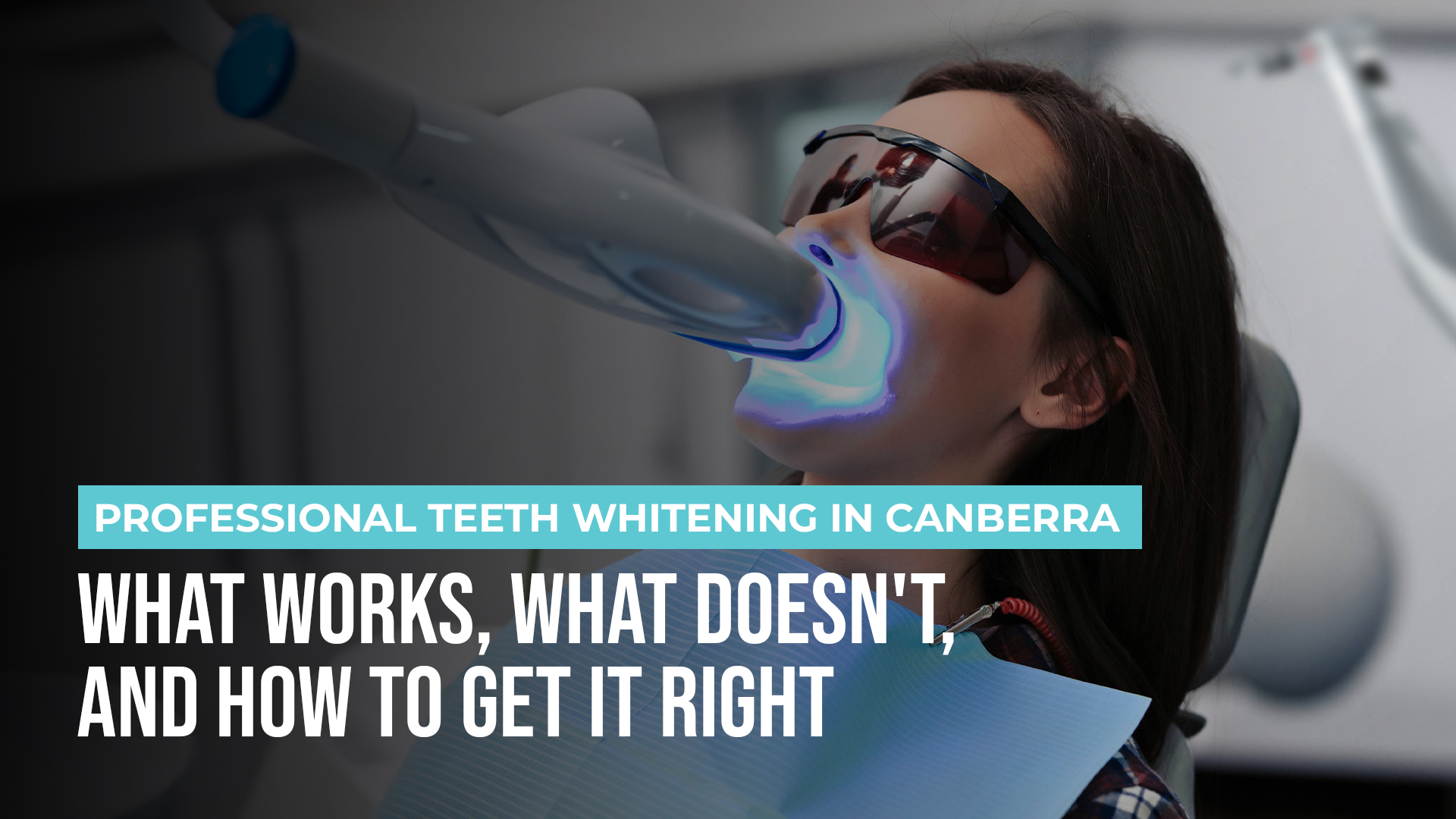
The teeth whitening category is saturated with products that promise dramatic results from a tube, a strip, or a charcoal paste. Some of them work a little. Most of them work less than the marketing suggests. Professional teeth whitening from a dentist in Canberra works noticeably but only when it's done in the right sequence, on the right type of staining, with realistic expectations in place. This guide sets out exactly what you need to know before you invest in professional whitening at our Kaleen dental clinic.
How Tooth Whitening Actually Works
Most teeth whitening systems professional and over-the-counter use hydrogen peroxide or its precursor carbamide peroxide as the active bleaching agent. The peroxide penetrates the enamel and the underlying dentine, where it breaks down the chromogen molecules responsible for discolouration through an oxidation reaction.
Professional take-home whitening gel prescribed by a dentist contains significantly higher concentrations of active agent than anything available without prescription typically 10–22% carbamide peroxide compared to 1–3% in over-the-counter products. Combined with custom-fitted trays that hold the gel precisely against your teeth with minimal leakage onto the gums, the result is more effective and more predictable than retail options.
Surface Staining vs Intrinsic Discolouration — Why It Matters
What Professional Whitening Can Fix
Extrinsic staining the yellowing and browning caused by coffee, tea, red wine, tobacco, and aging responds very well to professional whitening. This is the most common type of discolouration and the one whitening is designed for. Most patients achieve meaningful shade improvement within 2–3 weeks of consistent tray use. The results, maintained with good oral hygiene and periodic touch-ups, can last 1–3 years.
What It Cannot Fix
Intrinsic staining discolouration within the structure of the tooth caused by tetracycline antibiotics taken during tooth development, fluorosis, trauma, or certain developmental conditions does not respond reliably to bleaching. Trying to whiten severely intrinsically discoloured teeth often leads to disappointment and wasted expense. For this type of discolouration, porcelain veneers or composite bonding produce far more reliable and dramatic improvements.
Dead teeth those that have had root canal treatment or suffered trauma can also discolour internally and require a different approach called internal bleaching or, for more significant cases, a veneer or crown.
The Whitening Process at Kaleen Family Dental
Step One: Get the Dental Fundamentals Right First
Whitening open cavities is uncomfortable at best and clinically counterproductive at worst. Bleaching through active gum inflammation can cause significant sensitivity. Before any whitening treatment, we ensure your teeth and gums are healthy which is also why we always recommend a professional clean before whitening. Teeth are brightest immediately after a clean, and a clean surface allows the whitening gel to work more effectively.
Step Two: Custom Tray Fabrication
Impressions or digital scans of your teeth are taken to create trays that fit precisely. Well-fitted trays hold the gel evenly against all tooth surfaces, prevent it from spreading onto the gums where it can cause irritation, and allow you to wear them comfortably for the prescribed time each day.
Step Three: Home Whitening Protocol
You wear the trays with the prescribed gel for 30–60 minutes per day for approximately two to three weeks. The change is gradual which is both desirable (allowing you to stop when you've reached your target shade) and less dramatic on a day-to-day basis. Patients who stop too early sometimes feel the treatment didn't work; completing the full protocol is important.
Managing Sensitivity During Whitening
Temporary tooth sensitivity is the most common side effect of professional whitening, caused by the peroxide temporarily increasing the permeability of enamel. For most patients, this is mild and manageable. Wearing trays for slightly shorter periods, using a sensitivity toothpaste in the trays on alternate days, or taking short breaks in the whitening schedule can all help.
Patients with pre-existing sensitivity, exposed root surfaces, or gum recession should discuss this before beginning whitening. We adjust the protocol accordingly there's no need to push through discomfort when small modifications make the process far more comfortable.
How Teeth Whitening Fits Into a Cosmetic Plan
Whitening is almost always the first step in any cosmetic treatment sequence not the last. The reason is straightforward: composite bonding and porcelain restorations are colour-matched to your teeth at the time of fabrication. If you whiten after your bonding or veneers, those restorations won't lighten only your natural teeth will, creating a mismatch.
The correct sequence for patients planning cosmetic dental work is: whiten first, then allow the colour to stabilise for two to four weeks, then match any bonding or ceramic work to the new, lighter shade. If you're thinking about composite bonding, veneers, or even crown replacements, let us know we'll incorporate whitening at the right point in your treatment plan.
Maintaining Your Whitening Results
The longevity of whitening results depends heavily on dietary habits. High-staining foods and drinks coffee, tea, red wine, tomato-based sauces will gradually restain teeth over time. Using a straw for cold beverages, rinsing with water after staining foods, and maintaining a diligent oral hygiene routine all extend the results.
Most patients find that a short top-up whitening session using the same trays with a new syringe of gel every 12–18 months keeps their result looking fresh. The custom trays are durable and can be reused for these top-up sessions for years.
Frequently Asked Questions About Teeth Whitening Near Kaleen
Q: 1 How much does professional teeth whitening cost in Canberra?
Professional take-home whitening with custom trays at Kaleen Family Dental typically ranges from $400–$700 including the trays and an initial supply of whitening gel. This is significantly more effective than comparable retail products and the trays can be reused for future top-up treatments with replacement gel at a lower ongoing cost.
Q: 2 Is teeth whitening covered by health funds?
Cosmetic teeth whitening is not covered by private health insurance extras. It is considered an elective cosmetic procedure. However, if whitening is undertaken as part of a broader treatment plan that includes claimable restorative work, the clinical appointments associated with that plan may attract a partial rebate.
Q: 3 Can I whiten my teeth if I have crowns or veneers?
Whitening will not change the colour of existing crowns, veneers, or composite bonding only natural tooth structure responds to bleaching. If you have visible restorations in your smile and whiten your natural teeth, you may create a colour mismatch. Discuss your existing restorations with us before beginning a whitening program.
Q: 4 How long does professional teeth whitening last?
Results typically last 1–3 years depending on diet, home care, and lifestyle factors like smoking. Periodic top-up sessions with the same custom trays and fresh whitening gel extend the results efficiently and at a lower cost than the initial treatment.
Ready for a brighter smile backed by clinical expertise? Kaleen Family Dental Surgery offers professional take-home whitening as a standalone treatment or as the first step in your cosmetic treatment plan. Call (02) 6241 5941 or book your whitening consultation online. We'll assess your teeth, confirm whitening will achieve what you're hoping for, and get you started properly.