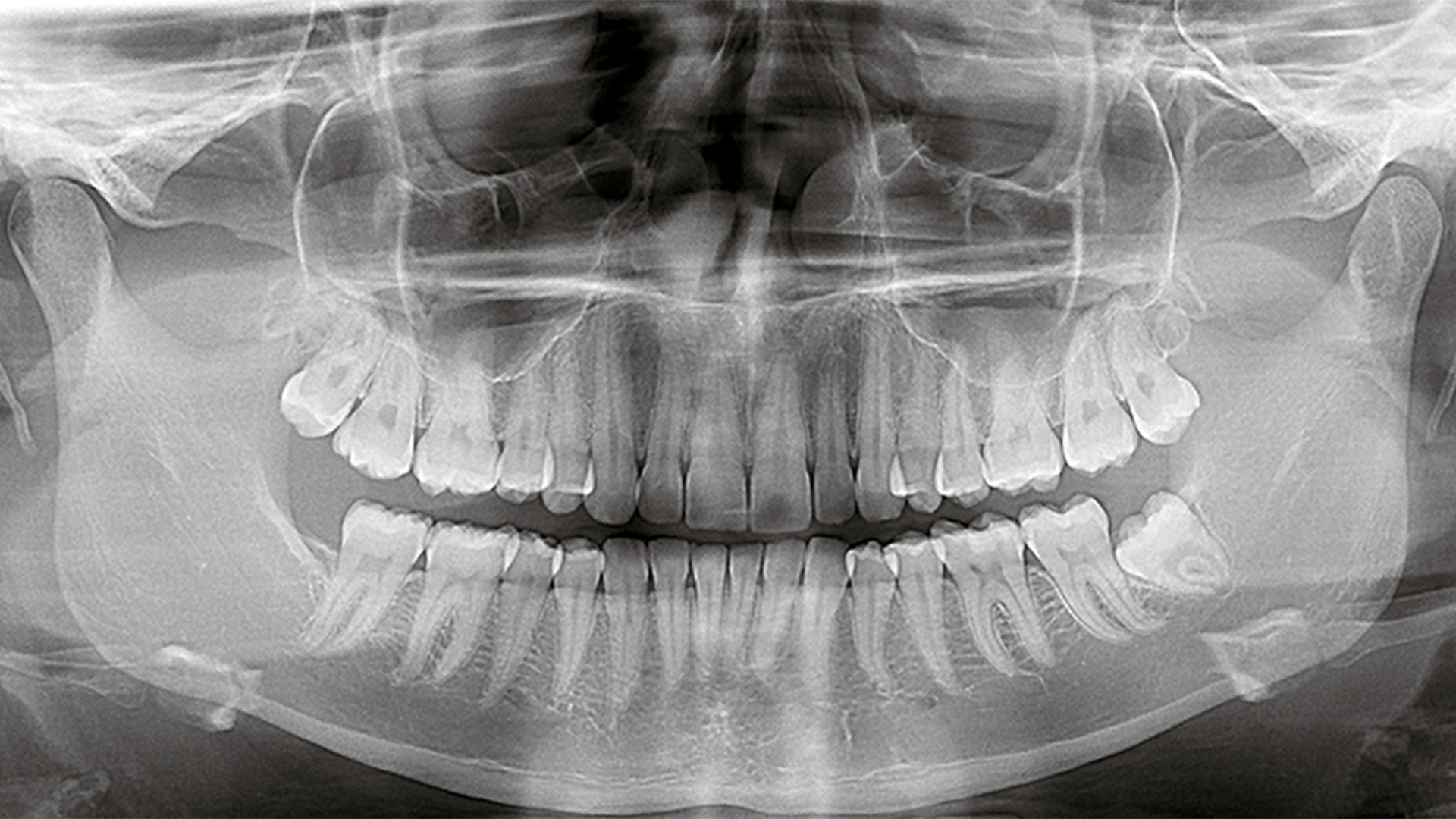
A dental OPG (Orthopantomogram) is a single panoramic X-ray that captures every tooth, both jaws, the temporomandibular joints (TMJ), and the surrounding bone structures in one image. It takes roughly 15 seconds, requires no injections, and involves far less radiation than most patients expect. If your dentist has recommended one, here is exactly what you need to know before you arrive.
Key Takeaways
An OPG is also called a panoramic dental X-ray or OPG scan — all the same thing.
Radiation dose is approximately 0.014 mSv — about the same as a few hours of natural background radiation.
It is used before implants, orthodontic treatment, wisdom tooth removal, and general jaw assessment.
OPG scan cost in Australia typically ranges from $90–$150 at a dental practice; some radiology centres bulk-bill eligible Medicare patients.
Dr. Henny Purba at Kaleen Family Dental Surgery has been ordering and interpreting OPGs for Canberra patients since 1997.
What Does an OPG Actually Show?
Unlike the small bitewing X-rays taken during a routine dental check-up and clean, a dental OPG gives a full-arch view in a single exposure. The machine rotates around your head you stand still, bite gently on a small plastic peg, and it is over before you have time to feel nervous.
What appears on the image goes well beyond teeth. Dentists use an OPG to evaluate the bone level around all teeth (critical for diagnosing periodontal disease), the position and angulation of wisdom teeth, the roots of every tooth, sinus cavities, and the condyle of the jaw joint. In children, it shows developing permanent teeth still hidden inside the jaw information that is essential for orthodontic treatment planning.
When Will a Dentist Order One?
In over 28 years at Kaleen Family Dental Surgery, Dr. Henny Purba orders OPGs most commonly in these situations:
Wisdom teeth assessment — to see exactly how the roots sit in relation to the inferior alveolar nerve before recommending wisdom tooth removal in Canberra.
Dental implant planning — to assess available bone height and proximity to anatomical structures, often alongside a CBCT scan for 3D detail. See our dental implants page for how imaging fits the process.
Orthodontic records — for patients considering Invisalign in Canberra or braces, an OPG is standard before treatment begins.
New patient comprehensive exam — particularly for adults who have not had an X-ray in several years, or patients transferring from another practice.
Suspected jaw pathology — cysts, tumours, fractures, and bone changes are often visible on an OPG that would be completely missed on small intraoral films.
Gum disease monitoring — bone loss pattern and severity are far clearer on a panoramic view. Learn more about our gum disease treatment approach.
Is an OPG Scan Safe?
The radiation dose from a modern digital OPG is approximately 0.014 millisieverts (mSv). To put that in context, Australians receive roughly 1.5–2 mSv of background radiation every year just from the environment. A dental OPG is equivalent to a few hours of everyday exposure. The Australian Radiation Protection and Nuclear Safety Agency (ARPANSA) classifies dental panoramic X-rays as low-dose imaging, and digital receptors have reduced doses significantly compared to older film-based machines.
Pregnancy requires an individual conversation. The standard clinical position is to defer non-urgent X-rays during the first trimester when possible, but if there is an acute dental problem, the diagnostic benefit typically outweighs the minimal risk. Dr. Purba discusses this honestly with each patient rather than applying a blanket rule.
OPG vs CBCT: When One Is Not Enough
An OPG is two-dimensional. For most diagnostic decisions — gum disease staging, orthodontic planning, wisdom tooth proximity to nerves — it provides everything needed. However, a Cone Beam CT (CBCT) produces a three-dimensional image and is ordered when the 2D view leaves a clinical question unanswered: precise implant site measurement, complex root anatomy before specialist referral, or detailed jaw joint assessment.
The key distinction patients sometimes misunderstand: a CBCT is not simply a "better OPG." It involves more radiation and more cost. It is appropriate when the additional 3D information will change the treatment decision. When it will not, the OPG is the right tool.
OPG Scan Cost in Canberra: What to Expect
At a dental practice in Australia, an OPG is billed under item number 037. The typical out-of-pocket cost ranges from $90 to $150, depending on the practice. Some standalone radiology clinics — including some in the ACT region — can bulk-bill an OPG if you hold a valid Medicare card and your dentist provides a referral. This is worth asking about if cost is a concern.
Private health insurance rarely covers dental imaging under hospital cover, but many Extras policies include it under dental benefits. Check your fund's schedule before assuming it is not covered. If you are unsure about your payment options, our health funds and payment plans page explains how we work with major funds at Kaleen Family Dental Surgery.
What Canberra Patients Ask Most
Do I need a referral for an OPG?
If you are having the OPG taken at your dental practice, no referral is needed — the dentist orders it as part of your appointment. If you are attending a radiology centre for a Medicare-rebatable scan, you will need a referral from your dentist or GP. The referral takes 30 seconds for us to generate at the time of your consult.
How often should I have an OPG?
There is no fixed schedule for panoramic X-rays the way there is for bitewing X-rays (typically every 12–24 months for average-risk adults). An OPG is ordered when there is a specific clinical reason — not on a routine annual basis. Most patients who are not undergoing active treatment have one every three to five years, or when a new clinical question arises.
Can children have an OPG?
Yes. OPGs are commonly taken in children from around age six or seven when mixed dentition begins, and they are a routine part of orthodontic records in teenagers. The dose is low, and the diagnostic information particularly for assessing developing permanent teeth, missing teeth, or early orthodontic problems is difficult to obtain any other way. The child dental benefits schedule (CDBS) does not cover OPGs, but the item is straightforward to claim under most private Extras policies.
What Happens at Your OPG Appointment
Remove any earrings, necklaces, or hair clips that fall below the ears before you arrive — metal objects create artefacts on the image. You will stand or sit in the OPG machine (some units have a chin rest, others a standing platform), bite gently on a small plastic peg to position your teeth correctly, and stay still for approximately 15 seconds while the arm rotates. No injection, no mouth-opening device, no gag reflex trigger for most patients. The image appears on screen within seconds for Dr. Purba to review with you.
If you have questions about your jaw, teeth, or whether an OPG is the right next step for your situation, book a general dentistry consultation at Kaleen Family Dental Surgery. We have been looking after Canberra families from our Kaleen practice since 1997 and an honest conversation about what you actually need costs nothing.