A patient will often book in because their teeth suddenly look longer in the mirror, or because a sip of cold water sets off a sharp ache near the gumline. Nine times out of ten, what they are noticing is gum recession that has been creeping along quietly for years. By the time it is obvious, some ground has already been lost. The reassuring part is that recession almost always has a cause you can identify, and once you know the cause you can usually stop it getting worse. Here is how I explain it to patients in the chair.
Why do gums pull back from your teeth?
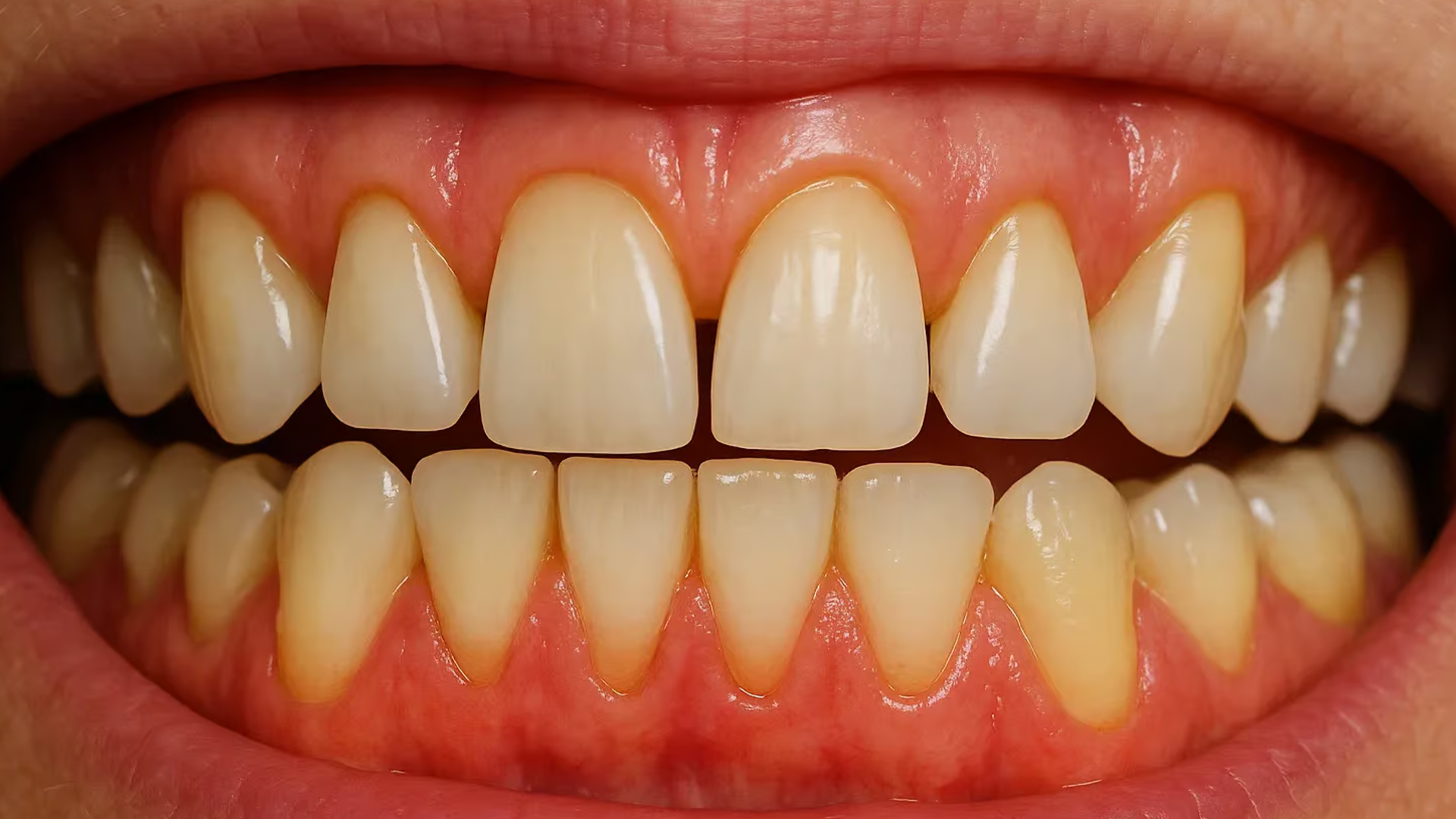
Your gums are meant to sit snugly around each tooth like a collar, sealing off the root underneath. Recession is what happens when that collar slips down and exposes part of the root. The crown of your tooth is covered in hard enamel, but the root is covered in cementum, which is far softer and thinner. That single fact explains most of the trouble recession causes. Once the root is exposed, it picks up decay more easily, wears down faster, and reacts to cold, heat and sweet foods because the nerve has less insulation between it and the outside world.
It helps to think of recession as a symptom rather than a disease in its own right. Something is driving the gum to retreat, and the job is to work out what. Mild recession can be almost invisible, sitting a millimetre or two below where it should. More advanced recession leaves a clear band of yellowish root on show and can affect a single tooth or spread across several.
The two main triggers behind recession
Most articles give you one long list of causes. In practice, nearly every case I see falls into one of two camps, and telling them apart matters because the fix is different.
The first is mechanical. This is wear and tear from force, usually a toothbrush. Scrubbing hard, side to side, with a firm brush slowly abrades the gum and the tooth surface at the neck. The tell-tale sign is a clean, often wedge-shaped notch on the cheek side of the tooth, frequently on the canines and premolars, with the surrounding gum looking pink and healthy. A heavy or uneven bite can do something similar by flexing the tooth at the gumline.
The second is inflammatory. Plaque and tartar that are not cleaned away trigger gum disease, and the body's own inflammatory response gradually destroys the bone and gum that anchor the tooth. Here the gum tends to look red, puffy and bleeds when brushed, and the recession comes with deeper pockets around the tooth. This kind needs the gum disease itself brought under control, not just a softer toothbrush.
Sitting behind both is your gum type. Some people are born with thin, delicate gum tissue, and if a parent has receding gums you are more likely to as well. Thin tissue does not cause recession on its own, but it gives way far more easily once either trigger is at work.
Could your daily habits be the real cause?
Plenty of recession is driven by habits people never connect to their gums.
Clenching and grinding are near the top of the list. The repeated load flexes teeth at the neck and stresses the gum margin, and most people who do it are completely unaware because it happens in their sleep. If I can see the wear pattern, I will usually talk about a night splint, and for some patientsBotox for clenching eases the muscle force that is driving it.
Smoking is a well-known culprit, but vaping deserves a mention too. Nicotine narrows the small blood vessels that feed the gums, which slows healing and masks the bleeding that would normally warn you something is wrong. Vapes add dryness and heat on top of that. Lip and tongue piercings are another quiet cause, because the metal rubs against the gum on the lower front teeth every time you talk or eat, and that is exactly where I tend to see the damage. Nail-biting, chewing pens, and long-term mouth breathing that dries out the front gums all add to the pile. Orthodontic treatment can play a part too if teeth are moved quickly through thin bone, though that is far less common than the everyday habits.
How can you tell how advanced it is?
You can get a rough sense of your own gums with a mirror and good light. Look for teeth that seem longer than they used to, a small step or ledge near the gumline that you can feel by running a fingernail up the tooth, and any band of darker, yellow-tinged root showing above the gum. Small triangular gaps opening up between teeth, sometimes called black triangles, are another sign that the gum has dropped. Sensitivity that flares with cold air or sweet food often points to an exposed root as well.
What you cannot do at home is measure it accurately. A dentist uses a fine probe to record exactly how far the gum has moved and to check the pocket depth around each tooth, which is the part that tells us whether gum disease is involved. One isolated patch of recession on a single tooth is usually mechanical or habit-related. Recession spread across many teeth, especially with bleeding, is more likely to be a gum disease problem that needs proper assessment.
What untreated recession costs you
Left alone, recession rarely stays still, and the damage compounds. The exposed root is the weak point. Because cementum is so much softer than enamel, it decays quickly, and root decay is harder to fill neatly and more likely to threaten the nerve. The same softness means the notch at the gumline keeps deepening, which can eventually undermine the tooth. The newly exposed gap also traps plaque in a spot that is awkward to clean, so the original cause often accelerates. If gum disease is the driver, the bone loss underneath continues, and bone is the foundation that holds the tooth in place. Lose enough of it and the tooth starts to feel loose. The honest reason I push people to act early is cost, in every sense. Catching recession while it is mild might mean nothing more than changing how you brush. Letting it run can lead to fillings,treatment for gum disease, a gum graft, or in the worst cases losing the tooth and needing an implant. The early fix is almost always the cheap one.
Can receding gums ever grow back?
This is the question I am asked most, and the straight answer is no. Once gum tissue has receded, it does not grow back on its own, and no toothpaste or rinse will rebuild it. What you can do is stop the loss and, in the right cases, restore the area surgically.
Matching the fix to the cause is the whole game. If aggressive brushing is to blame, correcting your technique can halt it completely. If a tooth is out of line, moving it back with orthodontics sometimes lets the gum settle better. For sensitivity, a desensitising toothpaste or a fluoride application helps, and a dentist can cover a worn root with tooth-coloured bonding to protect it and improve how it looks. Where recession is significant or affecting your confidence,a gum graft can rebuild the missing tissue, either using a small graft from the roof of your mouth or a collagen matrix that avoids a second surgical site. Grafts work well, but they only last if the original cause has been dealt with first.
How to protect your gum line
Protecting your gums comes down to removing force and removing plaque, gently. Use a soft-bristled brush and never anything firmer. Hold it at about forty-five degrees to the gumline and use small, light movements rather than long horizontal scrubbing. If you use an electric brush, let it do the work and hold it like a pen, and choose one with a pressure sensor so it warns you when you are pushing too hard.
For the gaps between teeth, especially where roots are already exposed, small interdental brushes often clean better than floss because they reach into the wider spaces recession creates. If you clench or grind, sorting that out with a splint protects your gums as much as your teeth. Go easy on whitening exposed roots, since they are more sensitive and do not respond to it the way enamel does. Most importantly, keep up your regularcheck-up and clean, because recession caught at one or two millimetres is a very different conversation to recession caught at five.
If your teeth are looking longer or feeling more sensitive, the team at Kaleen Family Dental Surgery can check your gums properly and tell you what is driving it. Call us on (02) 6241 5941 to book an appointment.