Wisdom tooth surgery is one of the most common dental procedures carried out in Australia, yet for most patients it arrives as an unknown. The appointment is booked, the anaesthetic is administered, and then there is a recovery period nobody quite prepared them for. Understanding why wisdom teeth are removed, how the procedure actually works, and what happens to the jaw and soft tissue during healing removes a significant amount of that uncertainty — and makes recovery considerably more straightforward.
At Kaleen Family Dental Surgery, we manage wisdom tooth removal for patients across Canberra's north, from straightforward erupted cases through to more involved surgical extractions. This guide covers the full picture.
Key Takeaways
► Wisdom teeth do not always need to be removed — position, angle, and available space determine whether extraction is necessary.
► The ideal time for removal is typically late teens to mid-twenties, when root formation is incomplete and bone density is lower.
► Most soft tissue heals within two weeks; full bone healing takes three to six months.
► The greatest risks of delayed extraction include infection, cyst formation, and damage to adjacent teeth.
► Dry socket is the most common post-operative complication and is almost entirely preventable with correct aftercare.
Why Wisdom Teeth Cause Problems in the First Place
The human jaw has become progressively shorter over thousands of years of evolutionary change, largely attributed to dietary shifts from coarse, fibrous foods to softer, processed diets. The result is that most people do not have sufficient space at the rear of their dental arches to accommodate four additional molars. When wisdom teeth attempt to erupt without adequate room, several things can happen — none of them straightforward.
An impacted wisdom tooth is one that cannot erupt fully into its correct functional position. It may be angled toward the adjacent second molar, angled away from it, tilted horizontally, or completely submerged within the bone. Each of these positions creates different clinical risks, and the appropriate management differs accordingly.
The Specific Risks of Leaving Impacted Wisdom Teeth in Place
A partially erupted wisdom tooth creates a direct communication between the oral environment and the tissues beneath the gum. Bacteria accumulate in this pocket, which cannot be adequately cleaned by brushing or flossing. The resulting infection — pericoronitis — causes swelling, pain, difficulty opening the mouth, and sometimes systemic symptoms including fever. Recurrent episodes of pericoronitis are one of the most common reasons wisdom teeth are removed.
Beyond infection, impacted wisdom teeth can resorb the roots of the adjacent second molar through sustained pressure, a process that is often clinically silent until significant damage has occurred. Dentigerous cysts can form around the crown of an unerupted tooth, and while usually benign, they expand within the jawbone and require surgical management that becomes progressively more involved over time.
When Is the Right Time to Have Wisdom Teeth Removed?
Timing matters more than most patients realise. The optimal window for wisdom tooth removal is generally between 17 and 25 years of age. At this stage, the roots of wisdom teeth are typically between one-third and two-thirds formed — long enough to allow adequate grip during extraction, but not yet fully anchored into the dense bone of the mature jaw. Healing is also faster and more predictable in younger patients.
This does not mean extraction after 25 is difficult or inadvisable — it is performed routinely across all adult age groups. It does mean that waiting until a wisdom tooth is causing active problems, rather than addressing a clearly impacted tooth preemptively, often results in a more complex procedure and a more involved recovery.
Not every wisdom tooth requires removal. Fully erupted wisdom teeth in good alignment, with healthy gum tissue and no adjacent tooth compromise, can be retained with routine monitoring. The decision is made on the basis of clinical examination and dental radiographs that show the tooth's position, root morphology, and relationship to surrounding structures including the inferior alveolar nerve in the lower jaw.
What Wisdom Tooth Surgery Actually Involves
The Consultation and Radiographic Assessment
Before any extraction, we take a detailed clinical history and review appropriate imaging. Panoramic X-rays give a broad view of all four wisdom teeth and their relationship to adjacent structures. Where a lower wisdom tooth is in close proximity to the inferior alveolar nerve — which supplies sensation to the lower lip and chin — a cone beam CT scan may be indicated to precisely map the three-dimensional anatomy before surgery.
The Extraction Procedure Itself
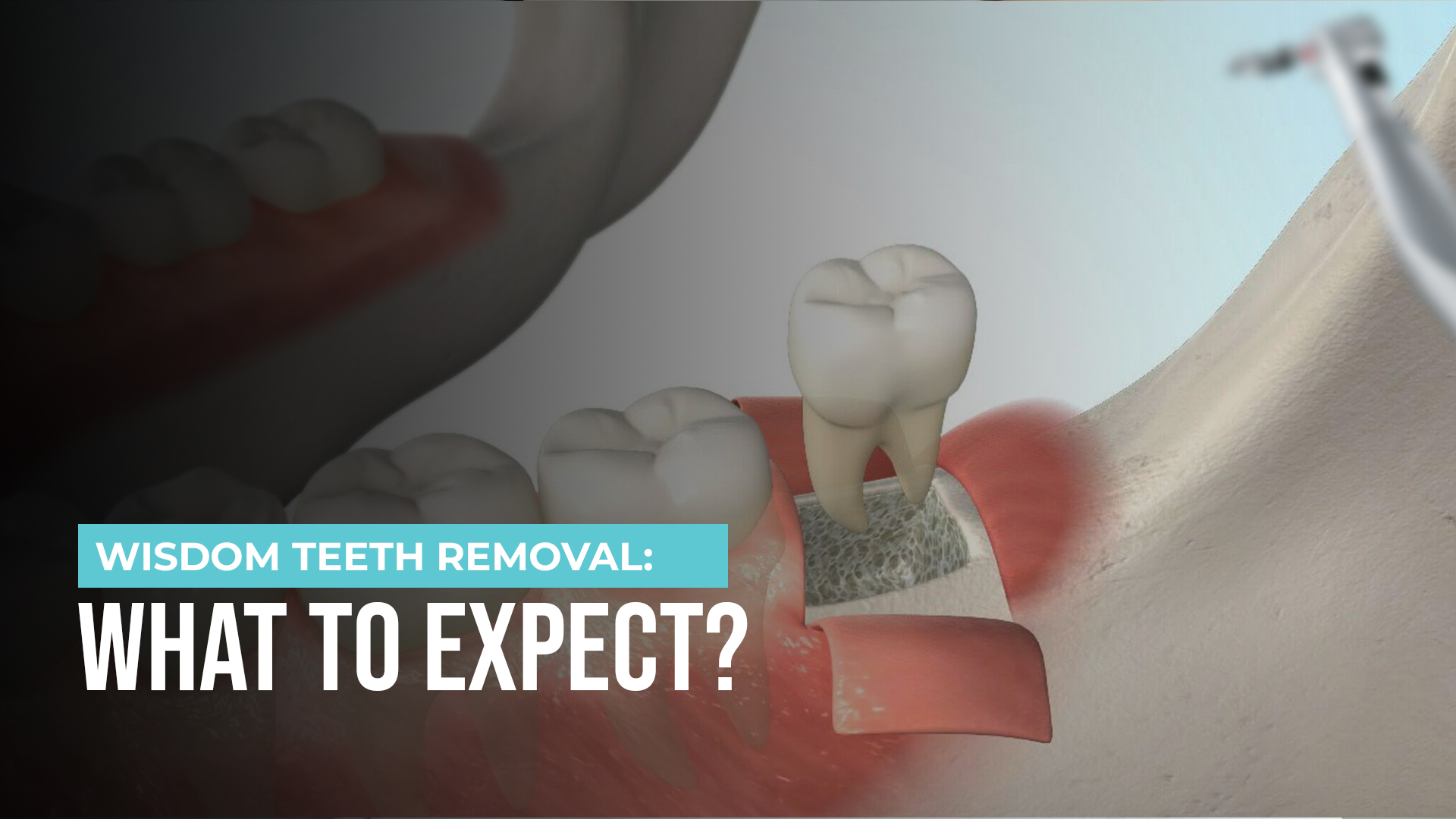
Wisdom tooth removal under local anaesthetic is performed as a chairside procedure for most cases. The area is thoroughly anaesthetised — you will feel pressure during the procedure but not pain. For straightforward erupted teeth, the extraction follows the same principles as any other molar removal. For impacted teeth, a small incision is made in the overlying gum, any covering bone is gently removed, the tooth may be sectioned into pieces for easier removal, and the socket is cleaned and closed with dissolvable sutures.
The total procedure time varies from a few minutes for simple cases to 45 minutes or more for complex surgical extractions. For patients with significant anxiety, we offer sleep dentistry options so the experience is entirely managed.
Recovery: What Is Actually Happening and How to Help It
The First 24 Hours
Immediately following extraction, a blood clot forms in the socket. This clot is not simply a side effect of the wound — it is the scaffolding on which healing tissue grows. Protecting this clot in the first 24 hours is the single most important thing a patient can do. Gentle biting pressure on gauze for 30 to 60 minutes helps initial haemostasis. Avoiding vigorous rinsing, drinking through straws, smoking, and strenuous physical activity all reduce the risk of dislodging the clot.
Days Two Through Seven
Swelling peaks between 48 and 72 hours after surgery and then begins to resolve. Cold packs applied to the outside of the face in 20-minute intervals during the first 24 to 48 hours significantly reduce peak swelling. After 48 hours, warmth is more helpful than cold. Soft foods, adequate hydration, and prescribed or recommended pain relief manage most of the discomfort during this period.
Gentle warm salt water rinses from day two onward keep the socket clean without disturbing healing tissue. The gum will look unusual during healing — white tissue forming in the socket is granulation tissue and is a normal part of the process, not infection.
Most patients are comfortable returning to normal activities and work within three to five days. Swelling and limited jaw opening can persist somewhat longer.
What Is Dry Socket and How Is It Prevented?
Dry socket occurs when the blood clot in the extraction socket is lost or fails to form, exposing the underlying bone to the oral environment. It affects approximately 2 to 5 percent of all extractions and up to 30 percent of lower wisdom tooth removals. Smoking is the single greatest modifiable risk factor, increasing the risk significantly through both the chemical action of tobacco and the mechanical suction of drawing on a cigarette. Oral contraceptives also increase risk due to oestrogen's effect on clot stability.
Symptoms of dry socket are distinctive: a deep, radiating ache that begins three to four days after surgery — after the expected discomfort should be improving — and often radiates toward the ear or temple. If you experience this, contact us promptly. Treatment is straightforward: the socket is gently irrigated, a medicated dressing is placed, and the pain resolves quickly.
Frequently Asked Questions
How do I know if my wisdom teeth need to be removed?
The clearest indicators are recurring pain or swelling at the back of the jaw, difficulty cleaning around the tooth, decay in the wisdom tooth or the adjacent second molar, visible impaction on X-ray, or a history of pericoronitis. Many patients discover impacted wisdom teeth at a routine dental check-up before symptoms appear — which is the ideal time to address them. A clinical examination and dental X-rays at Kaleen Family Dental will give you a definitive answer.
Is wisdom tooth removal painful?
The procedure itself is carried out under local anaesthetic and should not be painful, though pressure and movement are felt. Post-operative discomfort is managed with over-the-counter or prescribed pain relief and is typically most pronounced on days two and three. The recovery from a surgical extraction of an impacted tooth involves more discomfort than a straightforward extraction, and we advise patients accordingly when planning the procedure.
How long does wisdom tooth surgery recovery take?
Soft tissue heals within one to two weeks for most patients. Swelling and any residual jaw stiffness resolve within a week to ten days. Complete bone healing of the extraction socket takes three to six months, though this occurs below the surface without discomfort and does not affect daily function.
Can I eat normally after wisdom tooth removal?
For the first 24 hours, consume only cool, soft foods and avoid hot drinks, alcohol, and anything that requires significant chewing. From day two onward, soft foods that can be eaten without strain on the extraction sites are appropriate — think soups, yoghurt, mashed vegetables, eggs, pasta. Most patients return to a normal diet within a week to ten days as comfort allows.
If you have been told your wisdom teeth may need to be removed, or if you are experiencing pain or swelling at the back of your jaw, book an assessment at Kaleen Family Dental Surgery. We will review your X-rays, explain your options clearly, and plan any necessary treatment at a pace that suits you. Call us on (02) 6241 5941 or book online. We are open Monday to Friday 8am to 5pm and Saturday 8am to 1pm.