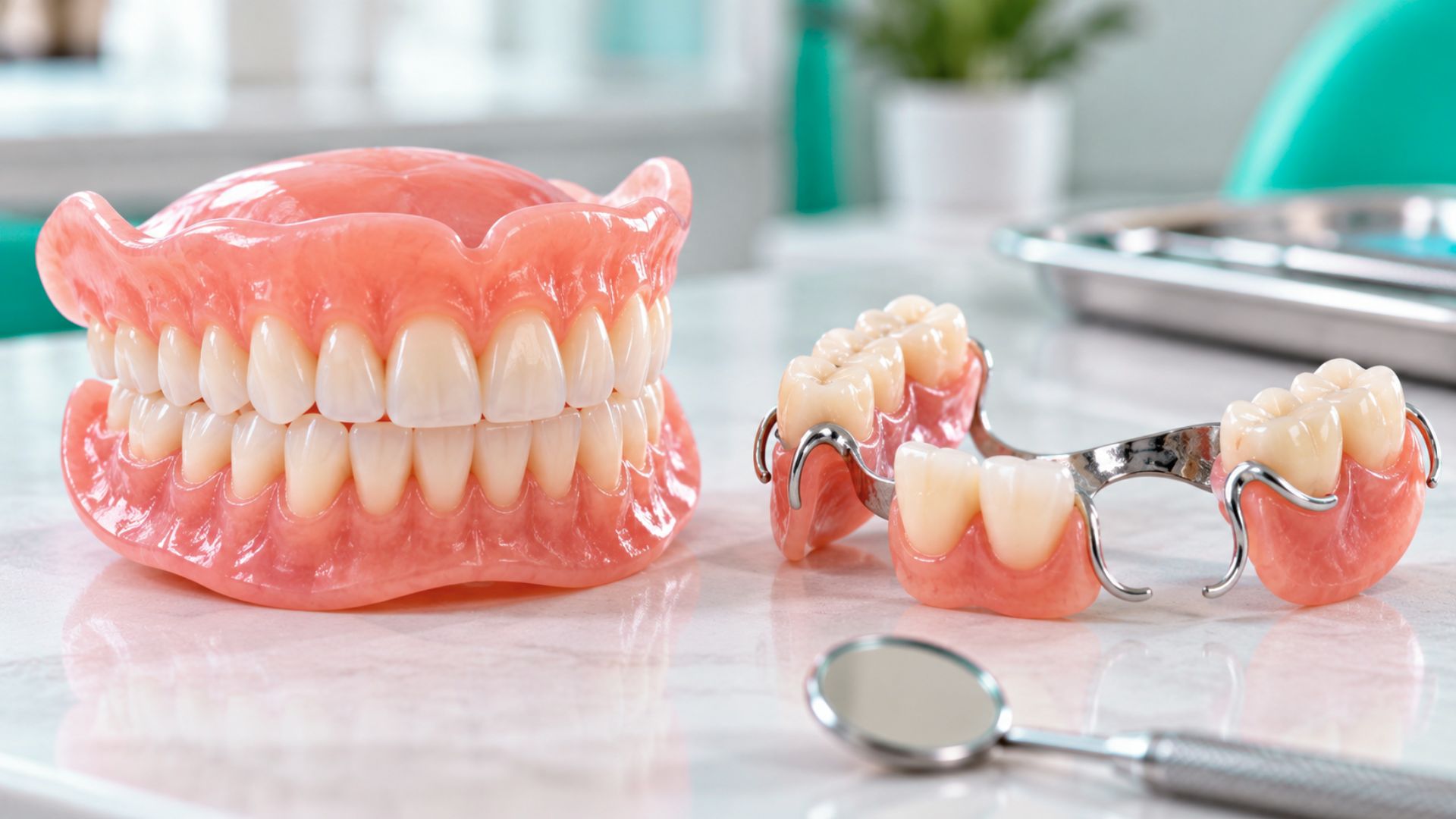
The main difference is simple: full dentures replace all the teeth in a jaw, while partial dentures replace only some, filling the gaps around the natural teeth you still have. A full denture is for someone who has lost every tooth in the upper or lower arch, and it rests on the gums to recreate a complete set.
A partial denture is for someone who has lost a few teeth but kept others, and it fits around those remaining teeth like a missing piece slotting into a puzzle, usually clipping onto them for support. So the deciding factor is not really preference, it is how many natural teeth you have left. Everything else, from how they stay in place to how they are made, follows from that one distinction.
What a full denture is
A full denture, sometimes called a complete denture, replaces an entire arch of teeth. People need one when all the teeth in the upper jaw, the lower jaw, or both have been lost or have to be removed. It is a removable plate, usually made from acrylic, with a gum-coloured base that supports a full row of artificial teeth.
Because there are no natural teeth left to hold onto, a full denture stays in by resting directly on the gums and the bony ridge underneath. An upper denture covers the roof of the mouth, and that broad surface creates suction that helps it grip reasonably well. A lower denture is trickier, since it has to sit in a horseshoe shape around the tongue with less to hold it, which is why lower full dentures are more prone to moving and often rely on a little adhesive.
What a partial denture is
A partial denture replaces one or several missing teeth while your remaining natural teeth stay in place. Rather than a full plate, it is a smaller appliance that fills only the gaps, shaped to fit precisely around the teeth you have kept.
The big difference in how it works is support. Instead of relying only on the gums, a partial denture anchors to your existing teeth, typically with small clasps or clips that hook around them, which holds it far more securely than a full denture can manage. Partials come in a few types. Acrylic partials have a pink plastic base and are often the more economical choice. Cast metal partials use a slim, strong cobalt-chrome framework that is lighter and less bulky in the mouth. Flexible partials use a softer, gum-coloured material with no visible metal, which many people find comfortable and discreet. A partial also does a quiet but important job beyond filling the gap: it helps stop your remaining teeth from drifting into the space, which they tend to do when a gap is left.
The differences that actually matter
Put side by side, a few practical points separate the two, and these are usually what people really want to know.
Who they suit. This is the heart of it. Full dentures are for a jaw with no remaining teeth, partial dentures for a jaw that still has some healthy ones. If you have even a few sound teeth worth keeping, a partial lets you keep them rather than removing them to fit a full plate.
How they stay put. A full denture relies on suction and the fit against your gums and ridge. A partial clips onto your natural teeth, so it generally feels more stable and secure, especially when eating.
Appearance and comfort. Both are made to look natural, but a partial is smaller and often less intrusive, since it only fills the gaps. A full denture is a larger appliance, and an upper one covering the palate can take some getting used to, affecting the sense of taste and temperature at first.
Cost. A partial denture is usually less expensive than a full denture, simply because it replaces fewer teeth and uses less material, though the exact price depends on the type and the materials. Prices vary from person to person, so it is worth confirming with the clinic for your situation.
Looking after them. Both are removable and need taking out for cleaning, but a partial adds one extra responsibility. Because it clasps onto your natural teeth, keeping those anchor teeth and your gums healthy becomes doubly important, since trapped plaque around the clasps can lead to decay if cleaning slips.
What full and partial dentures have in common
For all their differences, the two share the same basic nature, and it helps to know what that means. Both are removable, so they come out for cleaning and usually overnight, unlike fixed options such as implants or bridges. Both take a short adjustment period while your mouth learns to eat and speak with them.
And both sit on the gums to some degree, which means neither stops the slow bone loss that happens once teeth and their roots are gone. Over the years that shrinkage changes the fit, so both types will eventually need relining or remaking to stay comfortable and secure. None of this makes dentures a poor choice, it is simply the trade-off that comes with a removable, non-surgical solution.
When the alternatives are worth a look
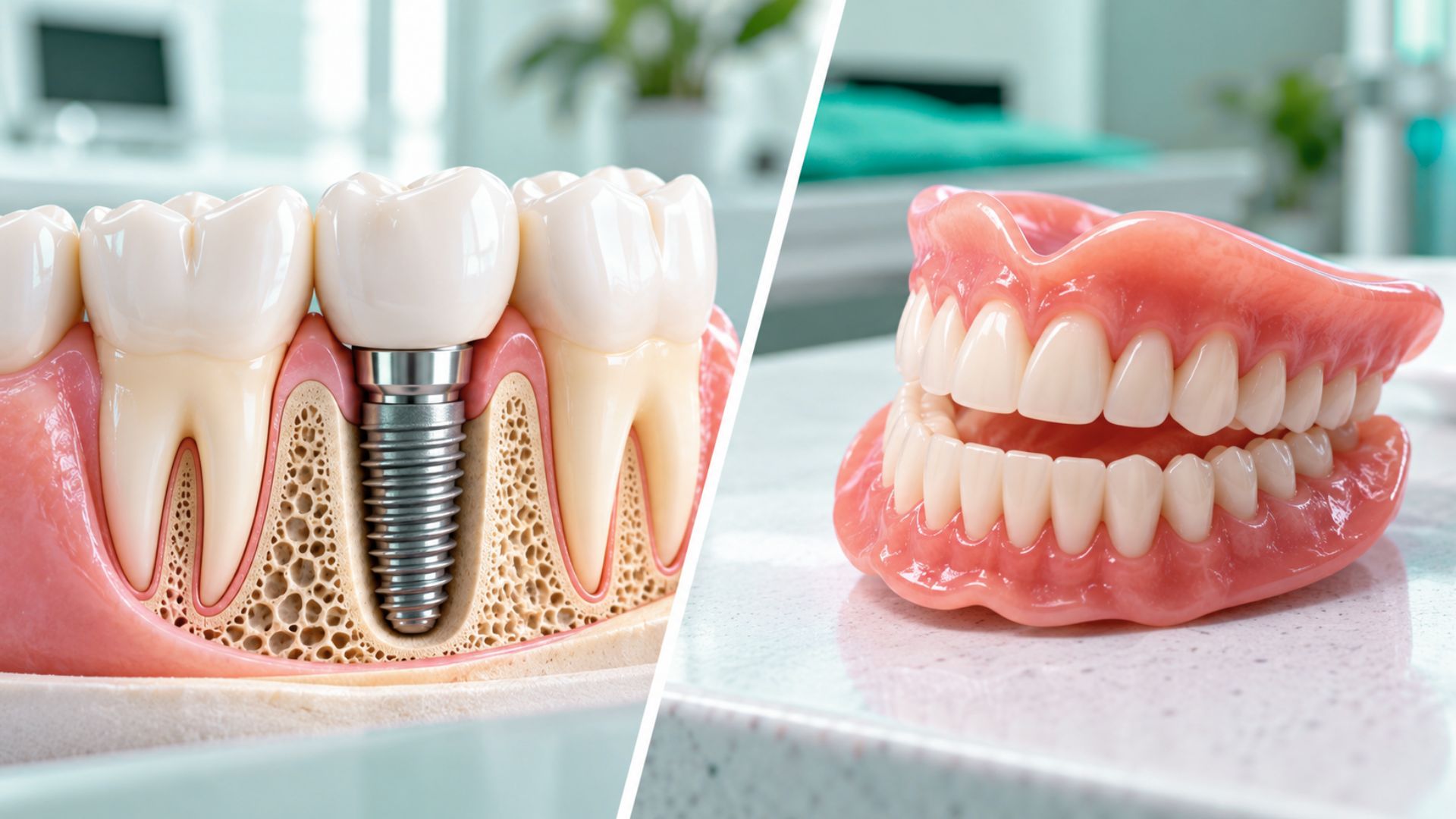
Being honest, full and partial dentures are not the only ways to replace missing teeth, and for some people a fixed option fits their life better. A dental bridge can fill a small gap without being removable, which is an alternative to a partial denture in the right case. Dental implants go a step further by replacing the tooth root, which keeps the jawbone healthier and gives a fixed, natural feel, though at a higher cost.
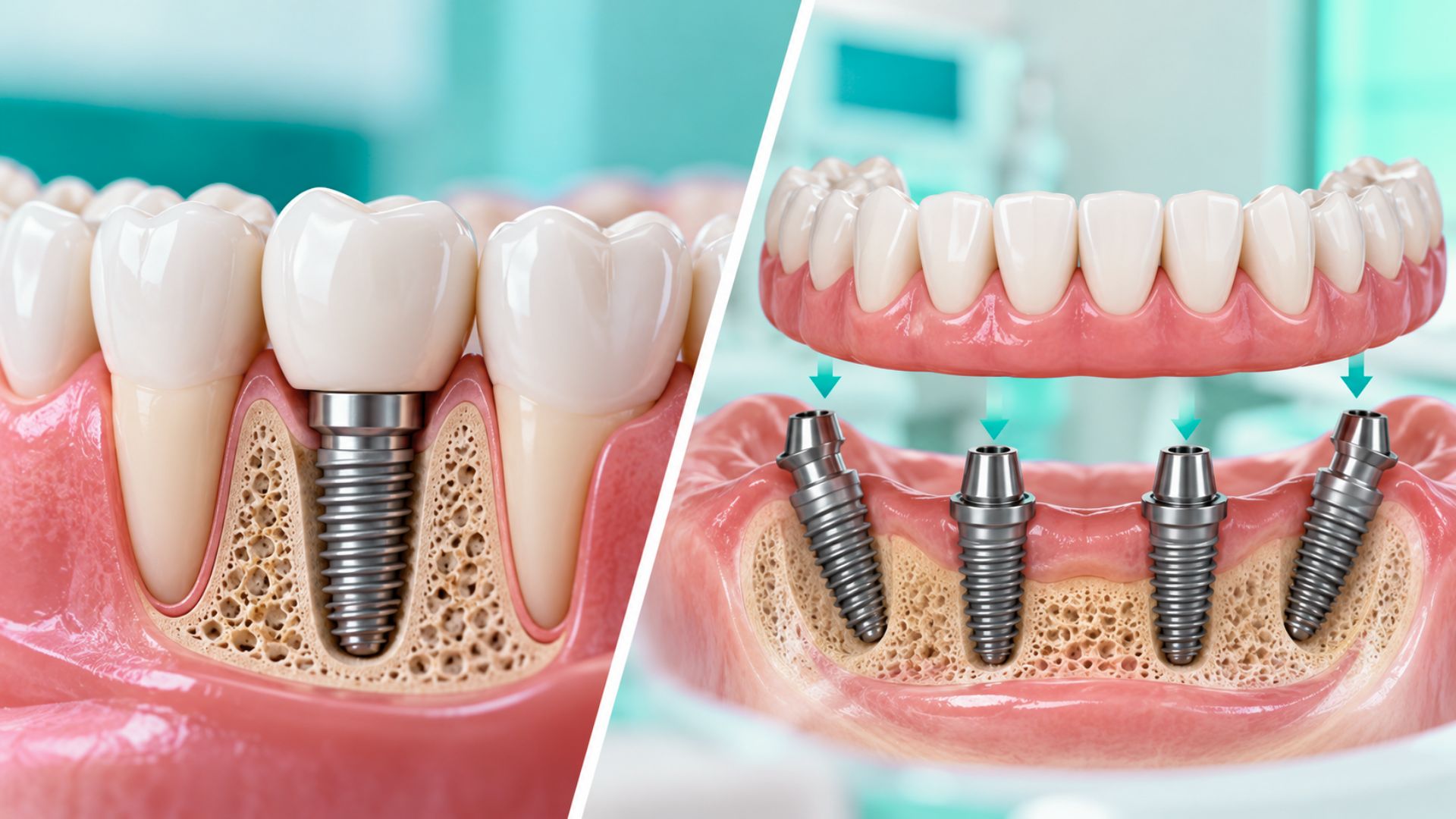
There is even a middle path for full-arch cases, where a denture clips onto a few implants for far more stability, explained in our guide on how a denture implant works. If you are weighing everything up, our overview of implants, dentures, or a bridge lays out the trade-offs. The point is not that dentures are second best, but that the right answer depends on how many teeth are missing, your budget, and what matters most to you day to day.
Frequently asked questions
Can I have a partial denture if I only have a few teeth left? Yes, as long as the remaining teeth are healthy enough to anchor it. A partial denture relies on your natural teeth for support, so they need to be sound. If only a couple of weak teeth remain and they are failing, your dentist may suggest removing them and moving to a full denture or an implant-based option instead, which an assessment will clarify.
Is a full denture or partial denture more comfortable? Many people find a partial more comfortable, because it is smaller and clips securely onto natural teeth rather than relying on suction. A full denture is a larger appliance and takes more getting used to, particularly a lower one, which has less to hold it in place. Comfort is personal, though, and a well-made denture of either type fitted properly makes a big difference.