Conventional dentures have a fundamental limitation that no improvement in materials or design can overcome: they rest on the gum rather than being anchored into the jaw. Over time, as the jawbone resorbs beneath a denture, the fit changes, retention decreases, and the patient adapts by restricting what they eat, using adhesives, and gradually accepting a quality of life that is significantly below what healthy natural teeth provided.
Denture implants, more precisely called implant-supported dentures, address this limitation at its source. By anchoring the prosthesis to implants placed in the jawbone, the result is a denture that does not move, does not require adhesives, and allows a significantly broader diet than a conventional denture ever could. This guide explains how they work, the different systems available, and how to determine whether you are a suitable candidate. You can also read our detailed dental implants guide for a broader overview of implant treatment options.
KEY TAKEAWAYS
Implant-supported dentures use two to four implants to anchor a removable or fixed prosthesis, eliminating the movement and instability of conventional dentures.
All-on-4 implants use four strategically angled implants to support a full-arch fixed restoration. The result is not a traditional denture at all.
Snap-in dentures are still removed for cleaning. Fixed implant bridges are cleaned like natural teeth.
Implants in the jaw prevent the bone resorption that accelerates under conventional dentures.
Candidacy depends on bone volume, general health, and whether existing denture problems warrant the investment. A consultation determines this definitively.
Why Do Conventional Dentures Lose Their Fit Over Time?
When a tooth is lost, the jawbone that was held in place by the tooth root no longer receives the functional stimulation it needs to maintain its density and volume. Resorption begins within months and continues throughout life. A denture resting on this surface accelerates the process because chewing forces are transmitted through the soft tissue of the gum rather than absorbed by the bone as they would be with natural teeth or implants.
The clinical consequence is progressive change in denture fit. A denture that fits well in year one requires relining in year three, another reline or remake in year five or six, and eventually reaches a point where adequate retention is not achievable regardless of adhesive use. The bone loss that drives this process also affects facial appearance. The sunken look commonly associated with long-term denture wear reflects actual bone volume loss rather than simply the absence of teeth.
How Do Implant-Supported Dentures Work?
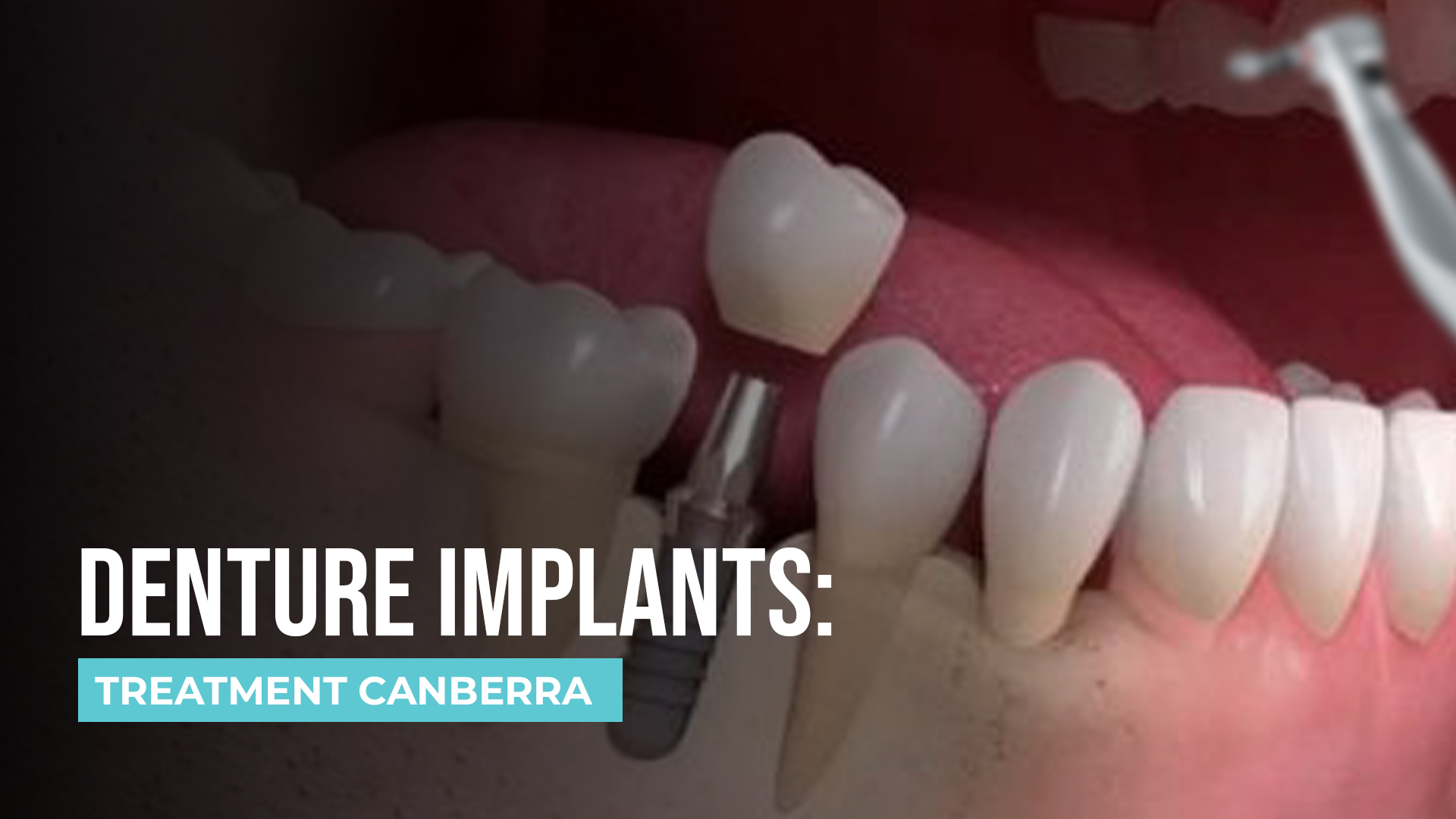
Dental implants are titanium posts placed surgically into the jawbone. Over a period of two to four months, the bone grows into the titanium surface, a process called osseointegration, creating a biological bond that is as strong as the bone itself. This integrated implant then serves as an anchor point for the prosthetic restoration placed on top of it.
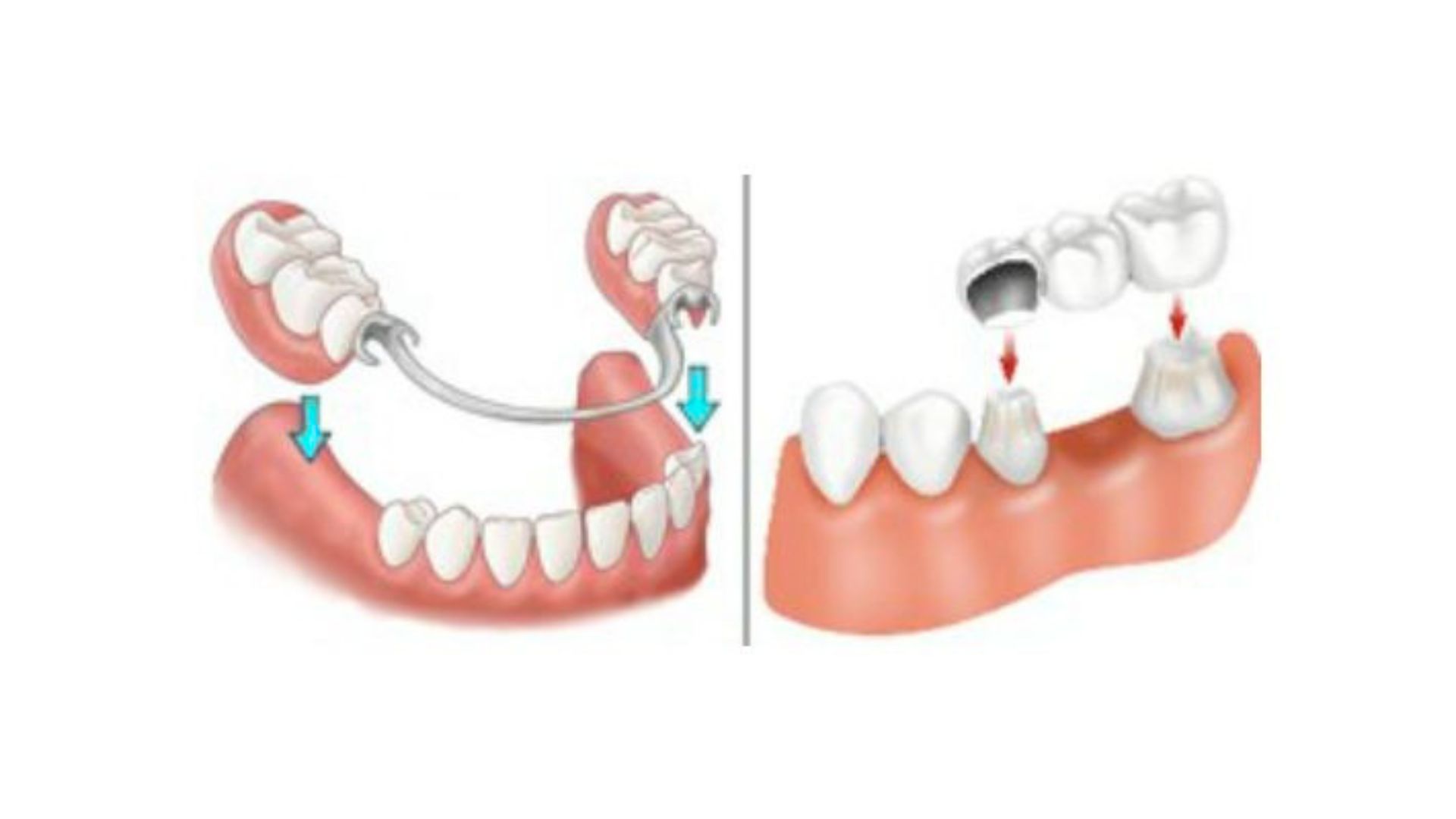
For implant-supported dentures, two to four implants are typically placed in each arch. Attachment mechanisms on the surface of the implants, most commonly ball-and-socket or bar-clip systems, engage with corresponding components in the fitting surface of the denture. The denture clicks firmly into position when placed and remains stable during function.
What Are the Different Types of Denture Implants?
Snap-In Dentures: Removable Implant-Supported Prosthetics
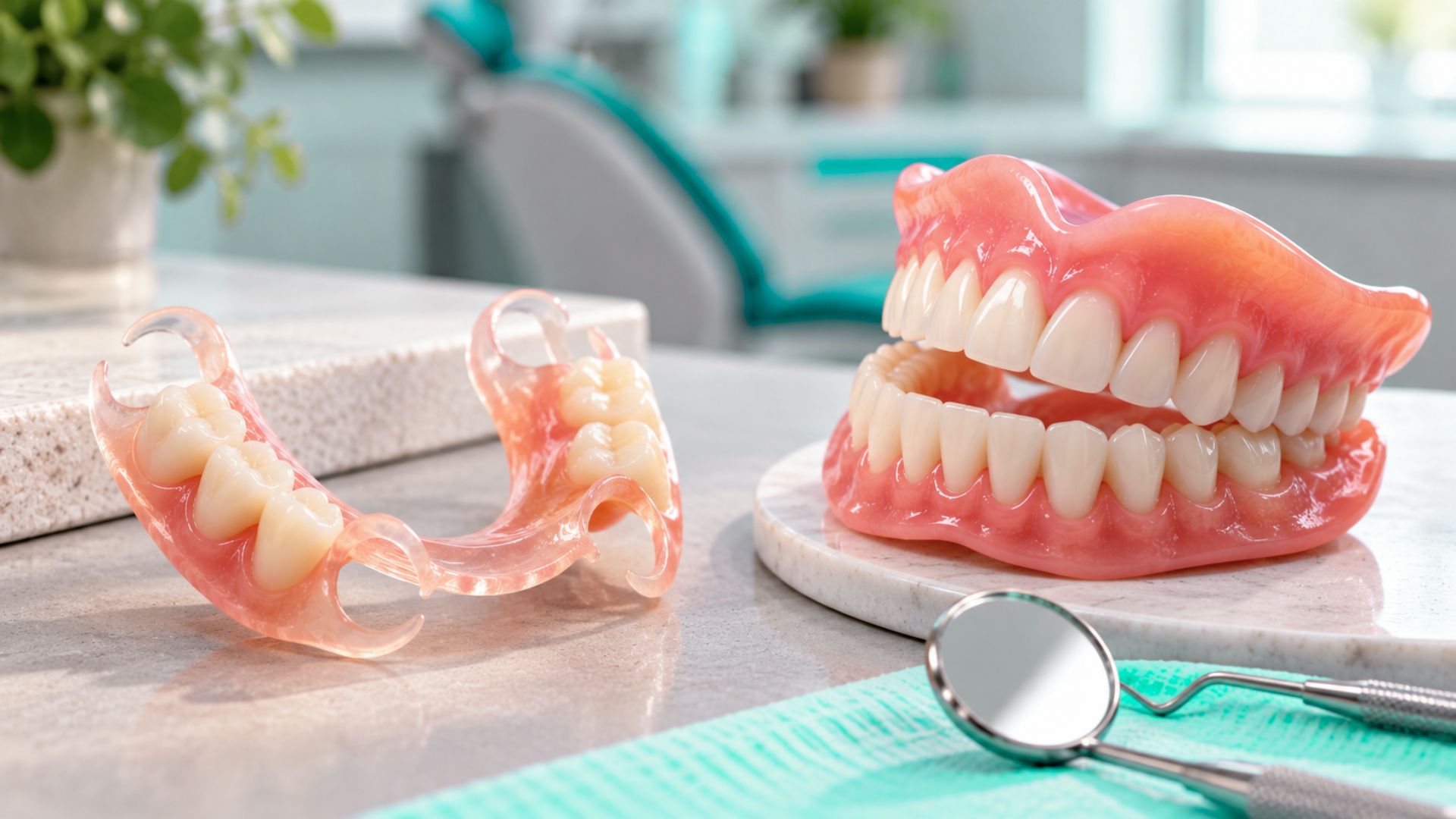
Snap-in dentures, also called overdentures, are removed by the patient for cleaning but are held firmly in place by implant attachments during wear. The difference in stability compared to a conventional denture is pronounced. Patients consistently describe the ability to eat foods they had avoided for years, and the confidence of knowing the prosthesis will not move during speaking or laughing.
Two implants in the lower arch are typically sufficient to dramatically improve the retention of a lower overdenture, which is historically the most problematic arch for conventional denture wearers. The upper arch usually benefits from four implants. Snap-in dentures are easier to maintain than fully fixed options and the implant components can be replaced if they wear over time.
All-on-4 Implants: The Fixed Full-Arch Solution
All-on-4 implant treatment uses four implants per arch, two placed vertically at the front and two placed at a specific angle at the back to maximise bone engagement, to support a fixed non-removable prosthetic arch. The result is not a denture in the traditional sense: the restoration is fixed in the mouth, cleaned like natural teeth, and has no acrylic palate covering the roof of the mouth. Our dedicated dental implants service covers how All-on-4 treatment is planned and carried out at Kaleen Family Dental Surgery.
The All-on-4 protocol was specifically designed to work with the bone volume available in patients who have experienced significant resorption. Bone that would be insufficient to support conventional implant positions can often support the angled posterior implants used in this system. A provisional fixed prosthesis can often be placed on the day of surgery, meaning patients leave with a functioning set of teeth immediately, even while the implants integrate. The final permanent prosthesis is fabricated once integration is confirmed, typically four to six months later.
All-on-6 and Individual Implant Bridges
Where greater bone volume is available, some patients benefit from All-on-6 treatment, which provides additional support and load distribution across six implants per arch. Individual implant-supported bridges, replacing specific sections of missing teeth rather than a full arch, are another option where the pattern of tooth loss is more limited. A full comparison of implant options versus other tooth replacement alternatives is covered in our post dental implants, dentures or a bridge: how to think through your options.
Who Is a Suitable Candidate for Denture Implants?
The primary clinical requirements are sufficient jawbone volume and density at the proposed implant sites, healthy gum tissue, and systemic health that permits a surgical procedure. Uncontrolled diabetes, active smoking, and certain medications that affect bone metabolism are factors that affect both candidacy and long-term success rates and are reviewed at consultation.
Bone volume is the most common concern for patients who have worn conventional dentures for many years. Significant resorption may have occurred, but this does not automatically preclude implant treatment. All-on-4 protocols are specifically designed to work with reduced bone volumes, and bone grafting can build volume in specific areas where conventional implant placement requires it. A cone beam CT scan gives us a precise three-dimensional picture of available bone before any treatment is planned.
Age, by itself, is not a barrier to implant treatment. We treat patients in their 70s and 80s for implant-supported dentures with good outcomes when the clinical conditions are appropriate. Patients with significant dental anxiety can also discuss sleep dentistry options to make the surgical appointment more comfortable.
What Does Denture Implant Treatment Cost?
A two-implant lower overdenture, the most cost-effective starting point for conventional lower denture wearers, typically begins from approximately $7,000 to $10,000 including the implants, attachments, and the prosthesis. All-on-4 treatment for a full arch typically ranges from $18,000 to $30,000 depending on the complexity of treatment and whether the existing prosthesis can be adapted or needs to be remade.
At Kaleen Family Dental, we provide detailed written treatment plans and cost estimates before any treatment is agreed to. Flexible payment options including staged treatment help manage the total cost over time. Some private health funds with major dental extras may contribute a rebate to implant placement. Full information on health fund coverage and payment options is available on our health funds and payment plans page.
What Does the Adjustment Period Look Like After Denture Implants?
Patients who transition from conventional dentures to implant-supported prosthetics consistently report that the adjustment is more positive and faster than they expected. The initial surgical recovery from implant placement involves some swelling and discomfort for three to five days, managed with prescribed medication. During the integration period, a conventional or provisional prosthesis is worn.
Once the implant-supported prosthesis is in place, the adjustment is primarily about relearning to eat with confidence, which comes quickly when the prosthesis does not move. Many patients report eating foods they had avoided for years within weeks of treatment. The absence of palatal coverage in a fixed All-on-4 prosthesis also produces a noticeable improvement in taste and thermal sensation that patients find unexpectedly pleasing.
Frequently Asked Questions
Can you get implants if you have had dentures for many years?
In most cases, yes. The length of time a patient has worn conventional dentures directly affects the degree of bone resorption that has occurred. Significant bone loss may require treatment under All-on-4 protocols, which are designed for reduced bone volumes, or bone grafting to restore volume for conventional implant placement. A cone beam CT scan at your consultation will establish exactly how much bone is available and which treatment approach is appropriate.
Do denture implants look natural?
Modern implant-supported prosthetics are designed to replicate the appearance of natural teeth and gum tissue as closely as possible. Fixed All-on-4 restorations in particular produce an outcome that is difficult to distinguish from natural dentition in appearance and function. The prosthesis is custom-fabricated to suit your facial proportions, skin tone, and aesthetic preferences.
How long do implant-supported dentures last?
The implants themselves, when properly maintained, can last decades. Many function for 20 years or longer. The prosthetic component placed on the implants has a shorter lifespan: removable overdentures typically require replacement or significant servicing every 10 to 15 years, with attachment component replacement every five to seven years. Fixed prostheses are similarly durable with appropriate maintenance.
Is the implant surgery painful?
Implant placement is performed under local anaesthetic, with sedation available for anxious patients. The procedure itself involves pressure and movement rather than pain. Post-operative discomfort in the first three to five days is managed with prescribed pain relief and anti-inflammatory medication. Most patients find the experience more manageable than they anticipated, particularly when they understand what to expect beforehand.
Book a Denture Implant Consultation at Kaleen Family Dental Surgery
Living with unstable dentures is not something you simply have to accept. Implant-supported dentures have given thousands of Australian patients back the ability to eat freely, smile without self-consciousness, and stop thinking about their teeth during every meal and conversation. Book a consultation at Kaleen Family Dental Surgery to find out whether you are a candidate and what treatment would look like for you specifically.
Open Monday to Saturday at 136 Gateway Boulevard, Kaleen ACT 2617. Call (02) 6241 5941 or book online at kaleenfamilydental.com.au.