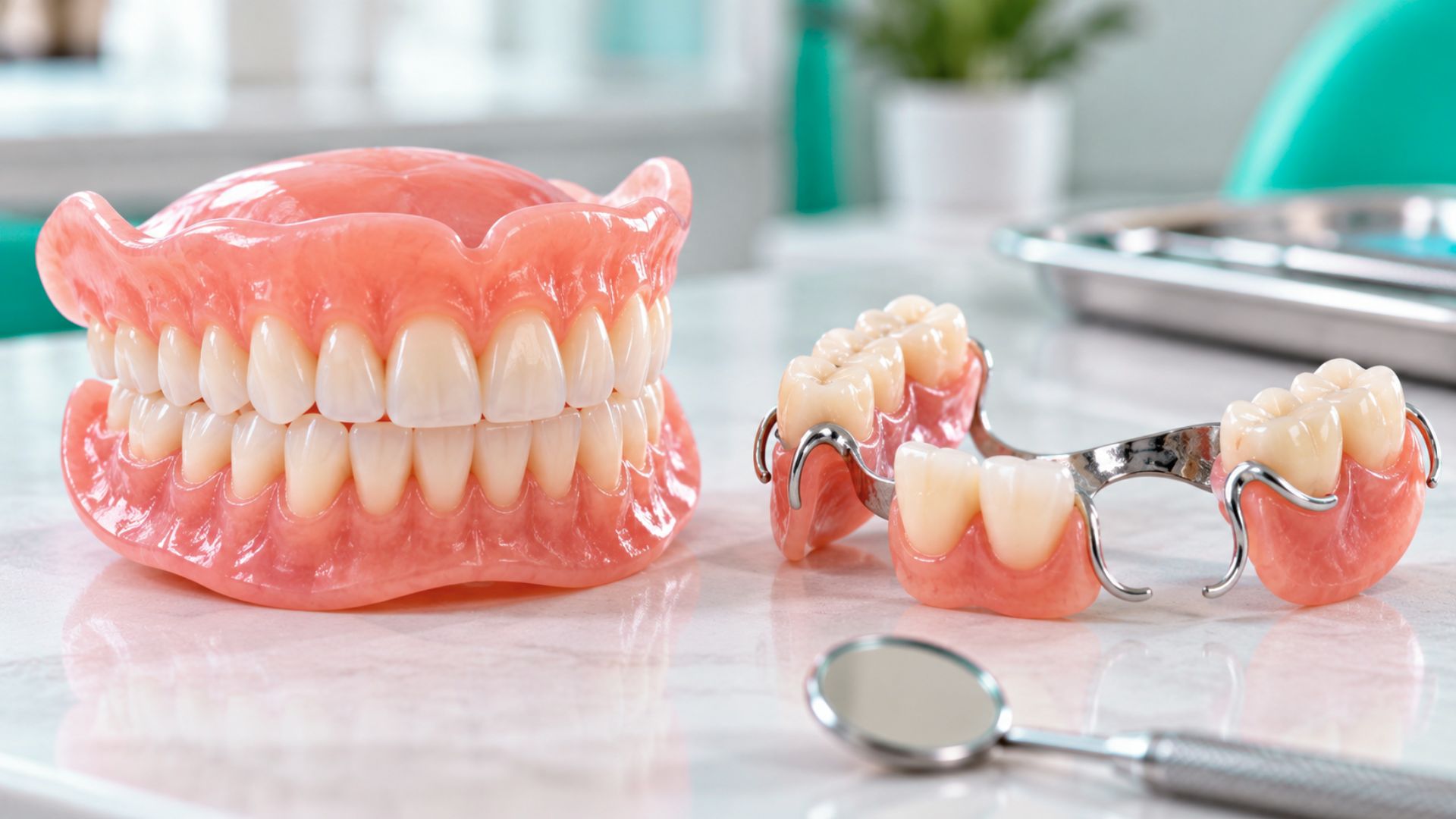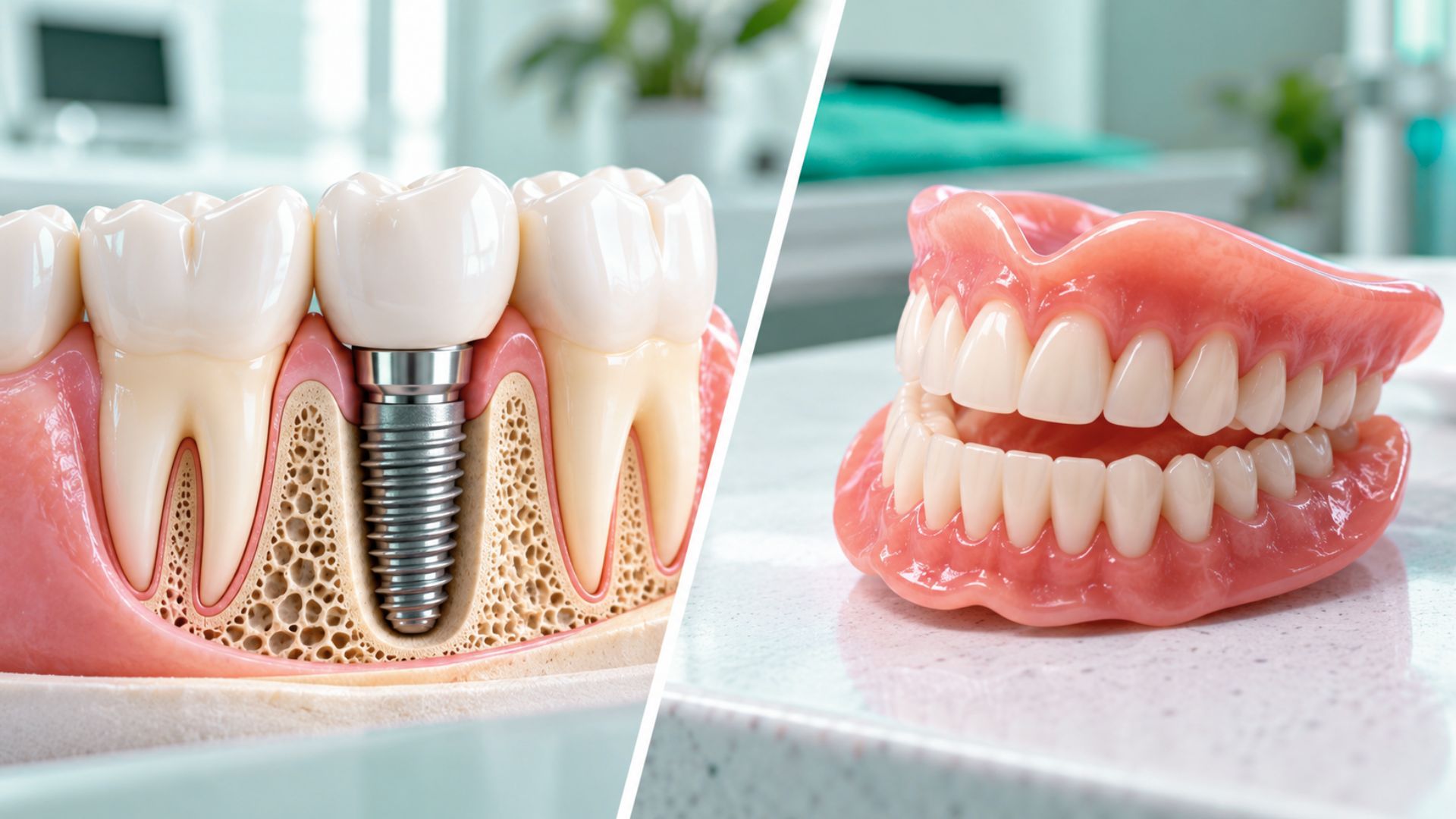
The short answer is that it depends almost entirely on how many teeth you are replacing, because the two are really designed for different situations. Individual implants are best when you are missing one tooth or a few scattered teeth and still have healthy teeth of your own. All-on-4 is designed for people who have lost, or are about to lose, all the teeth in a jaw, replacing a whole arch with a fixed set of teeth anchored on just four implants.
So for most people the decision is not a free choice between two equal options. It is guided by your mouth. The real crossover point, where it becomes a genuine decision, is when someone facing the loss of a full arch has to weigh up many individual implants against a single All-on-4 solution. That is the comparison worth understanding.
What each one actually means
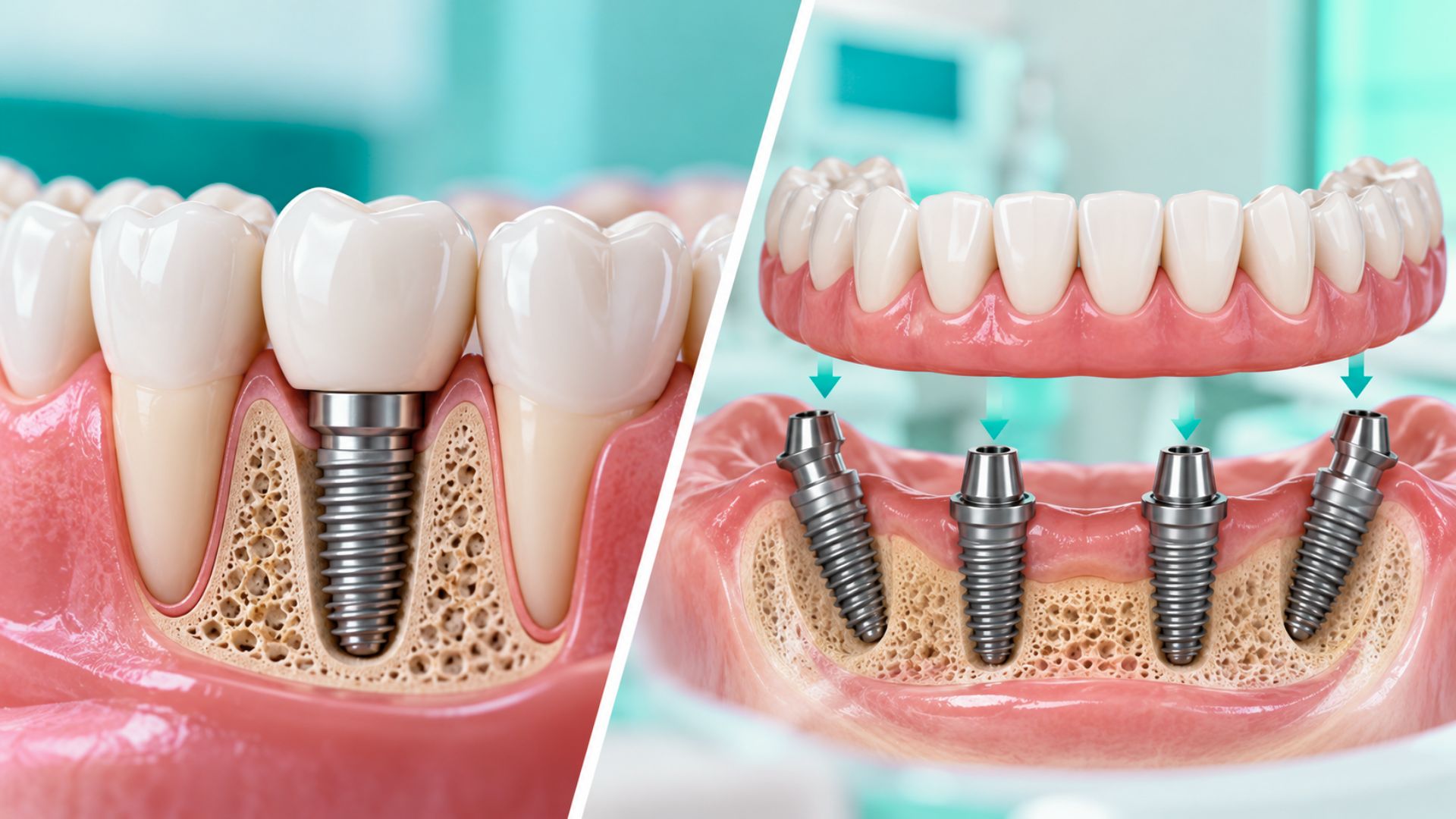
It helps to be clear on the two approaches, because the names can be confusing. With individual implants, each missing tooth is replaced by its own titanium post topped with a crown, so one implant equals one tooth. If a few teeth are missing in a row, two implants can also support a small bridge between them. Either way, you are replacing teeth one at a time or in small groups, and each sits independently in the jaw. The single tooth implant process shows how one of these is placed.
All-on-4 is a full-arch solution. Rather than giving every tooth its own implant, which could mean eight or more posts per jaw, it uses just four implants to support a complete fixed bridge of teeth. The back implants are usually placed on an angle, which lets them anchor into firmer bone and often avoids the need for bone grafting. In many cases a temporary set of teeth goes on the same day, which is why the approach is sometimes called teeth in a day. It is a cousin of the implant-supported denture, explained in our guide on how a denture implant works.
When individual implants make sense
Individual implants are the clear choice when you still have most of your natural teeth and need to fill specific gaps. Replacing one tooth, or a couple scattered across the mouth, calls for targeted implants rather than a full-arch system that would mean removing healthy teeth you do not need to lose.
They also give the most tooth-like result. Each implant stands alone, and you clean between them with normal brushing and flossing, just as you would natural teeth. For someone missing only a handful of teeth, that independence and ease of cleaning is a real advantage, and it keeps every healthy tooth you still have. The trade-off is that once you are replacing many teeth, the cost and the number of surgeries climb quickly, since every tooth needs its own post.
When All-on-4 makes sense
All-on-4 comes into its own for a different person entirely: someone who has lost all the teeth in a jaw, or whose remaining teeth are failing and need removing. For them, replacing each tooth with its own implant would be expensive and complex, and All-on-4 offers a far more efficient path. Four implants carry a whole arch, which means fewer posts, usually lower cost than a mouth full of single implants, and often no need for bone grafting thanks to the angled placement.
The result is a fixed set of teeth that do not come out, unlike a conventional denture, giving back strong chewing and a natural look. For people who have struggled with loose dentures, or who are facing full tooth loss, it can be life-changing. It is worth knowing that an All-on-4 arch is cleaned a little differently, since the teeth are joined as one bridge rather than separate, so you clean underneath it rather than flossing between each tooth. Our broader look at implants, dentures, or a bridge helps place it among the full-arch choices.
Comparing cost and commitment
Cost is often what tips the decision, so it is worth being straight about it. If you need only a few teeth, individual implants are usually the more sensible spend, because you are paying for exactly what you need. Once you are looking at a whole arch, the maths flips. Eight to ten single implants with crowns in one jaw becomes a very large investment, while All-on-4 delivers a full set of fixed teeth on four implants for less, which is a big part of its appeal.
Time and surgery differ too. Individual implants are placed where teeth are missing, each needing to heal, so replacing many can stretch over months with several procedures. All-on-4 concentrates everything into one planned surgery per arch, often with temporary teeth fitted the same day and the final bridge some months later once healing is complete. Neither is a quick fix for the final result, but All-on-4 generally means fewer separate appointments when a full arch is involved.
How to decide
The honest way to choose is to start with your mouth, not with a preference for one name over the other. Ask how many teeth you are actually replacing. A few gaps point clearly to individual implants. A full or failing arch makes All-on-4, or a full set of individual implants, the real comparison, decided mostly by cost, bone, and what feels right to you.
Then factor in your jawbone and health, which an in-person assessment settles, since these shape what is even possible. The best decision is made with a dentist who lays out every path for your situation, including the costs and the trade-offs of cleaning and longevity, rather than defaulting to one approach.
Frequently asked questions
Is All-on-4 cheaper than individual implants? For a full arch, usually yes. Replacing every tooth in a jaw with its own implant can mean eight or more posts, while All-on-4 supports a complete set of fixed teeth on just four, so it typically costs less for a whole arch. For only a few missing teeth, though, individual implants are the more economical choice, because you pay for just the teeth you need.
Can I choose All-on-4 if I still have some teeth? All-on-4 replaces an entire arch, so any remaining teeth in that jaw would need to be removed first. That makes it suitable when those teeth are already failing or beyond saving. If your remaining teeth are healthy, individual implants that fill only the gaps are almost always the better and more conservative choice, because they keep the natural teeth you still have.