If you have lost teeth or can see it coming, one of the first questions I hear in the chair is a simple one: what are dentures, and would they actually work for me? Dentures are removable replacements for missing teeth and the gum tissue around them, and modern ones are a long way from the clattering plates most people picture. Understanding what dentures are, and which type suits you, makes the whole decision far less daunting.
I have fitted dentures for patients across more than two decades, from a single missing tooth to a complete set, and the technology keeps improving. This guide walks through the types of dentures available, what they are made of, the denture fitting process step by step, and the honest day-to-day of living with them.
What are dentures and how do they work?
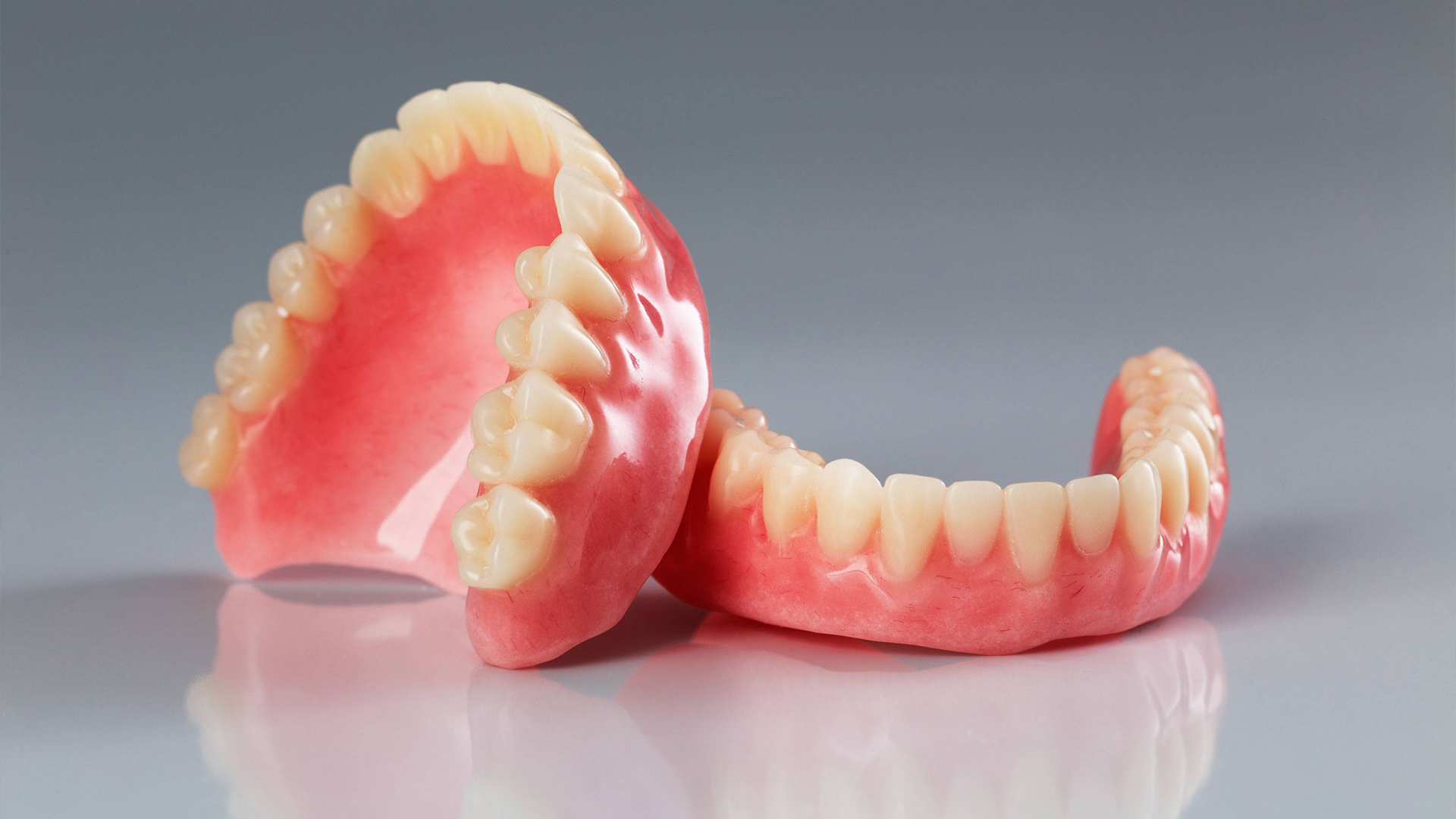
A denture is a custom prosthesis that sits over your gums and replaces teeth you have lost. The base is an acrylic resin tinted to blend with your gums, and the replacement teeth are set into it. It is removable by design, which is what separates dentures from fixed options like bridges or implants.
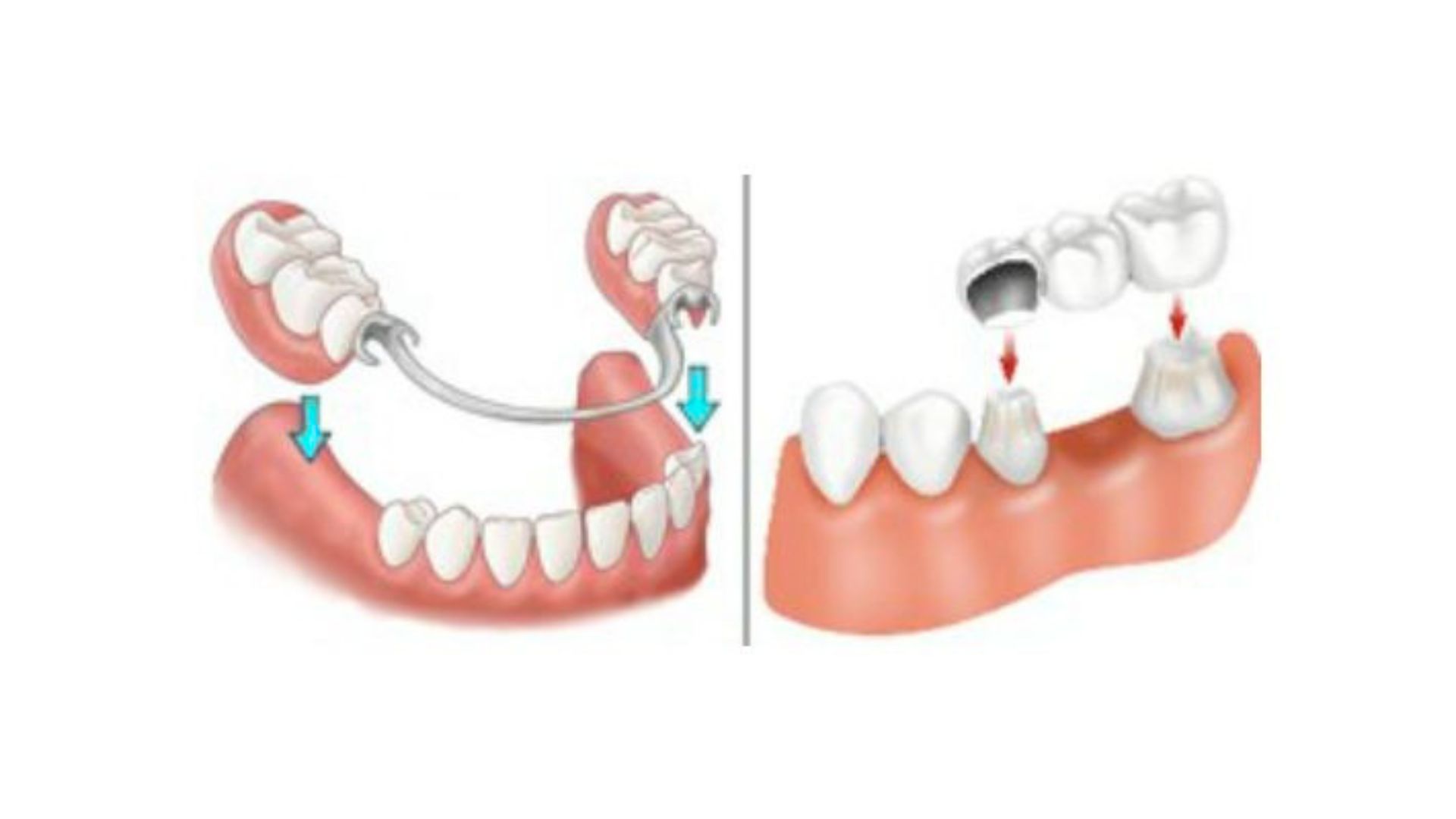
How they stay put depends on the type. A full upper denture works mostly by suction, sealing against the roof of your mouth. A lower denture has no palate to grip, so it balances on the bony ridge and relies on your tongue and cheeks to hold it, which is why lowers take more getting used to. A partial denture clips onto your remaining natural teeth with small clasps.
Beyond filling gaps, dentures do real work. They restore your ability to chew a proper range of foods, they support the lips and cheeks so the face does not look sunken, and they bring back the clear speech that missing teeth often blur.
Why would someone get dentures?
Tooth loss is the obvious reason, but the cause behind it matters. The most common drivers I see are advanced gum disease, which loosens teeth at the root, extensive decay that has gone past saving a tooth, and trauma from an accident.
Leaving gaps unfilled is rarely harmless. Chewing gets harder and your diet narrows. Speech can change. The face loses support and starts to look collapsed around the mouth. Remaining teeth also drift into the space and take on load they were never built for, which puts them at risk too.
Dentures are often the most accessible and affordable way to restore a full set of teeth, which is why they remain so widely used. They are not the only path though, and it is worth seeing how they compare to implants and bridges. Our guide to implants, dentures or a bridge lays out that decision clearly.
What are the main types of dentures?
Dentures are not a single product. There are several types, and the right one depends on how many teeth are missing, the state of your gums and jaw, your budget, and how much stability you want.
Full (complete) dentures
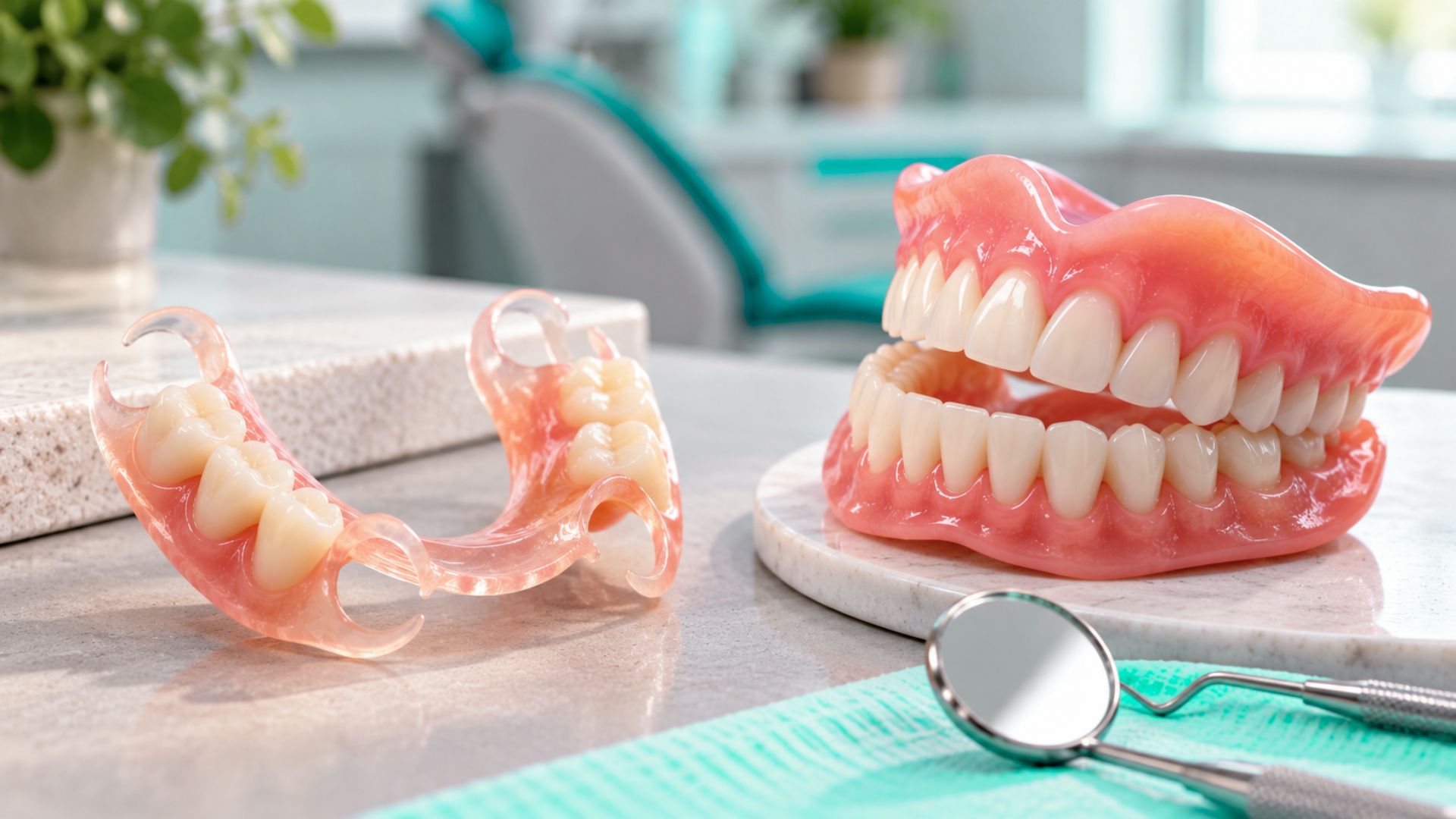
Full dentures replace every tooth in an arch, upper, lower, or both. They sit directly on the gums and are the standard choice when no natural teeth remain in that arch. They are the most economical full-arch option, though the lower denture in particular takes practice to control.
Partial dentures
When you still have some healthy teeth, a partial denture fills the gaps and clasps onto those teeth for support. This is the heart of the full vs partial dentures question: full dentures replace an entire arch, while partials work alongside the teeth you have kept and stop them drifting. The framework is usually a slim cobalt-chrome metal or acrylic.
Flexible dentures
Flexible dentures use a soft nylon-based material instead of rigid acrylic and metal clasps. They are lighter, blend in well because there is no visible metal, and many people find them more comfortable for partial replacement. The trade-off is that they are harder to adjust and reline later, so they suit some cases better than others.
Implant-supported dentures
An implant-supported denture, sometimes called an overdenture, snaps onto two to four implants placed in the jaw. This is the most stable option by a wide margin: no slipping, far better chewing power, and it slows the jawbone shrinkage that loosens conventional dentures over time. To understand the mechanics, see our guide to how a denture implant works, or read about our dental implant treatment.
What are dentures made of?
The base of most dentures is acrylic resin, a medical-grade plastic tinted to match gum colour. It is light, repairable, and easy to adjust. The replacement teeth are usually acrylic, which is kinder to the teeth they bite against, though harder-wearing porcelain is still used in some cases.
Partial dentures often add a cobalt-chromium metal framework for strength, which lets the rest be made thinner and more comfortable. Flexible dentures swap all of that for a single nylon-based thermoplastic. Each material has its place, and part of the fitting consultation is matching the material to your bite, your gums, and how the denture will be cleaned.
What does the denture fitting process involve?
The denture fitting process is a series of short appointments rather than a single visit, and that staged approach is exactly what produces a denture that fits well and looks natural.
1. Consultation and examination. We assess your remaining teeth, gums, and jaw, take any X-rays needed, and discuss which type suits you.
2. Impressions. We take moulds of your mouth, by physical impression or digital scan, so the denture is built to your exact shape.
3. Bite registration. We record how your upper and lower jaws meet, so the new teeth sit at the right height and the bite is even.
4. Wax try-in. A trial denture in wax lets you see and approve the look and fit before anything is finalised. Changes are easy at this stage.
5. Fitting and adjustments. The finished denture is fitted, and we fine-tune any pressure spots over a few short follow-ups.
Can a dentist pull all your teeth at once for dentures?
Yes. When teeth are too decayed or too affected by gum disease to save, removing a full arch, or occasionally a full mouth, in one appointment is a recognised approach. Whether we do it all at once or stage it depends on your general health, any blood-thinning medication, how well you heal, and how you feel about the surgery itself.
You do not have to leave without teeth. This is where an immediate denture comes in: it is made in advance from impressions taken beforehand and fitted the same day the teeth come out, so you walk out with a full smile. Because the gums and bone shrink as they heal, that immediate denture is relined or replaced once healing settles, usually after three to six months. For anxious patients, we can discuss sleep dentistry so the extractions are done while you are deeply relaxed.
Can you sleep with dentures in?
As a rule, no, and for good reasons. Taking your dentures out overnight gives the gum tissue a chance to rest and recover from a full day of pressure.
Wearing them around the clock raises the risk of denture stomatitis, a fungal inflammation of the gums that thrives when tissue is covered constantly. Continuous wear also speeds up the bone loss that loosens dentures over time. Leaving them out at night, soaking in a cleaning solution, keeps both the denture and your mouth healthier.
Implant-retained overdentures are more forgiving, but even then most clinicians suggest removing them overnight for hygiene. Your gums, like the rest of you, do better with a break.
How long do dentures last, and how long can you wear them each day?
A well-made denture typically lasts five to ten years. That is not because the plastic wears out, but because your mouth changes underneath it.
When teeth are removed, the jawbone that once held their roots slowly resorbs. As the ridge shrinks, a denture that fit perfectly starts to loosen. This is why relines, where the fitting surface is rebuilt to match your changed gums, are usually needed every one to two years, well before a full replacement.
Through the day, you wear them as much as you like; the key habit is taking them out at night. If a denture becomes loose, sore, or clicks when you eat, that is the signal to come in for a reline or review rather than reaching for more adhesive. A routine check-up keeps the fit and your gums in good shape.
How fast is bone loss with dentures, and can you slow it?
Bone loss is fastest in the first year after teeth are removed, when the ridge can lose a noticeable amount of its height and width, then continues slowly for the rest of your life. This is normal biology: bone that no longer carries a tooth root is gradually reabsorbed by the body.
A conventional denture rests on the gums and presses on the ridge, but it does not stimulate the bone the way a natural root does, so it does not stop resorption and can add to ridge wear over years. That steady shrinkage is the real reason dentures need relining and eventually replacing.
The one option that genuinely slows the process is implants. An implant transmits chewing force into the bone, which keeps it active and preserves the ridge. That is a major reason patients who want long-term stability look at implant-supported dentures.
What are the downsides of dentures, and do people regret them?
I would rather you hear this from me than discover it later. Dentures have real downsides. There is an adjustment period of a few weeks where speech and eating feel awkward and sore spots are common. Chewing power is lower than natural teeth or implants. You have to remove them to clean, and they need relines and replacements as your mouth changes. Lower full dentures, in particular, can feel less secure than people expect.
This is also why some dentists steer patients away from rushing into full dentures. It is not that dentures are bad. It is that saving healthy teeth, or choosing an implant-retained design that protects the bone, often serves you better in the long run. A good dentist weighs that up with you rather than defaulting to the cheapest fix.
Most regret I see does not come from dentures themselves. It comes from poorly fitting dentures, or from expectations that were never set properly. Patients given a well-made denture and an honest picture of daily life with it are usually very satisfied. If you are unsure, it is worth comparing the alternatives first, which our implants, dentures or a bridge guide is built to help with.
Can people tell if you are wearing dentures?
With a well-made set, usually not. The things that give cheap dentures away are predictable: teeth that are too white and too uniform, a flat or fake-looking gum line, visible metal clasps on a partial, and the obvious tells of clicking or slipping while you talk and eat.
The most natural-looking dentures get the details right. The teeth are sized to suit your face, shaded to match your natural colouring rather than blinding white, and given subtle variation so they do not look manufactured. Proper lip support stops the sunken look, and partials can use clasp-free flexible designs or tooth-coloured clasps so no metal shows.
None of that is luck. It comes from accurate impressions, a careful wax try-in, and a clinician who treats the look as seriously as the fit. That is exactly what the staged fitting process above is for.
Common questions about dentures
What are the three types of dentures?
The three most common types are full dentures, which replace a whole arch, partial dentures, which fill gaps among remaining teeth, and implant-supported dentures, which clip onto implants for stability. Flexible dentures are a popular fourth option, a softer partial with no metal clasps.
How much do dentures cost in Australia?
Cost varies with type and materials. A basic acrylic partial sits at the lower end, full acrylic dentures in the mid range, and implant-supported dentures cost the most because of the surgery and components involved. Most private funds with major dental cover offer a rebate, so check your level of cover first. We can explain health funds and payment plans at your consultation.
What are the newest types of dentures?
The biggest recent shift is digital dentures, designed and milled from a digital scan for a more precise fit and a reproducible record if a replacement is ever needed. Implant-retained overdentures and metal-free flexible dentures are also far more refined than the dentures of a generation ago.
Can you eat normally with dentures?
Most foods, yes, though it takes practice. Start with soft foods cut small, chew evenly on both sides, and build up to tougher textures. Very hard or sticky foods stay challenging with conventional dentures, which is one reason patients who want unrestricted eating often move to an implant-supported design.
What is the hardest food to eat with dentures?
The usual troublemakers are tough cuts of meat, crunchy raw items like whole apples and corn on the cob, sticky toffees and caramels, and small hard pieces like nuts and seeds that can slip under the plate. Cutting food small, chewing on both sides at once, and easing into these foods helps. An implant-retained denture handles them far better than a conventional one.
Can dentures cause bad breath?
They can, if they are not cleaned properly. A denture is a surface that food debris, plaque, and bacteria settle on, and an unclean denture or denture stomatitis is a common hidden cause of bad breath. Brushing the denture daily, soaking it overnight, and keeping your gums and tongue clean clears it up in almost every case.
How do I take my dentures out for the first time?
Work over a folded towel or a basin of water so a drop does not break anything. For a full upper, break the suction first by pressing gently at the gum line or rocking it slightly, then ease it down. For a lower, lift evenly with light rocking. Partials unclip best when you pull evenly on both sides rather than levering one corner. It feels fiddly on day one and becomes second nature within a week.
Talk to us about your denture options at Kaleen Family Dental
Whether you are weighing up your first partial or a full set, the right denture is the one matched to your mouth, not an off-the-shelf guess. At Kaleen Family Dental, Dr Henny assesses your gums, jaw, and goals before recommending a type, and walks you through every step of the fitting process.
If missing teeth are affecting how you eat, speak, or feel about your smile, book a consultation. Call us on 02 6241 5941 or book online, and ask about your payment options so the cost is clear from the start. Replacing missing teeth is one of the most rewarding things we do, and it begins with a single conversation.