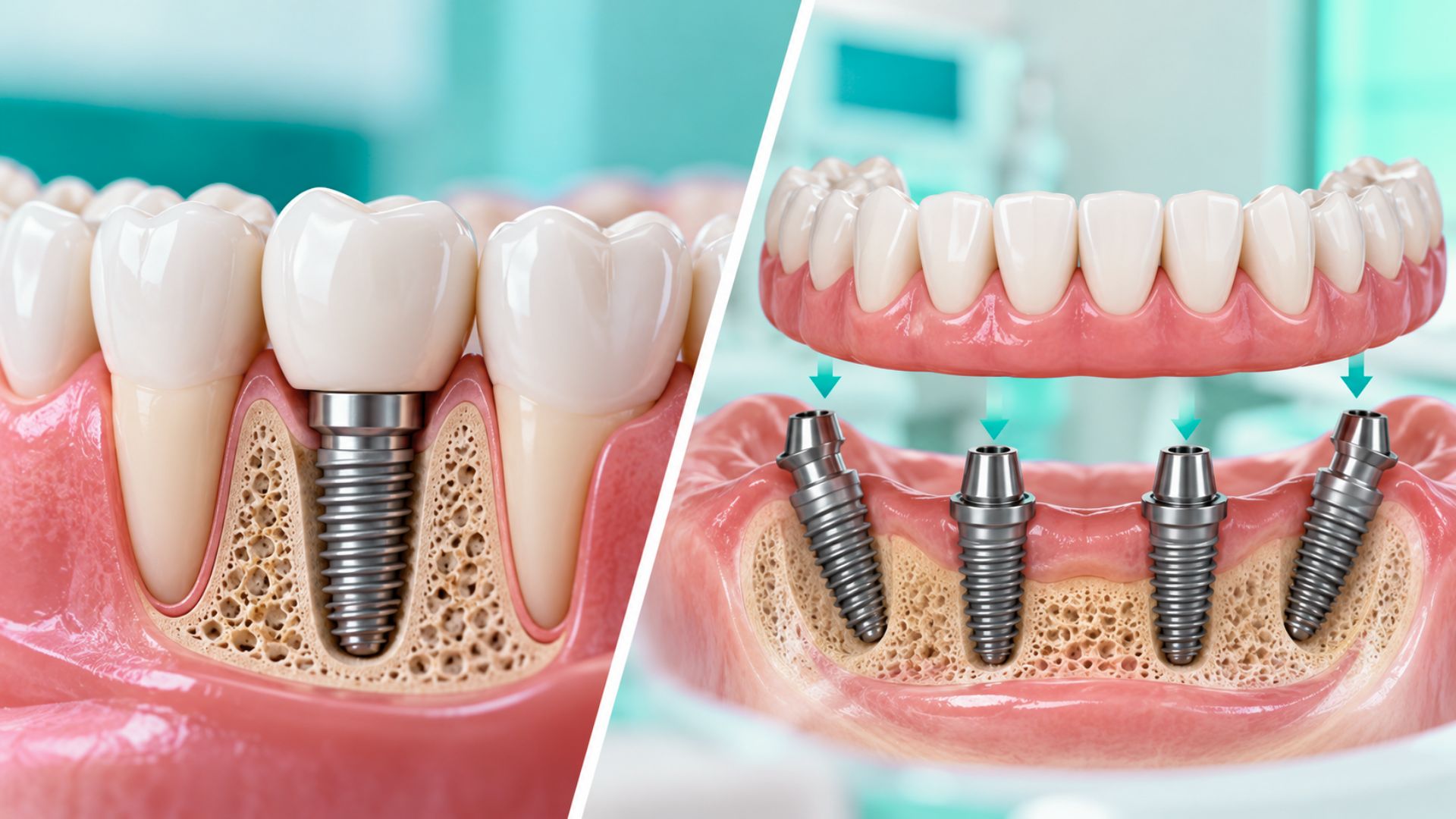

The core difference is that a dental bridge is fixed permanently in your mouth, while a partial denture is removable and comes out for cleaning. Both replace missing teeth, but they do it in very different ways. A bridge fills a gap by anchoring to the teeth on either side, so it stays put and feels like part of your mouth.
A partial denture is a removable plate that fills one or more gaps and clips onto your remaining natural teeth, then lifts out at night and for cleaning. That single distinction, fixed against removable, drives almost everything else, from how many teeth each can replace to cost, comfort, and how you look after them. Which one suits you depends on how many teeth are missing, where they are, and the health of the teeth around the gap.
What a dental bridge is
A dental bridge literally bridges the gap left by a missing tooth. The most common type uses the two teeth either side of the space as supports. Those teeth are shaped and fitted with crowns, and a false tooth, called a pontic, sits between them, all joined as one fixed unit and cemented into place. Once it is on, it does not come out, and you clean it in the mouth rather than removing it.
Because it relies on the neighbouring teeth as anchors, those teeth need to be strong and healthy enough to carry the load. Fitting a traditional bridge also means reshaping them, since they have to be trimmed to take the crowns that hold the bridge, which involves altering teeth that may have been perfectly healthy. The crowns that cap them are made much like any other dental crown, so a bridge is really a set of joined crowns with a replacement tooth built in. It is best suited to replacing one tooth, or sometimes a couple, in a row where the gap has solid teeth on both sides.
What a partial denture is
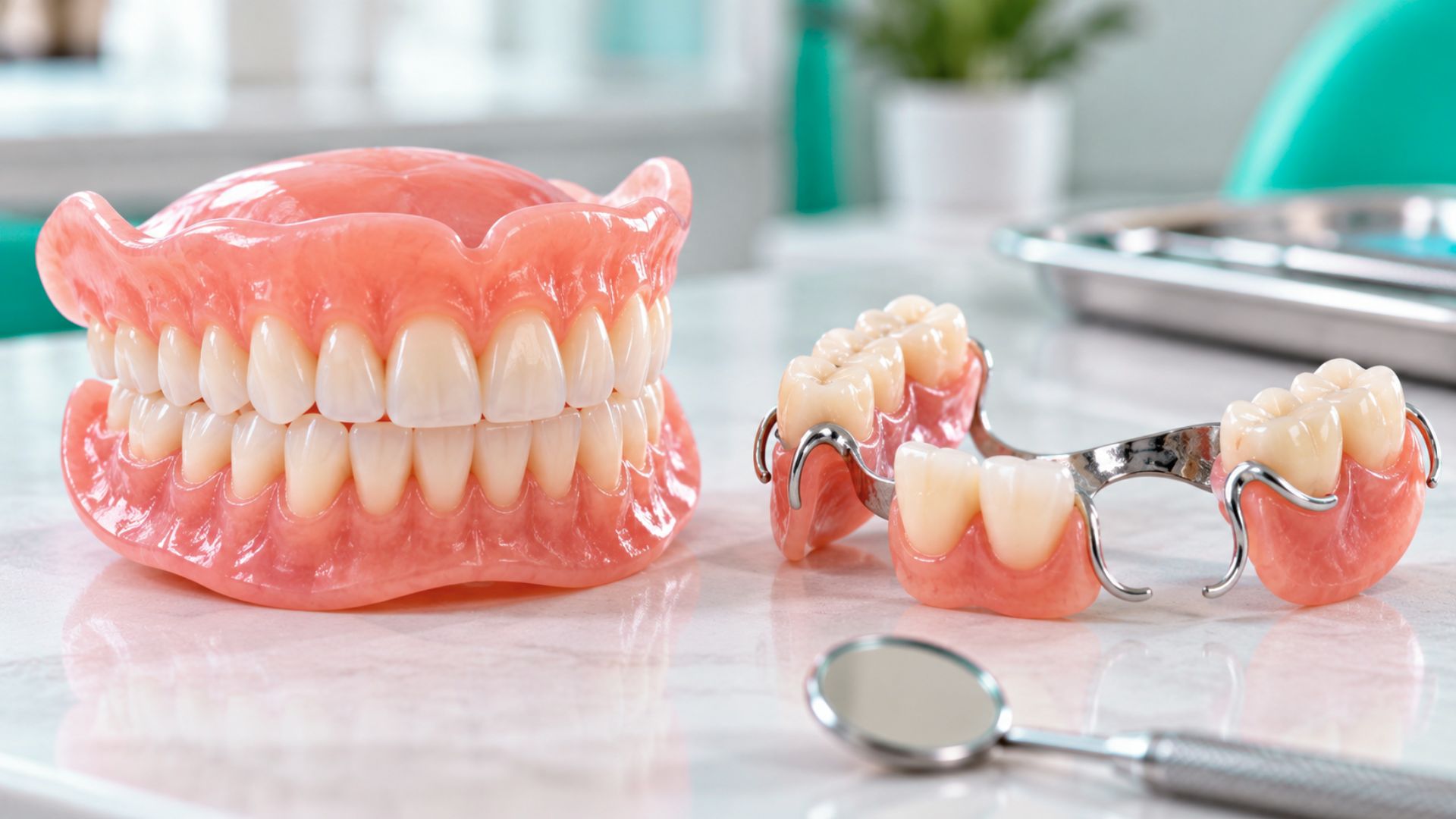
A partial denture takes the removable approach. It is a custom-made plate carrying one or more false teeth, designed to fit around the natural teeth you still have and fill the gaps between them. Instead of being fixed, it clips into place using small clasps or flexible grips that hook onto your existing teeth, and you take it out to clean it and usually overnight.
Partial dentures are more versatile in what they can replace. Because they are not tied to having a healthy tooth on each side of every gap, they can fill several spaces at once, even ones scattered across the mouth, which a bridge cannot easily do. They come in acrylic, slim cast metal, and flexible gum-coloured versions, each with its own balance of comfort, strength, and appearance. Partial dentures sit within the wider family of removable dentures, and they are generally the simpler, less invasive way to replace missing teeth, since the surrounding teeth usually do not need reshaping.
The differences that actually matter
Laid side by side, a handful of practical points separate the two, and these are what most people are really asking about.
Fixed or removable. A bridge stays in permanently and feels like your own teeth, with nothing to take out. A partial denture is removable, which some people find less natural but others prefer for easy cleaning.
How many teeth, and where. A bridge is ideal for one or a few teeth in a row with healthy neighbours. A partial handles multiple gaps or missing teeth spread around the mouth, where a bridge would not work.
Effect on other teeth. A traditional bridge means grinding down the two anchor teeth to fit crowns, which permanently alters them. A partial clips on without reshaping, so it keeps your other teeth intact.
Comfort and feel. A bridge is smaller and fixed, so most people forget it is there. A partial is a larger appliance that takes some getting used to and can feel bulkier, though a well-made one is comfortable.
Cost and longevity. A bridge usually costs more upfront than a basic partial but, cared for well, tends to be a durable long-term fix. A partial is often more economical to start with, though it may need adjusting or replacing over time as the mouth changes.
Cleaning. A partial lifts out, which makes cleaning the denture itself straightforward, but the clasped teeth need careful attention. A bridge is cleaned in place, including underneath the false tooth, which takes a little technique with floss or a special threader.
When each one is the better fit
The right choice follows your situation rather than a general rule. A bridge tends to be the stronger option when you are replacing a single tooth or a small run of teeth, the neighbouring teeth are healthy, and you want a fixed result that feels like your own. A partial denture often makes more sense when several teeth are missing, when the gaps are spread out, when the surrounding teeth are not strong enough to support a bridge, or when cost and a non-invasive approach are the priority.
It is worth knowing that neither is the only answer. Dental implants replace the tooth root itself, which gives a fixed result without reshaping the neighbouring teeth and helps preserve the jawbone, though at a higher cost and with minor surgery. Choosing between a bridge, a partial, and an implant is the wider decision weighed up in implants, dentures, or a bridge, and an in-person assessment is what turns these general points into a clear recommendation for your mouth.
Frequently asked questions
Is a bridge better than a partial denture? Neither is simply better, they suit different situations. A bridge is usually the stronger choice for one or a few missing teeth in a row with healthy teeth either side, because it is fixed and feels natural. A partial denture is better for several or scattered gaps, or when the neighbouring teeth cannot support a bridge, and it is often more economical and less invasive.
Does a bridge or a partial denture damage the other teeth? A traditional bridge requires reshaping the two anchor teeth to fit crowns, which permanently alters them. A partial denture does not reshape teeth, but its clasps rest on natural teeth, and if plaque builds up around them it can lead to decay, so careful cleaning matters. Both are safe when looked after well and reviewed regularly.
Which lasts longer, a bridge or a partial denture? A well-made bridge that is cared for tends to last many years as a fixed, stable fix, while a partial denture may need adjusting, relining, or replacing sooner as the mouth changes shape over time. Longevity for either depends heavily on daily cleaning and keeping up regular dental check-ups.