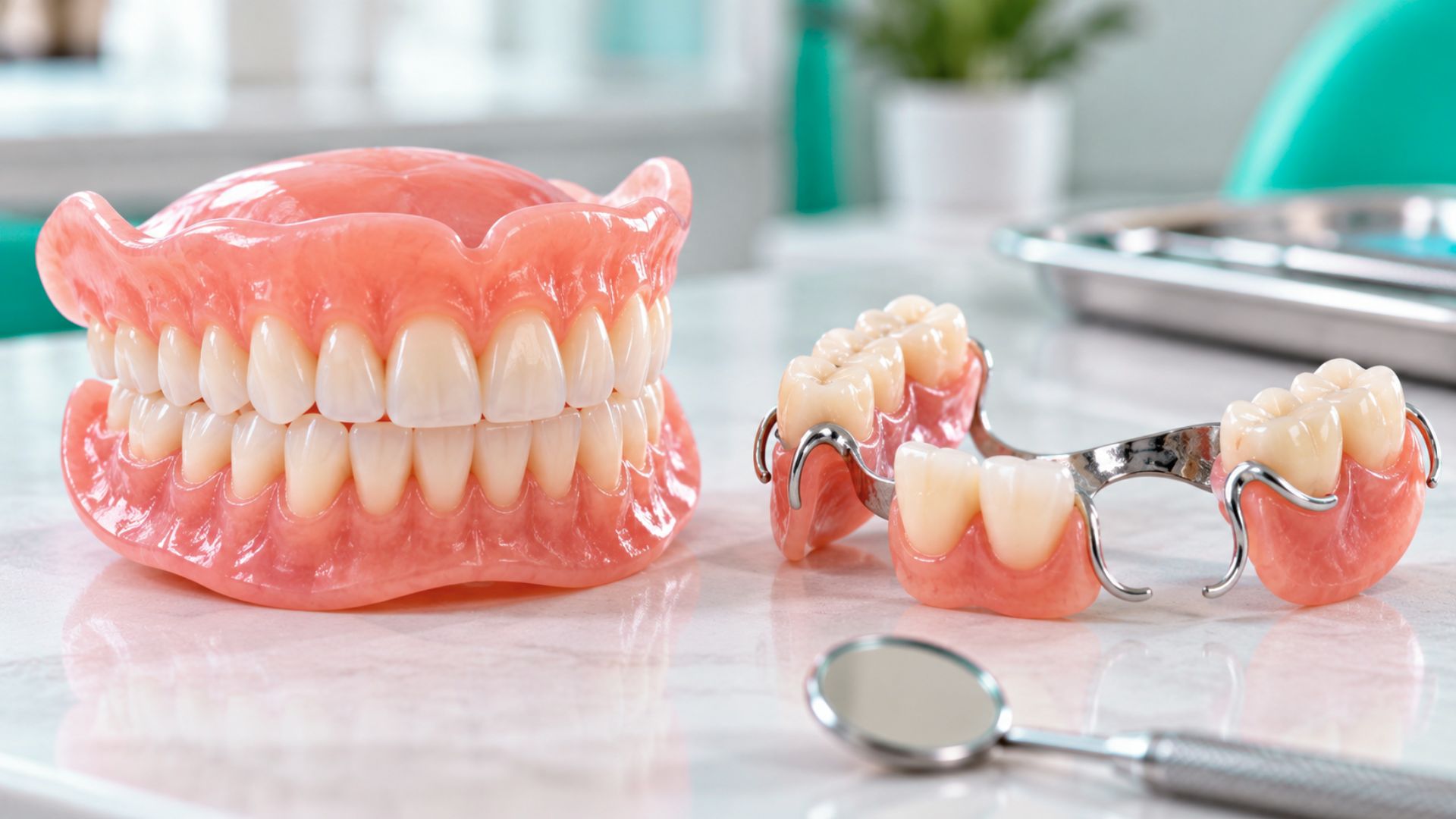
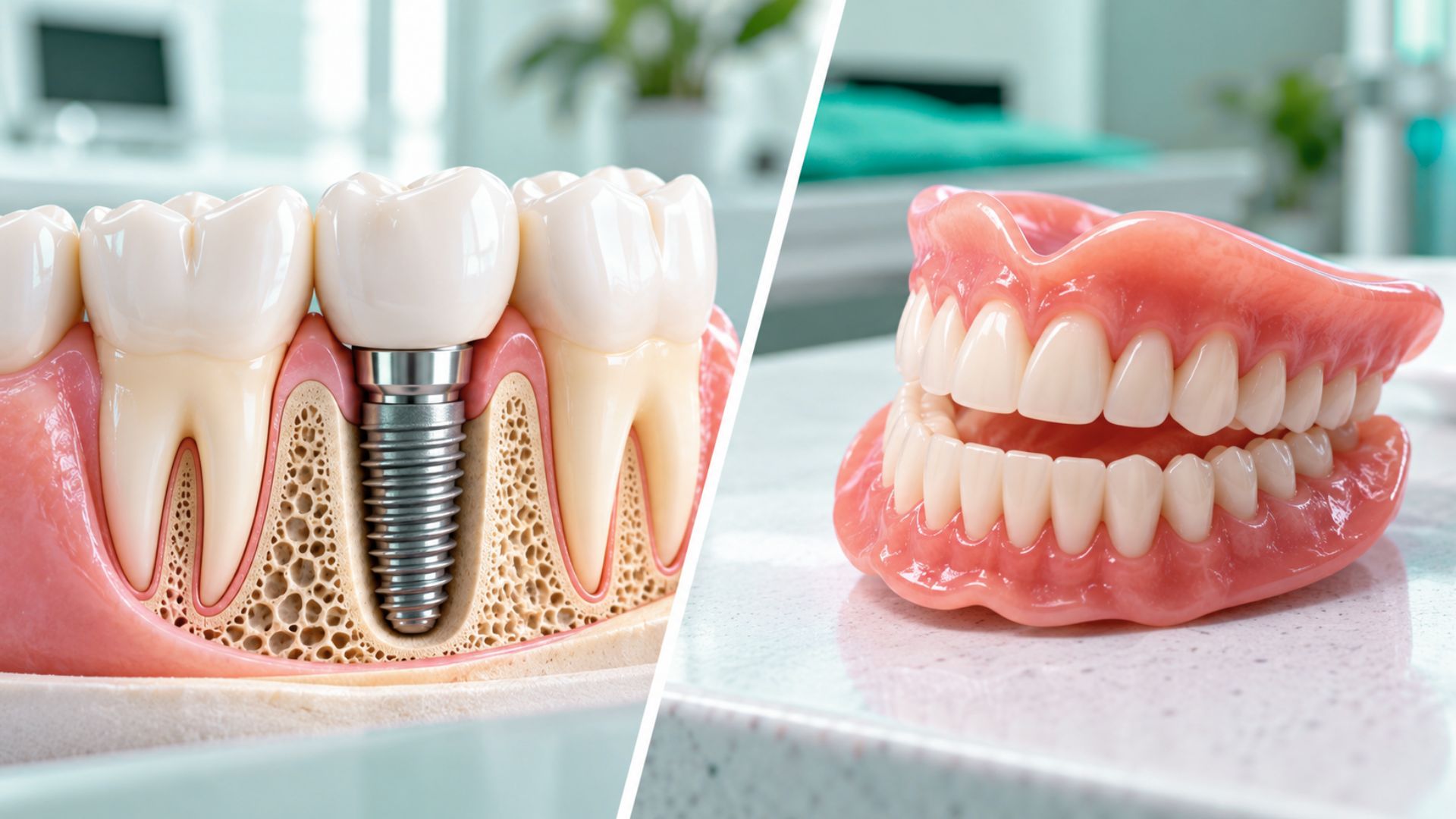
For most people who are suitable for them, dental implants are the better option, but they are not the right answer for everyone, and dentures still have real advantages. Implants tend to win on comfort, chewing strength, how natural they feel, and keeping the jawbone healthy, and they last far longer.
Dentures win on cost, on being non-surgical, and on suiting people who cannot have implants or who need many teeth replaced at once. So "better" depends on what matters most to you: your budget, your health, how many teeth are missing, and how much the feel and function matter day to day. The honest way to look at it is not that one is simply superior, but that each is better for different people and situations.
The short comparison
Before the detail, a side-by-side look at how the two stack up on the things people ask about most.
What matters | Dental implants | Dentures |
Upfront cost | Higher | Lower |
Comfort and stability | Fixed, feel like your own teeth | Can move or slip, especially lower ones |
Chewing strength | Strong, close to natural | Reduced, some foods are harder |
Jawbone health | Preserve bone | Do not stop bone loss |
Surgery | Minor surgery needed | No surgery |
Time to complete | Several months | Weeks |
Looking after them | Brush and floss like real teeth | Remove and clean daily |
Lifespan | Decades, often a lifetime for the post | Usually relined or replaced every 5 to 10 years |
Prices and timelines vary from person to person, so treat this as a general guide and confirm the specifics with your dentist.
Where implants have the edge
The biggest reason dentists often favour implants is that they replace the root of the tooth, not just the part you see. A titanium post sits in the jaw and takes the force of chewing, which keeps the bone stimulated and healthy. Dentures rest on top of the gums, so the bone underneath slowly shrinks over the years, which is why a denture that fit well at first can start to feel loose and need relining.
Implants also feel and work much like natural teeth. Because they are fixed in place, there is no slipping, no clicking, and no adhesive, and you can bite into most foods with confidence. Many denture wearers, especially with lower dentures, find they move around or make eating certain things awkward, and that difference in daily life is a big part of why people upgrade. Implants are cared for simply too, brushed and flossed like your own teeth rather than taken out each night. And they are built to last, with the post often lasting a lifetime and only the crown on top needing replacement down the track. If you are replacing just one tooth, our piece on how a single tooth implant works covers the process in practice.
Where dentures still make sense
None of that makes dentures a poor choice, and it would be misleading to suggest otherwise. For many people they are exactly the right call. The clearest advantage is cost. Dentures have a much lower upfront price, which matters a great deal, particularly when several teeth or a full arch need replacing, where a mouthful of implants becomes a significant investment.
Dentures are also non-surgical, so they suit people who cannot or would rather not have a procedure. Implants need enough healthy jawbone and good general health to succeed, so heavy smokers, people with certain medical conditions, or those who have already lost a lot of bone may not be good candidates without extra treatment first.
For them, a well-made denture is a reliable, far simpler solution. Dentures are quick too, ready in weeks rather than the several months an implant needs to heal, and they can replace many teeth at once without a surgery for each one. If you are new to all this, our overview of what dentures are is a good starting point, and our guide comparing implants, dentures, or a bridge walks through the trade-offs in more depth.
The option in between
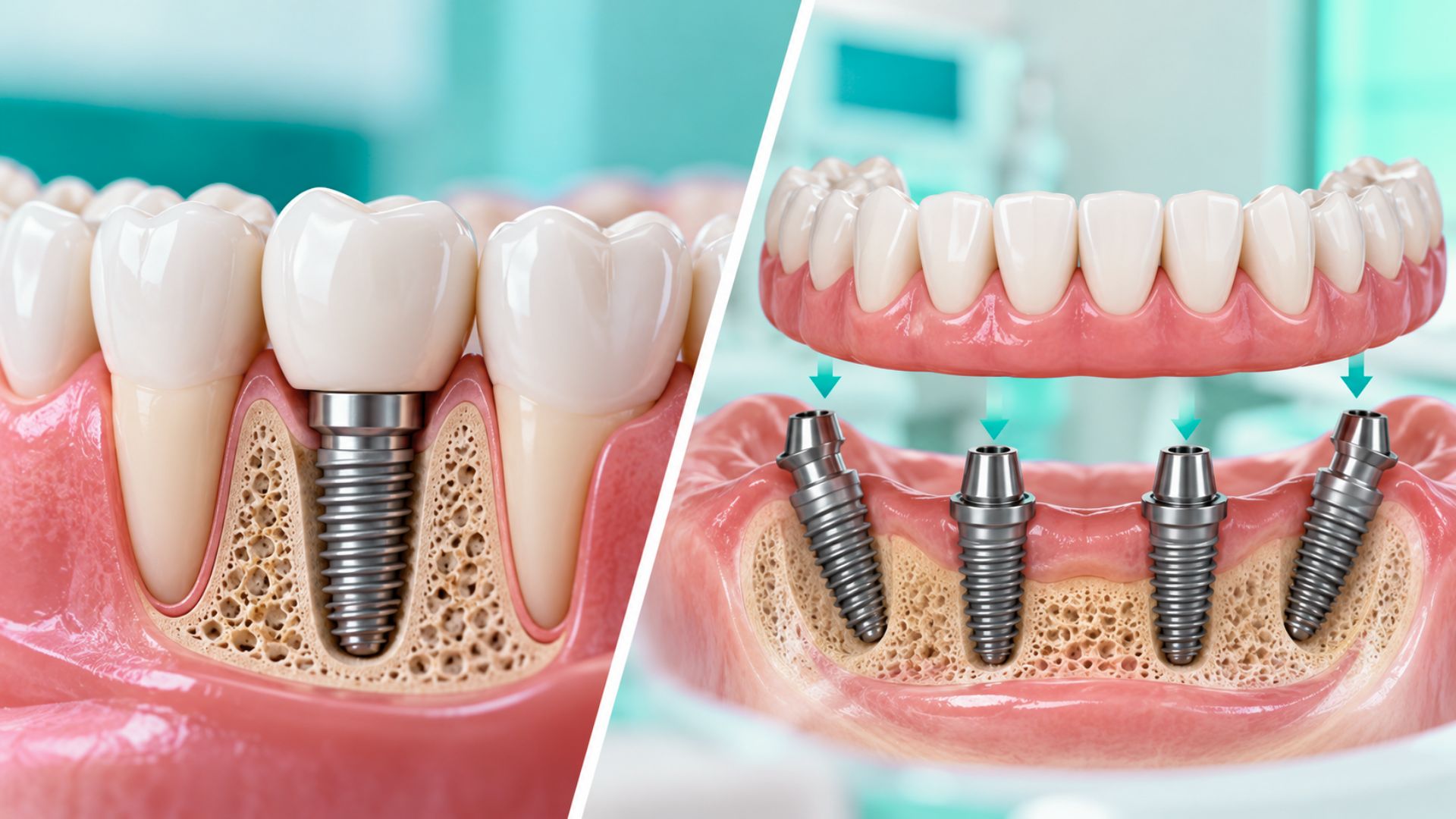
The choice is not always strictly one or the other, and the middle ground is worth knowing about. Implant-supported dentures combine both ideas. A small number of implants are placed in the jaw, and a denture clips securely onto them rather than resting on the gums. This gives much of the stability and bone benefit of implants while needing far fewer posts than replacing every tooth individually, so it costs less than a full set of single implants.
For people missing all or most of their teeth, this is often the sweet spot. The denture no longer slips or needs adhesive, eating becomes far easier, and the implants help hold the jawbone. Our guide on how a denture implant works explains this hybrid in detail. It is a reminder that the real question is rarely implants or dentures in the abstract, but which specific solution fits your mouth and your budget.
So which should you choose
The right answer comes down to a few honest questions. How many teeth are you replacing? For a single gap or a few teeth, individual implants are often ideal. For a full arch, the decision between a conventional denture, implant-supported denture, or full set of implants is really a balance of cost against comfort. What is your budget? If cost is the deciding factor, dentures or an implant-supported denture stretch further. And what does your health allow? Your jawbone, gums, and general health decide whether implants are even an option, which only an in-person assessment can confirm.
What matters is not to assume the most expensive option is automatically right for you, nor to rule out implants on price without knowing the alternatives like implant-supported dentures. A good dentist will lay out every path honestly, including the costs and trade-offs, so you can choose with your eyes open rather than being steered. You can read more about the treatment itself on our dental implants page.
Frequently asked questions
Are implants worth the extra cost over dentures? For many people, yes, because implants last far longer, feel more natural, chew more strongly, and protect the jawbone, which dentures do not. Over a lifetime the gap in value narrows, since dentures need relining or replacing every several years. That said, if budget or health rules implants out, a quality denture or an implant-supported denture is still a very good solution.
Can I switch from dentures to implants later? Often yes, though it depends on how much jawbone remains. Because dentures do not prevent bone loss, people who have worn them for many years may have less bone to anchor implants and might need a bone graft first. If you think you may want implants down the track, it is worth raising early, since acting sooner usually keeps more options open.