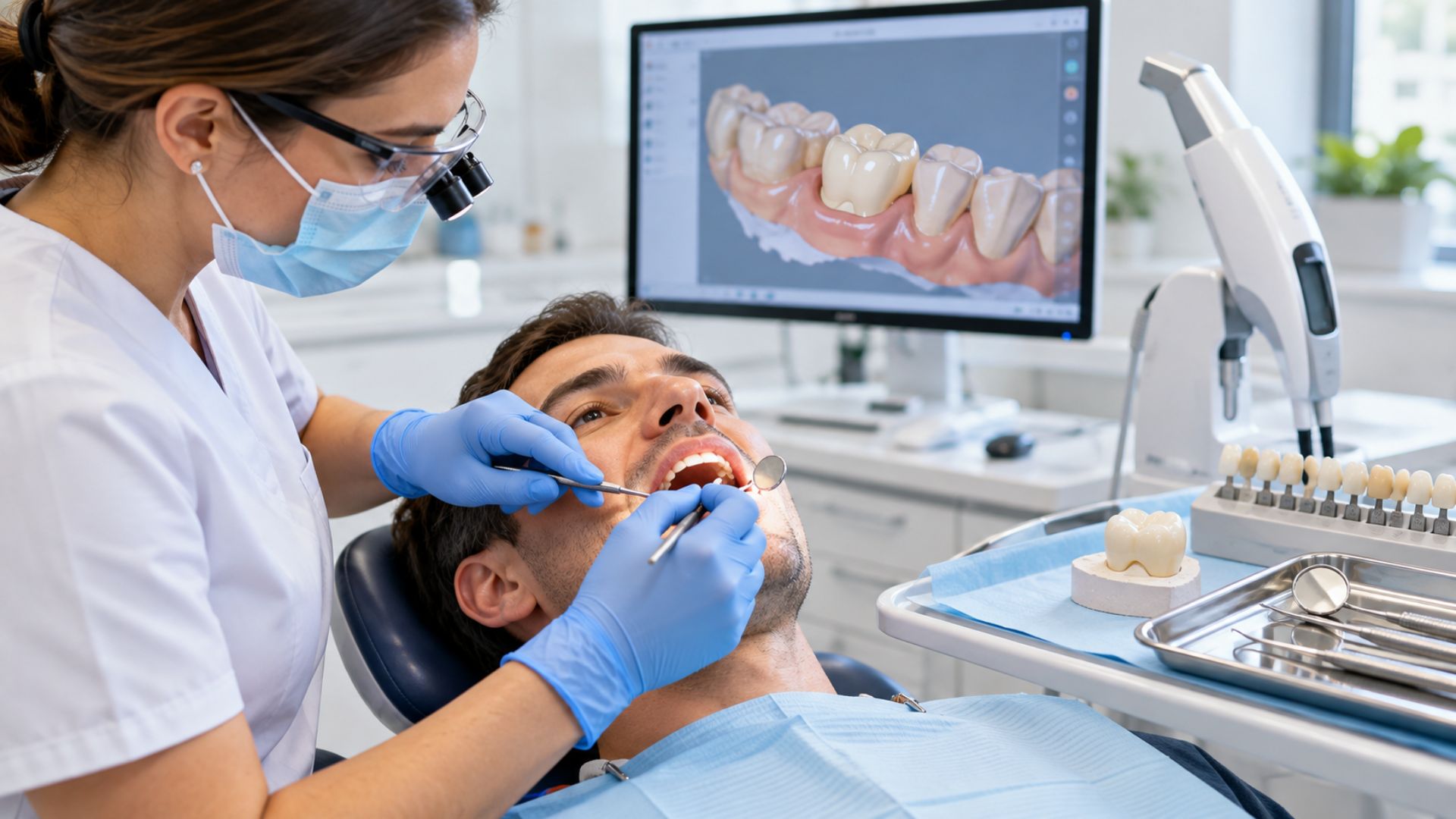
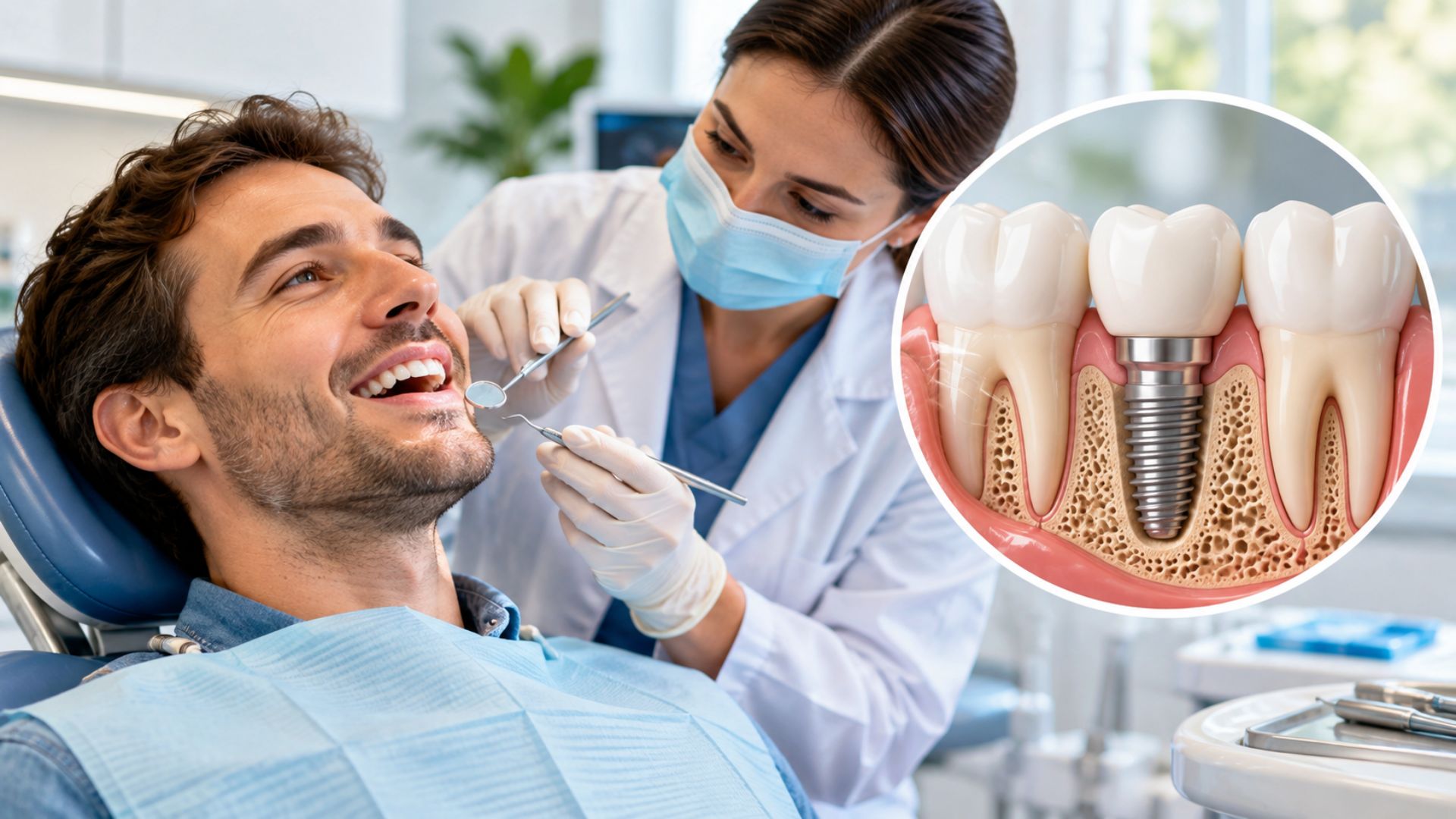
A single tooth implant is often recommended because losing even one tooth sets off a slow chain of problems, and an implant is the only replacement that stops that chain at its source. When a tooth is lost, so is its root, and the jawbone that used to support it starts to shrink away. Meanwhile the teeth on either side begin to drift, and the tooth above or below has nothing to bite against. An implant is a small titanium post that takes the place of the missing root, which keeps the bone active and lets a single crown fill the gap without touching the neighbouring teeth. To be fair, an implant is not the only way to replace a tooth, and it is not strictly compulsory in every case. So the real question is less about whether you must have one and more about why it is so often the best choice. The reasons come down to what happens when a gap is left, and how an implant compares with the alternatives.
What actually happens when you leave a gap
The reason dentists push to replace a missing tooth is that a gap is rarely just a gap. It is the start of a process that unfolds quietly over months and years, and each stage tends to make the next one worse.
It begins with the bone. The jawbone stays strong because chewing sends pressure down through the tooth roots, which tells the body to keep that bone dense and healthy. Remove the root and that signal stops, so the bone in that spot slowly resorbs and melts away. Within the first year after losing a tooth, a noticeable amount of that bone can disappear, and it keeps thinning after that. Over time this can also change the shape of your face around the gap, giving a slightly sunken look.
Next come the neighbouring teeth. Teeth rely on their neighbours to hold them in line. Once there is a space, the teeth beside it gradually tip and drift into the gap, and the tooth opposite, with nothing to meet, can slowly grow longer as it over-erupts. What starts as one clean gap can turn into several crooked, tilted teeth, throwing off a bite that used to work fine.
That shifting has knock-on effects. Tilted and drifting teeth create awkward angles and tight spaces that are harder to clean, which raises the risk of decay and gum disease around them. An uneven bite can overload certain teeth, wearing them down or leading to cracks, and for some people it brings jaw strain or discomfort. There are everyday effects too, from chewing less comfortably on that side to feeling self-conscious if the gap shows when you smile. None of this happens overnight, which is exactly why a missing tooth is easy to ignore until the harder-to-fix problems have already set in.
Why an implant, rather than the alternatives
Replacing the tooth deals with all of that, but there is more than one way to do it. A dental implant, a bridge, and a partial denture can each fill a single gap, and our guide on implants, dentures, or a bridge walks through how to weigh them up. What sets the implant apart is that it is the only one that replaces the root, not just the visible crown.
That single difference drives most of its advantages. Because the post sits in the bone and takes the force of chewing, it keeps stimulating that bone and helps prevent the shrinkage a gap would otherwise cause. A bridge and a denture sit on top of the gum and look good, but they do nothing to preserve the bone underneath.
An implant is also self-supporting, which matters more than it sounds. A traditional bridge works by grinding down the two healthy teeth either side of the gap to use them as anchors, which means altering teeth that had nothing wrong with them. An implant stands entirely on its own and leaves the neighbours untouched. It functions like a natural tooth too, fixed firmly in place rather than removable like a denture, so you can eat and speak without thinking about it. And it lasts. With good care the post can last for decades, often a lifetime, while the crown on top typically lasts many years before it might need replacing. Once it is done, the process of getting a single implant becomes a long-term fix rather than something you revisit every few years.
When an implant may not be necessary
Being honest about this matters, because "necessary" is a strong word and implants are not always the answer. There are real situations where holding off or choosing something else is perfectly sensible, and a good dentist will say so rather than push.
If the missing tooth is right at the very back and its opposite number has also gone, the gap may not be causing drifting or bite problems, and replacing it is more optional. Cost and time are fair considerations too, since an implant is a bigger investment than a bridge or denture and takes several months from start to finish, so for some people an alternative simply suits their circumstances better. Suitability is another factor. An implant needs enough healthy jawbone to anchor it and healthy gums to surround it, so heavy smokers, people with uncontrolled diabetes, or those who have already lost a lot of bone may need extra treatment first or may be better suited to another option. The sensible path is not to assume every gap must have an implant, but to have it assessed and understand what leaving it, or filling it another way, would actually mean for you.
Sooner is usually easier than later
One practical point is worth knowing: timing changes your options. Because bone loss begins soon after a tooth goes and continues over time, acting sooner generally means there is more healthy bone to work with, which can make an implant simpler and avoid the need to rebuild bone first. Waiting does not always rule an implant out, but it can add steps, so if you are weighing one up, it is worth getting an opinion sooner rather than letting the gap sit for years. You can read more about how the treatment works and what suits different situations on our dental implants page.
Frequently asked questions
Is it really a problem to leave one missing tooth? Often yes, over time. A single gap can lead to bone loss where the tooth was, drifting of the neighbouring teeth, over-eruption of the opposing tooth, and a bite that no longer meets evenly. These changes are slow and painless at first, which is why the trouble is easy to underestimate until it becomes harder to fix.
Is an implant better than a bridge for one tooth? For many people, yes, because an implant replaces the root and preserves bone while leaving the neighbouring teeth untouched, whereas a bridge relies on grinding down the teeth either side. A bridge can still be a good choice in some cases, so the right answer depends on your bone, your budget, and the health of the surrounding teeth.